
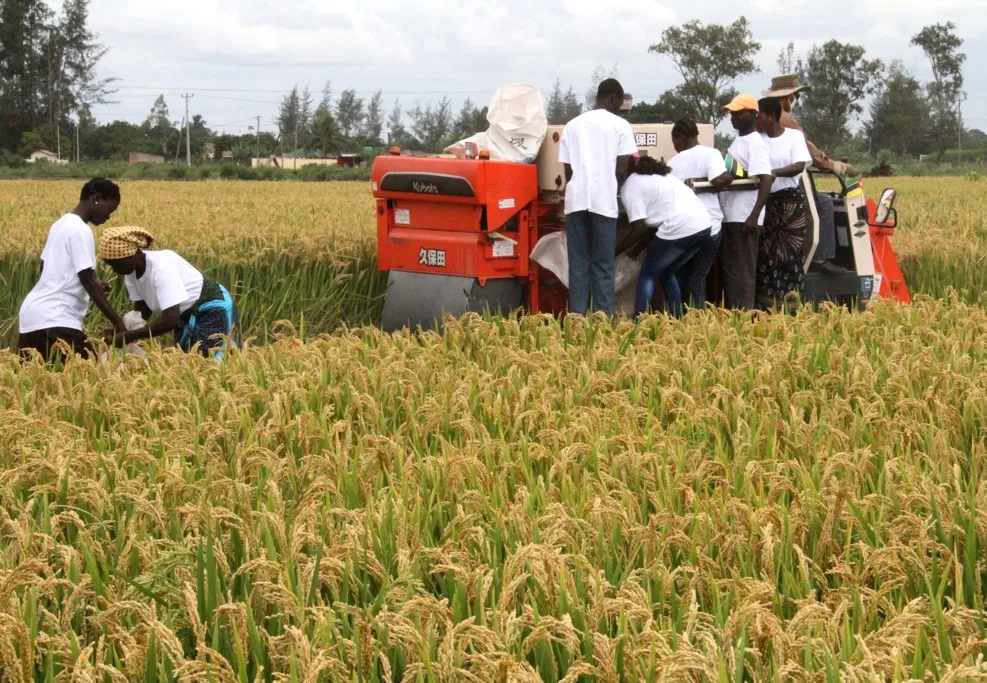
In a strategic move that strengthens economic cooperation between Europe and Africa, the German government has mobilised more than 45 million euros — the equivalent of around 3.3 billion meticais — to boost agribusiness in Mozambique, betting on direct financing for small and medium-sized agricultural initiatives.
The investment forms part of the “Innovative Financing for Agribusiness” programme (FINOVA), a platform designed to break down one of the sector's greatest barriers: access to credit. In an economy where agriculture remains the main livelihood of much of the population, yet absorbs only a minimal fraction of bank financing, the initiative is an attempt to correct this structural imbalance.
Implementation of the fund will be split between two key institutions. The Bank of Mozambique will be responsible for managing approximately 33.5 million euros, channelled through the national financial system, while the Zambezi Valley Development Agency will administer around 12 million euros, focusing on credit guarantee mechanisms, agricultural insurance — including cover against climate risks — and technical assistance to producers.
On the ground, the expected impact is broad. The funds are intended to finance projects linked to irrigation, mechanisation, storage and agricultural processing, areas considered critical for raising productivity and reducing losses along the value chain.
According to the director-general of the Zambezi Valley Development Agency, Celso Cunha, the financing will be made available at subsidised interest rates, giving entrepreneurs and producers access to more favourable conditions in a context traditionally marked by high borrowing costs.
The programme comes at a time when only around 2% of bank credit in Mozambique goes to agriculture — a figure often cited as one of the main obstacles to the sector's growth.
With this financial injection, Germany seeks not only to stimulate agricultural production, but also to promote job creation, strengthen food security and energise the rural economy, in a clear bet on the transformative potential of the Mozambican countryside.


