
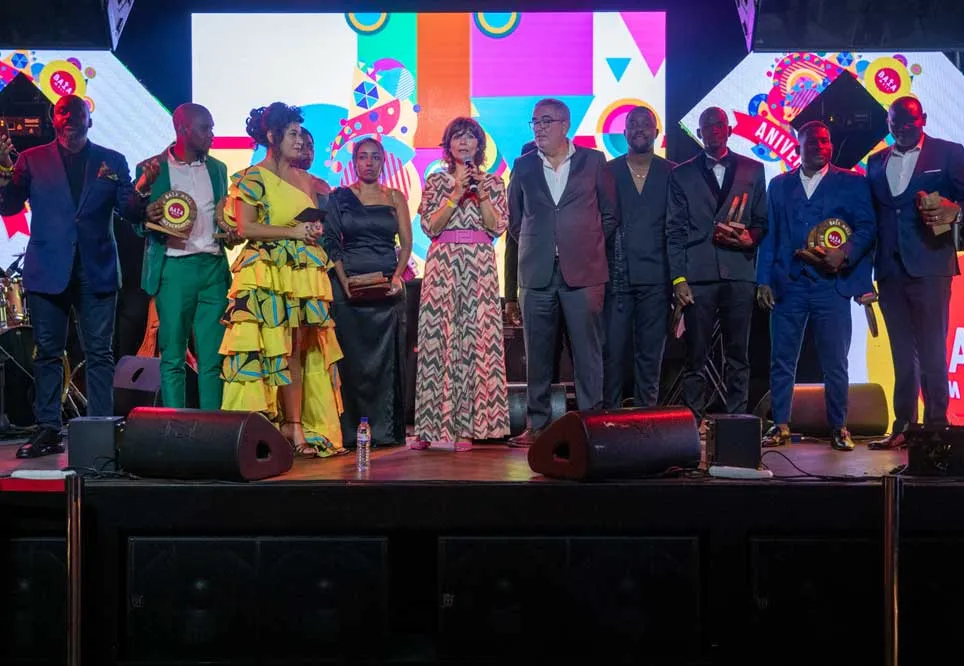
Marking five years of existence, Baía Mall, the largest shopping centre in Mozambique, has been bringing more vitality to a growing community. Over this five-year period, it has established itself as an unavoidable landmark, bringing progress and vitality to the local economic and social landscape. In this issue, we invite the reader to embark on a retrospective of this colossus of our retail trade. With the exclusive contribution of José Castilho, director of BROLL, we will unveil the milestones achieved by Baía Mall and catch a glimpse of its bold plans for the future.
What were the most significant milestones during Baía Mall's five years of operation?
First of all, the completion of the construction project for this space, which was extremely ambitious and would require very educational management in order to embrace the best international practices for this shopping centre, which is what came to pass. We also recall the inauguration by His Excellency the President of the Republic, which for us was recognition of the need for this asset and a welcome for international investment. Operationally, we recall the month of May 2019, when for the first time we exceeded 320,000 monthly visits to the mall, a figure that remains consistent today and that we hope to increase. In the area of social responsibility, which we have been developing since our beginning, there are countless events and contributions in which we have taken part: support for the victims of Cyclones Idai and Kenneth and, this year, Freddy. Our participation and contribution to cultural outreach, with art exhibitions and socially oriented ones, or in the area of health, with content that is important for Mozambican society, such as, for example, the Harvest Festival or temporary exhibitions of local crafts, medical screening campaigns, and so on. In addition, we always mark important dates for the family and community, such as Father's Day, Mother's Day and Mozambican Women's Day, International Women's Day and Family Day, involving the most diverse participants who give voice and example to our youth, to children and to the family itself.
Which obstacles would you highlight as the most challenging faced during this period?
The commercial area, the part without which we would not exist, since we are essentially a place of trade, was the area in which we found the most challenges, in putting together our mix of retailers, who today are our strength. Bringing to this space the best that Mozambique has to offer in formal trade was one of the greatest challenges we encountered. Finding and training, specialising our staff in managing the Centre, was another of the challenges we met and which, fortunately, we feel we have overcome with our current team.
In what way has the shopping centre impacted the local community?
Besides the specific actions we have mentioned within the framework of social responsibility, Baía Mall's impact on local trade has been extraordinary. Note that we began with a group of retailers used to a different type of trade, in shops on commercial streets or strip malls, informal trade or even start-ups, who started out at Baía, in a central shopping-mall environment where the rules are common to all retailers, with the aim of improving the overall offering and thereby increasing each one's sales. Throughout these years of existence, the challenge has always been to adapt the different businesses to this way of operating, which naturally has advantages. Neighbouring communities have also benefited from our presence and action in partnership with the municipality of Maputo, but also in targeted activities, often proposed by us, but also by those communities.
Since your opening, which changes implemented do you consider most significant?
The shopping centre is almost a living organism. Every day many variables are in motion that oblige us to manage change constantly. Whether on request, out of obligation or through plans that we successively update at every level. Activity in the shopping centre is very dynamic. Choosing the changes that have had the most impact is therefore very difficult, because we have many. In that sense, I would pick the management of retailers and the selection of the businesses that make the most sense in this space, because they work best within the overall mix of retailers, as the main concern that has driven these changes, and which has thereby benefited the shopping centre. We currently have a study under way to analyse improvements in energy efficiency, which we believe will have a great impact in the future.
How did the Covid-19 pandemic impact your operations?
There were several knock-on impacts that were significant. First of all, trade was heavily affected by the impossibility of in-person visits and the obligation to reduce opening hours. In certain cases we even had shops that, because of the type of activity, were closed the whole time by legal imposition. This naturally affected the Centre's business, sharply reducing returns on investment in that period, which lasted about two years. On the other hand, our marketing and maintenance management activities also suffered stoppages and delays because they could not be carried out, either because international travel by some suppliers was not possible, or even because there were no sanitary conditions that would allow it. But on the positive side, we highlight that less frequent travel led the people of Maputo to build local consumption habits; some retailers decided to open more specialised shops, particularly in fashion, here, and today we notice that this has contributed to a more consolidated retail sector, where the consumer has more immediate comparisons, better prices and greater comfort in their shopping. This fact, which is noticeable above all after that period with the consequent growth of local trade, is one of the improvements that remained in the post-Covid era.
What were the most relevant lessons your management team learnt over these five years?
Managing shopping centres in the way we do at Baía Mall, in line with international best practice, obliged us to build a management team with skills in several areas. In Accounting, Collections, Sales, Maintenance, Marketing and administrative processes, everything is specialised in this space. The best lesson we have learnt over this time is that it is worth betting on training staff who come to us with a basic academic education and who commit to professional training when they are exposed to these roles. We view the development of our staff with great fondness and we consider that we have a team which, in its interaction with the different stakeholders, whether retailers, suppliers, public bodies or others, is capable, competent and dedicated.
What strategies have you adopted to deal with the growing competition from e-commerce?
In truth, we see e-commerce as complementary rather than as a competitor. From a localised physical point such as the shopping centre, we also boost our retailers' business through e-commerce. Or rather, it is our retailers who do it; what falls to us is a constant presence on electronic media and social networks, which we have always been developing. From there, a large part of our retailers take that potential and turn it into an increasingly important component of their trade.
Among the actions and initiatives you have organised, which would you like to highlight for their effectiveness and impact? Could you describe what they involved?
We are particularly keen to highlight all the actions we have been involved in and that we know have helped to ease some people's suffering. We will not list those, because we do it whenever possible and with the committed collaboration of our retailers. We are proud to have organised some events that we know have had an impact on Mozambican society, such as, for example, having collaborated with campaigns for the preservation of biodiversity, to strengthen local artisans or even small farmers, for whom we have been creating spaces for promotion. We publicised and brought closer to us, to our retailers, customers and visitors to the Centre, public figures from our society who, at various events, whether in culture or in social actions, mixed closely with our more ordinary people.
We had other activities that we invented or reinvented, with an effort to recreate ourselves, but which we are equally proud of: in 2020, we committed ourselves to collecting as much school material as possible, and donated to the Macaneta Primary School 756 kits of assorted school supplies; in 2021, we created the “Covid-19 Heroes” campaign, in which, besides planting 200 casuarina trees in the open air on Maputo Bay to lift people's spirits and as a form of protection against erosion of the marginal's seafront, we created a literary and photographic exhibition in tribute to those who suffered from Covid-19, and displayed testimonies from hospital directors, patients who recovered and relatives who lost loved ones; in 2023, we were pleased to know that, besides donating food and basic necessities, we managed to offer the experience of a tasting to some children who delighted in Easter eggs and sweets. The marketing department's greatest challenge was to reinvent itself in order to communicate at a time when we were not allowed to create gatherings. Covid-19 taught us to survive on the bare minimum and with a mixture of various feelings that ran close to the surface.
In what way has Baía Mall kept up with trends in sustainability and ecological awareness?
In every respect and in every way. First of all, the building was developed with certain features and equipment with environmental sustainability in view, at the time giving priority to the installation of a water treatment plant, which is important not least because we are in a location by the beaches. We take part in and develop initiatives to protect the seafront, with tree-planting programmes whose function is to protect against erosion. Our policies include environmental sustainability in the collection and separation of waste for subsequent recycling. There is a concern with energy, and we have studies under way for the future use of self-generated energy, in principle using solar panels.
In future we will carry out carbon offsetting actions, but we consider that premature, since we are still in the phase of getting our retailers to adapt. On the other hand, we have run numerous campaigns associated with both recycling and the protection of endangered biodiversity, and campaigns against poaching, which we consider a scourge that affects us nationwide.
What activities can your customers look forward to in future? Are there plans to expand the shopping centre?
From a commercial point of view, all our retailers can count on us, just as we count on them, to achieve, continuously and sustainably, growth objectives in line with, if not greater than, the country's economic growth. We are betting on successive, localised marketing campaigns, using all the means we can access, to constantly remind the consumer of our quality and of the offering available from all retailers. This energising is very important, so we give it a high priority. In terms of specific activities, we will keep those a secret here, so that in future our activities always surprise on the upside, as has become the custom at Baía. Rest assured that we are attentive and extremely creative in planning innovative, essential activities, in line with the community's objectives and always with social responsibility. We are here to serve the community, and it is with the community that we live our business too. As for expansion plans, naturally the space in which we exist is limited, and returns on investment are particularly slow. This is a long-term investment which only after these 5 years can we say is close to its potential for exploitation, so it is too early to think about that. Nonetheless, the investor today has a very good view of this investment, which is why we do not rule out that there may be others in line with this one, but not in the short term.
How would you like Baía Mall to be perceived by the community and customers over the next five years?
I think that for the next 5 years we essentially aim to consolidate the image we have today. To be the benchmark shopping centre in the capital, which means to say, the benchmark shopping centre in the country, but above all to keep showing consumers that it is possible to shop with convenience and comfort in Mozambique, and that our offering will always be directed at the needs of the moment. Alongside our commercial objectives, we will maintain our work with the neighbouring community, without neglecting the national emergency support to which we have always given some response, and we will continue to energise our space and surrounding area in the strands of healthy living, which includes sport, the environment and culture.


