
Trees, technology and people help Mozambican park reverse nature's losses
The Park's Administrator, Pedro Muagura, under trees in Gorongosa National Park, Mozambique, on 30 May 2022. Thomson Reuters Foundation/Kim Harrisberg
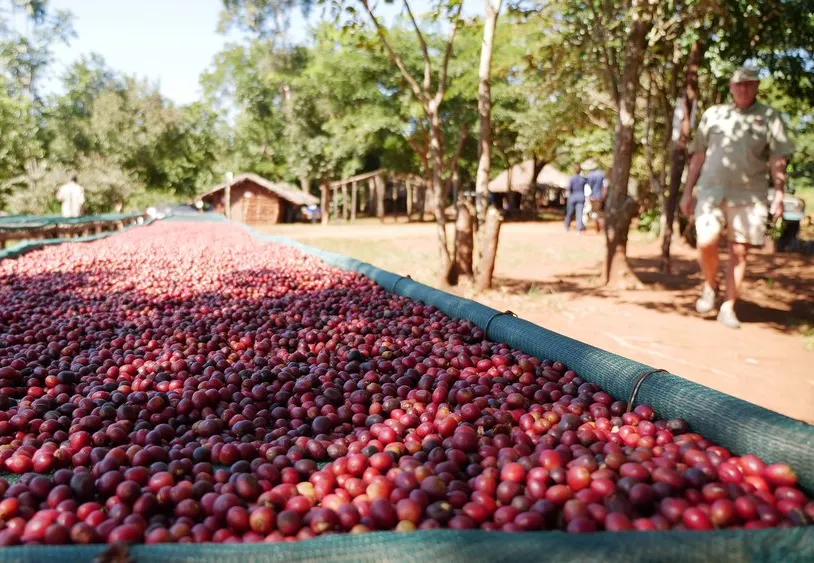
Only when his first harvest of green coffee beans began to turn cherry red, in 2011, did he reveal his plan, in keeping with the people-centred conservation spirit of Gorongosa National Park: give people a reason to protect the forests and they will
do so.
"People used to say 'the forest is for the future' - but here the forest is for now", said Muagura, sitting under trees in the national park, south-east of the mountain range of more than 1,800 metres where his planting began.
Last year, communities around Gorongosa planted more than 260,000 coffee plants and 20,000 indigenous trees, with their most recent harvest yielding 16 tonnes of green coffee from more than 800 smallholder farmers, 40% of whom are women.
The Park's own operations employ a total of 1,500 people, mostly local, in roles ranging from maintenance and guiding to research, making it one of the largest employers in Sofala province, in central Mozambique.
Among other tasks, the workers build schools and hospitals for local communities, help them harvest honey, plant cashew trees - another cash crop - and train former poachers to become conservation rangers.
The work to protect nature and keep the local economy running at the same time stems from the Park's unusual conservation vision, which combines nature conservation, technological innovation and scientific research with community education and job creation.
Around the world, such ambitious efforts - at least the successful ones - remain a rarity, mainly because international funding for nature protection falls short of what is needed.
From the recent evictions of the Maasai people from nature reserves in Tanzania to the battles of the Batwa in Uganda and the San in Namibia to keep their lands, local communities have often suffered at the hands of conservation projects that put animals before people.


