
THE ART OF WALKING & PHOTOMATON
Brief notes on the photography of Mariano Silva
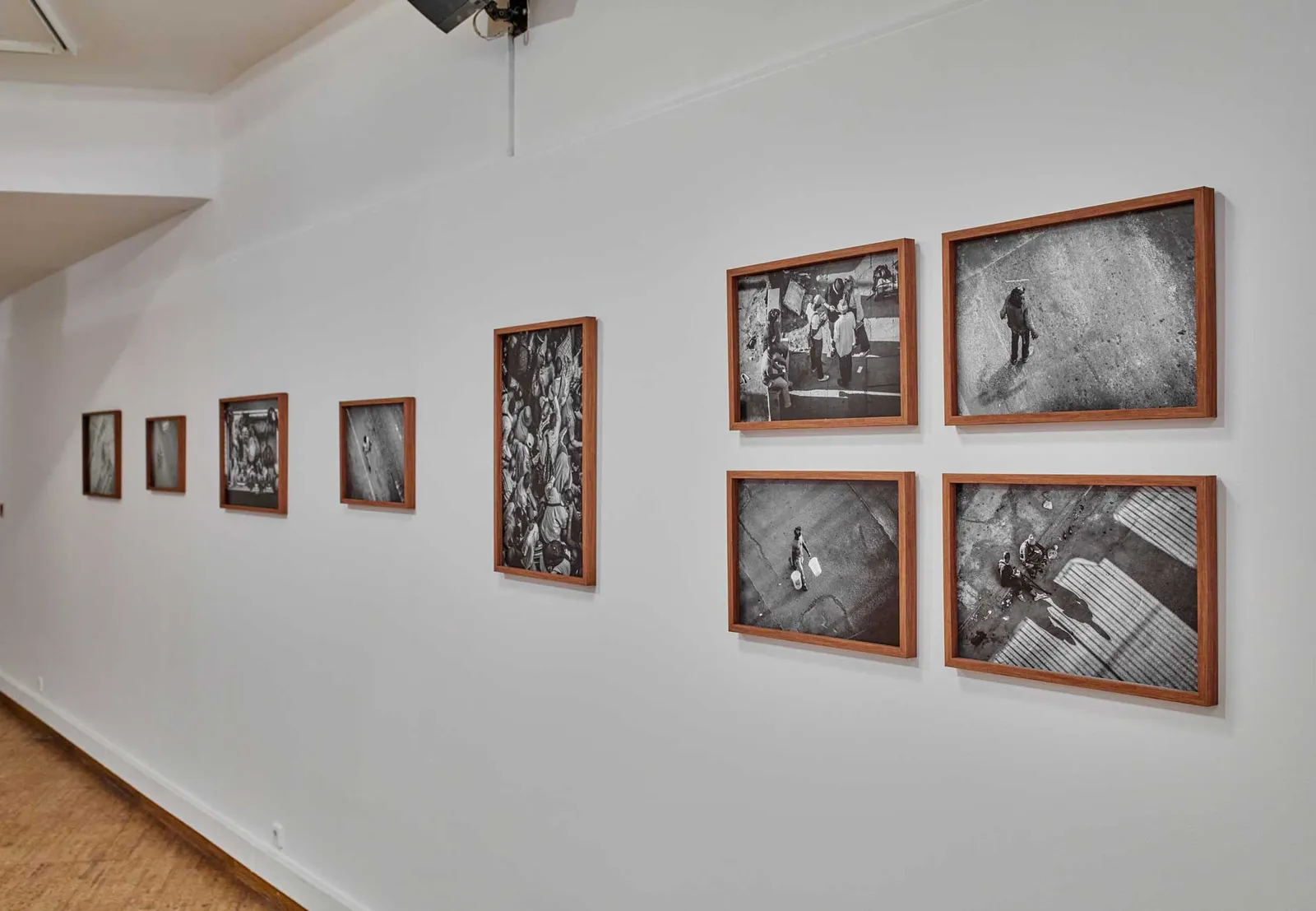
The images that Mariano Silva presents to us aim to say little or nothing about the faces of the people photographed, but they say a great deal about the paths crossed by man, animal laborans of modern times. They are men and women who, miniaturised in photography, undertake various movements, advancing and retreating, crossing and unfolding, loosening their bodies and casting their victories and defeats upon the paths. They are men and women who, with lightness and ease, tread paths and shortcuts, with the gait of those who go out into the street not merely to cross it, but also to lose themselves in it.
Before the photographer's lens, what itineraries are then laid out for us? Are such paths short or long? Steep or straight? Are they new routes or old, worn ones? Mariano's photography warns us that these are paths of love and perdition, of light and darkness, paths that open onto other paths, more labyrinthine, perhaps, but which carry us to the past and to the future. Tracks that, often, are the only possible route or, as the poet would say, the last place in which to lodge one's feet. Those who go and return along the same trail, bringing the warm smell of asphalt and the perfume of the wind.
How much can the streets and corners portrayed here tell us about the women and men who walk them, step by step, stumble by stumble, fall by fall? Mariano reminds us, through his beautiful depictions, that photography is also the description of the paths we travel and stumble along and where we rise again to travel them once more. What, then, do these bodies hope to reach as they tread paths so vast and so varied? Paths that surrender to the murmur of the people who clear them, expecting nothing from them, accepting them simply as if they were of their nature. Here is one possible reflection to which Mariano summons us. Or perhaps it is the opposite: these corners and streets traverse the bodies that tread on them, almost voluptuously, opening themselves firmly, without any renunciation, beneath the feet of passers-by?
Whatever the case, Mariano makes use of the art of walking to set his art in motion, displaying it in all its splendour and gently describing this intimate and complex relationship between man and his walk. These are considered photographs, as if a given image already inhabited our collective imagination months before the lens turned it into a portrait.
Mbate Pedro


