
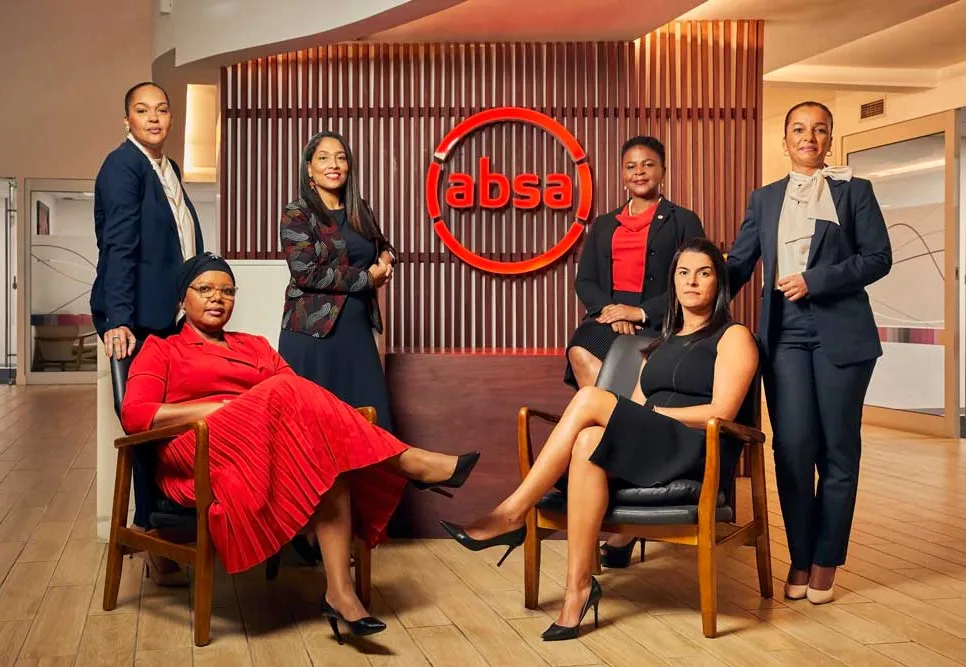
What is it like to be a leader in the national banking sector?
Denise Cruz, Acting Director of Channels: Being a female leader in Mozambican banking can bring unique challenges, but it can also offer the opportunity to lead change and contribute to the country's economic development. Today, each of the women (like me) who lead departments and take decisions that matter for the country's future has the chance to contribute significantly to its economic development, by leading innovative and sustainable projects, promoting entrepreneurship and helping to improve financial inclusion. However, it is still challenging to be both a leader and a woman, in different sectors, as we still face prejudice and gender stereotypes that can hold back our career growth. But the resilience and dedication that are characteristic of us drive us to work ever harder to prove our ability and to face the challenges along the way. At Absa, our culture of gender equity and of career progression based on meritocracy is very much present: although across the whole Bank we have 50% male employees and 50% female employees, at top leadership level women account for 55%. It is an honour to serve as an example and a source of motivation for other courageous women who aspire to grow and lead in the different sectors in which they operate!
How does your institution approach the question of gender equality in recruitment and promotions?
Hanifa Hassangy, Director of People and Culture: We are the national financial institution with the same number of women and men in our workforce and in management positions, which demonstrates our position on gender equality. We have a strong culture of gender equity, we believe in the competence and quality of our staff, and we are constantly working to ensure that each of our employees feels valued and is growing. The investment in our People over the last few years was reflected in the most recent appointments to the Bank's top leadership, from the Chief Executive Officer to the 4 new members appointed, all of whom were the result of internal career progression. When it comes to talent management, in recent years we have implemented the Graduate Programme and Ready to Work, which focus, above all, on training talented young professionals, whether boys or girls, for the labour market.
What must be done to achieve gender equality in Mozambique?
Patrícia Darsan, Director of Corporate and Investment Banking: I believe that, to achieve real gender equality in Mozambique, we first need a change of mindset that allows us to look at gender equitably and, with that, to create, openly and fairly, opportunities in which women can show their potential and their worth. It also requires a coordinated and ongoing effort to change the paradigm, one that begins within the family and extends across the key areas of society, such as education and health. It is important to guarantee girls and young women, throughout the country, equal access to education, from primary to higher level. This includes encouraging them to learn while seeking to eliminate the social barriers that prevent school attendance, such as early marriage and early pregnancy. It is worth noting that many of the challenges women face begin within the family, where they are taught from an early age that their role in society is to look after the children and the home, while the opposite sex provides for the household and focuses on professional growth. This social paradigm has to be eliminated. On the other hand, in health, women must have access to quality reproductive and sexual health services that enable them to take informed and conscious decisions about childbearing. We have a long way to go before we achieve gender equality in our country, since access to employment, equal pay, access to opportunities for advancement and to leadership positions, and gender discrimination in the workplace remain major challenges to be overcome. However, we are already seeing some examples of women who are driving this change and who have stood out in leadership positions, in both the public and private sectors, which suggests that a paradigm shift is indeed under way and may only need, perhaps, to be accelerated. Something I believe can be achieved more quickly through the implementation of policies that encourage gender equality in education and in the workplace.
Why is financial education important for the development of women in Mozambique?
Martha Humbane, Director of Retail and Business Banking: Indeed, financial education is essential for women to be able to make informed and responsible financial decisions. This is especially important for women who are constantly engaged in managing the household budget and helping to support their families, as well as in their own projects and businesses. Financial education gives women the basic tools to organise the management of collective and personal needs, enabling them to run their household budget effectively, with sensible consumption, the setting of limits, necessary costs and spending plans. This approach makes it possible to achieve financial independence on their own terms, promoting saving habits that will allow future investment. In addition, financial education can stimulate entrepreneurship among women because, with the right tools and prudent financial management, they can gain greater economic empowerment and take an active part in the country's economic activity, contributing to the well-being of their families and to sustainable economic growth. Financial education is therefore a powerful tool for enabling women in Mozambique to achieve their financial and life goals, reduce poverty and increase their economic independence. When widely disseminated, this financial education can bring benefits to the whole of society, contributing to a more prosperous and equitable future for everyone.
To what extent can training women help to develop the national economy?
Tânia Oliveira, Director of Marketing and Corporate Relations: A woman's level of education strongly determines her family's standard of living, as well as the education, future and potential opportunities of her sons and daughters. Women, particularly in developing countries, play a central role in the survival and economy of the family, both as providers and as managers of the family's life and resources. When women, particularly those who are not in situations of poverty and exclusion, are unable to work because of incapacity or illness, the survival of their own family is at stake. This puts women on the front line in a context of uncertainty and a rising cost of living, such as the one we are living through at present. But these conditions are not inevitable; there are ways around them. And this must be a challenge that mobilises the whole of Mozambican society.
Investing in the training of women and in the promotion of gender equality in its different spheres is the key to the development of our economy, and it is an objective that should be an integral part of companies' management strategy. At Absa, we have achieved the objective we set ourselves and today women make up 50% of the company's staff; we seek to capitalise on their potential in specific areas through training and by offering the same opportunities. Setting a target, I think, is a necessary means, and its aim is to promote a more balanced and more equitable organisation. Through this diversity, we are able to take better decisions, which automatically result in better products, better services, a better value proposition for our customers and, consequently, an economic benefit for the Bank and for society. Education and training have the role of empowering women and breaking the cycle that exposes them, above all, to poverty. We must mobilise resources where they make a difference. This is an investment that is necessary to accelerate the development of our society, improve poverty levels and reduce inequities. It has been shown that more equal societies are also more economically developed.
And how is the balance between professional and personal life handled for your female employees?
Akila Ghumra, Acting Director of Operations: We are an organisation that makes the well-being of its employees a priority and, after the pandemic, we definitively adopted the hybrid working model, allowing new ways of working to emerge. We believe it is no longer about having a balance between professional and personal life; it is, rather, about having harmony between the two. We have worked continuously to improve our employee value proposition and, in the specific case of maternity leave, recognising that it is an important and unique moment in a mother's life, we have created conditions for our female employees to have three months of maternity leave, instead of the two months established by law. Still in this context, we have increased paternity leave to 5 days, as a way of promoting the role that men play in supporting women and in family harmony. More recently, we created a discussion forum where we bring men and women together to explore topics, exchange ideas and debate themes relevant to the growth of our employees, both personally and professionally. We also encourage our teams to lead a balanced life, not to look only at their careers but also at their health. We maintain initiatives in which employees take part in sporting activities for physical health, we provide mental health helplines for colleagues to contact in moments of stress and uncertainty, and we encourage diversity and inclusion in the organisation to create a more dynamic working environment.


