
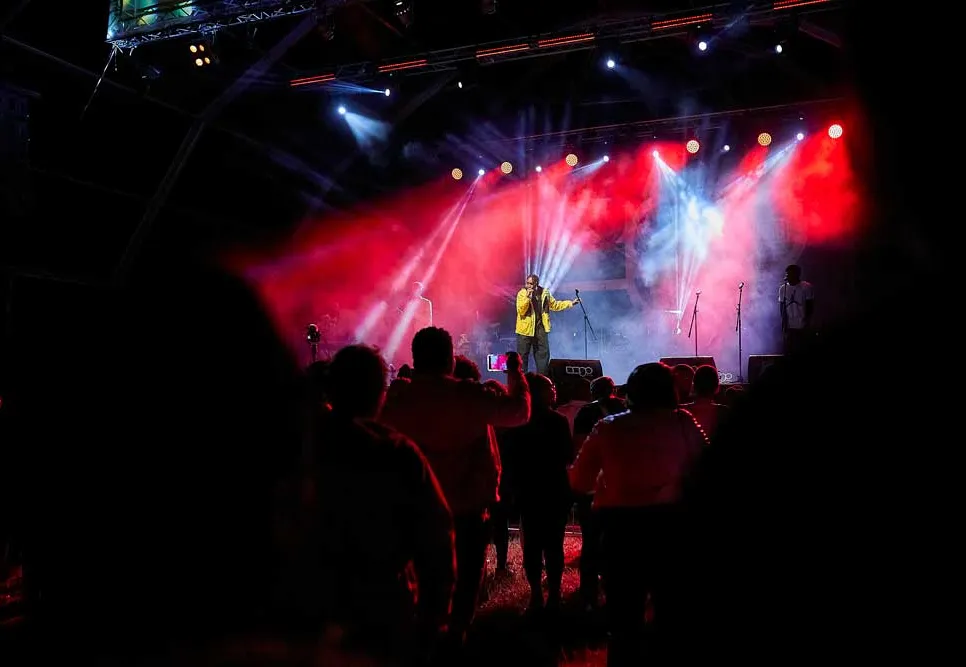
Last May, the vibrant city of Maputo hosted the long-awaited 10th edition of the AZGO Festival, regarded by many as the most complete and diverse showcase of the arts in Mozambique. After a three-year hiatus, the festival returned with a refreshing energy and a wide-ranging programme that ran from 19 to 21 May. The opening night took place at the prestigious Centro Cultural Franco-Moçambicano, filling the air of the Mozambican capital with expectation and anticipation. The second day was held at the Main Campus of UEM, where artists, managers, producers and, of course, audiences passionate about culture and music came together to celebrate the return of AZGO. Finally, on the third day, the festival closed at the Mafalala football pitch, in a collaboration between Khuzula and the Associação IVERCA. With established names such as Stewart Sukuma, Mark Exodus, Elvira Viegas, Eduardo Paim, Helio Beatz, Radjha Ally, among so many others, the 10th edition of the AZGO Festival promised – and delivered – a triumphant resurgence of Mozambican music and culture. Paulo Chibanga, the festival's founder, spoke to us about this edition.
To begin, could you share something of Azgo's trajectory and how the festival has evolved over these ten editions?
To begin with, we would like to express our gratitude for this opportunity to appear in a renowned publication, which has been a reference in the history of national culture and creativity and which bears a name that not only evokes but transports us to the universe of beauty!
To answer your question, the Azgo Festival has established itself as the main platform for showcasing the arts in all their diversity, actively contributing to artistic and cultural growth by encouraging greater awareness of cultural issues in Mozambique and in Southern Africa. The festival brings together distinct audiences and a variety of emerging and established artists from diverse genres, fostering Mozambican cultural heritage and artistic life by positioning Mozambique as an unmissable destination for lovers of the arts and, in particular, of music. Over these 10 years, the festival has generated multiple opportunities for professionalisation in the music industry, promoted the involvement of local communities and created jobs, alongside the creation of a platform intended to encourage musical exchanges between local and international artists, establishing a network of musical events and initiatives in Southern Africa, on the African continent and beyond. In statistical terms, the festival mobilises around 13,500 people annually, including participants and the working team.
As for this year's line-up, what were the highlights and how were the participating artists selected?
Each festival is a unique festival! Every year we bring together a curatorial team that helps us define the concept, choose the line-up, determine the pre- and post-festival activities and the side events to the main three days of the festival. By way of example, when we were forced to cancel the festival because of the pandemic, we already had a concept developed for it. However, on returning, we decided to create an updated context that would respond to current needs. The highlights included the promotion and internationalisation of national artists and the creation of a very intimate festival – with a more family atmosphere – and with a futuristic perspective that embraces fashion, gastronomy and lifestyle.
What role has Azgo played in promoting culture and tourism in the country?
As I mentioned earlier, Azgo is a true unifier of the arts and, since tourism can also be considered an art, Azgo is the leading national platform and benchmark for the promotion and internationalisation of national artistic creations, fostering the best environment for exchanges with international artists.
Given that this is the first edition since the pandemic, what were the main challenges in organising the event?
In reality, a comeback is always a challenge! Restarting all the machinery that had been active for the 10th edition was a relatively simple task, since we have a team that knows its role within the festival very well. The real challenge, in our understanding, was capturing everyone's attention. That is how the Azgo Profuturo and Afro Futuristic strand came about. This concept, designed with the aim of further leveraging Mozambican identity, stood out particularly through this edition's visual identity, created by the visual artist Psiconautah.
This year's theme was “Afro Futurism”. Could you explain a little what this theme means and how it was reflected in the festival?
In truth, the term Afro Futurism has become quite popular. However, the motto of this 10th edition is Cultural Diversity and Peace. This motto was chosen with the intention of exalting one of Azgo's fundamental pillars, which is the union of various cultures in the same space, in an atmosphere of conviviality and harmony. These values are spread by the festival through a programme that includes solidarity initiatives, forums for debating ideas and for bridging the differences between those taking part, collaboration programmes, the promotion and publicising of artists and their works, and the enhancement of the city of Maputo as a cosmopolitan territory. Above all, the purpose is to position the Azgo Festival as an artistic and tourist symbol of the City of the Acacias.
Was there a particularly memorable moment in this edition that you would like to share?
The whole festival was memorable! Let us see: we had the announcement of the festival's return, the first post on social media, which left everyone in suspense about the movement. In the second phase, we began announcing the artists, held the first flash mob in the city of Maputo and staged the festival at the CCFM, at UEM and in Mafalala. Also worth highlighting, on the main day, was the celebration of cultural diversity and peace through the exaltation of lifestyle, which earned a prize of 50,000 meticais, awarded to Valter Mudanisse.
How did the public and the sponsors react?
So far, we, as a team, are extremely pleased with the level of contentment we gather daily from the public, who feel particularly blessed by Azgo's return, with special emphasis on the innovations the festival brought: the cleanliness of the festival, the gastronomy fair, the financial management system, the inclusive initiative that gave people with physical disabilities the chance to follow the main performances without any restriction, and the Afro Futuristic strand, which introduced a highly innovative concept in culture and, particularly, in fashion.
What can we expect in future, in particular in the coming editions?
Our annual aim is always to present novelties, to surpass and maintain the innovations already introduced in previous editions.


