
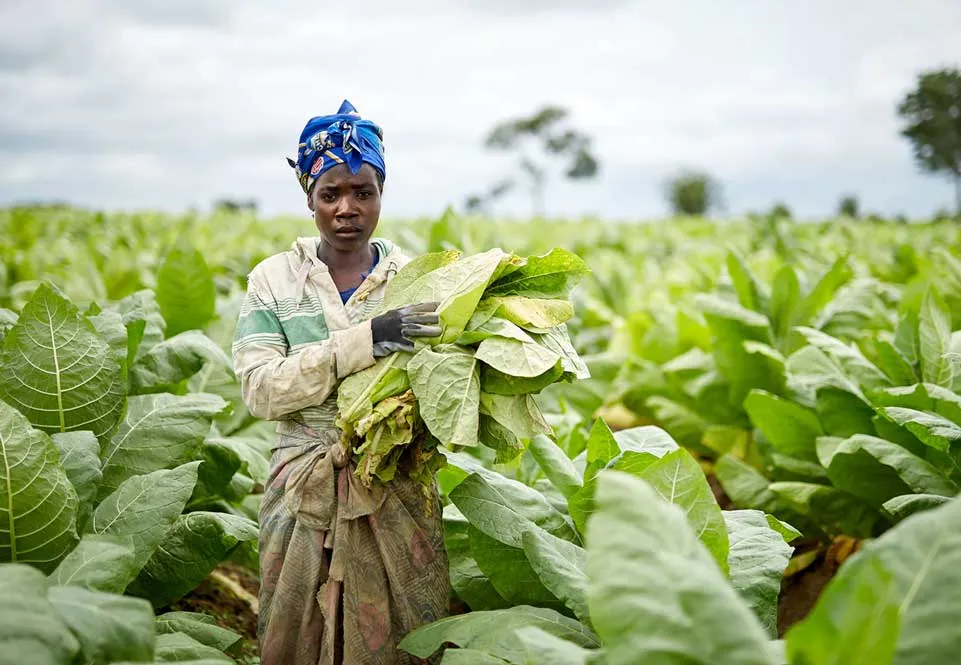
Mozambique, the pearl of the Indian Ocean, emerges as one of the main players in global tobacco production, securing a prestigious eighth place in the world, according to the recent report by the World Health Organization (WHO). The report, made public last week, places Mozambique as the third-largest producer on African soil, with a total of 91,469 hectares devoted to tobacco cultivation, surpassed only by Zimbabwe and Malawi.
Meanwhile, it is the South American giant Brazil that emerges as a true colossus in this sector, dominating the third-largest area of cultivation worldwide. On 31 May, World No Tobacco Day, the report highlights Brazil's role as the undisputed leader in the Americas region, maintaining robust production on 357,230 hectares without needing to expand its cultivation area. Together with China and India, Brazil accounts for a significant share of more than 55% of world tobacco production.
The report, entitled "World No Tobacco Day – Grow food, not tobacco", calls on governments to reflect, so that they may reconsider their stance in support of this crop and weigh up encouraging other, more sustainable crops that are more beneficial in feeding millions. This position is defended by the WHO Director-General, Tedros Adhanom Ghebreyesus, who recalled the sad figure of eight million deaths a year attributed to tobacco, in contrast to the millions invested by governments in its production.
The WHO also issues a stark warning that more than 300 million people worldwide face acute food insecurity, while more than three million hectares of land, spread across more than 120 countries, are used for tobacco production, including in nations where hunger is a reality.
The WHO thus maintains the importance of prioritising food cultivation over tobacco, as a measure to safeguard health, preserve ecosystems and strengthen food security. Nevertheless, the organisation points out that tobacco production is a problem on a global scale, with a particular focus in Asia and South America, but with growing expansion on African soil, noting an increase of almost 20% since 2005.
Finally, the report mentions that, of the Portuguese-speaking countries, only Brazil and Mozambique are listed among the 50 countries with the largest area under cultivation of this plant, once regarded as medicinal and now the target of criticism and restrictive policies owing to its massive use.


