
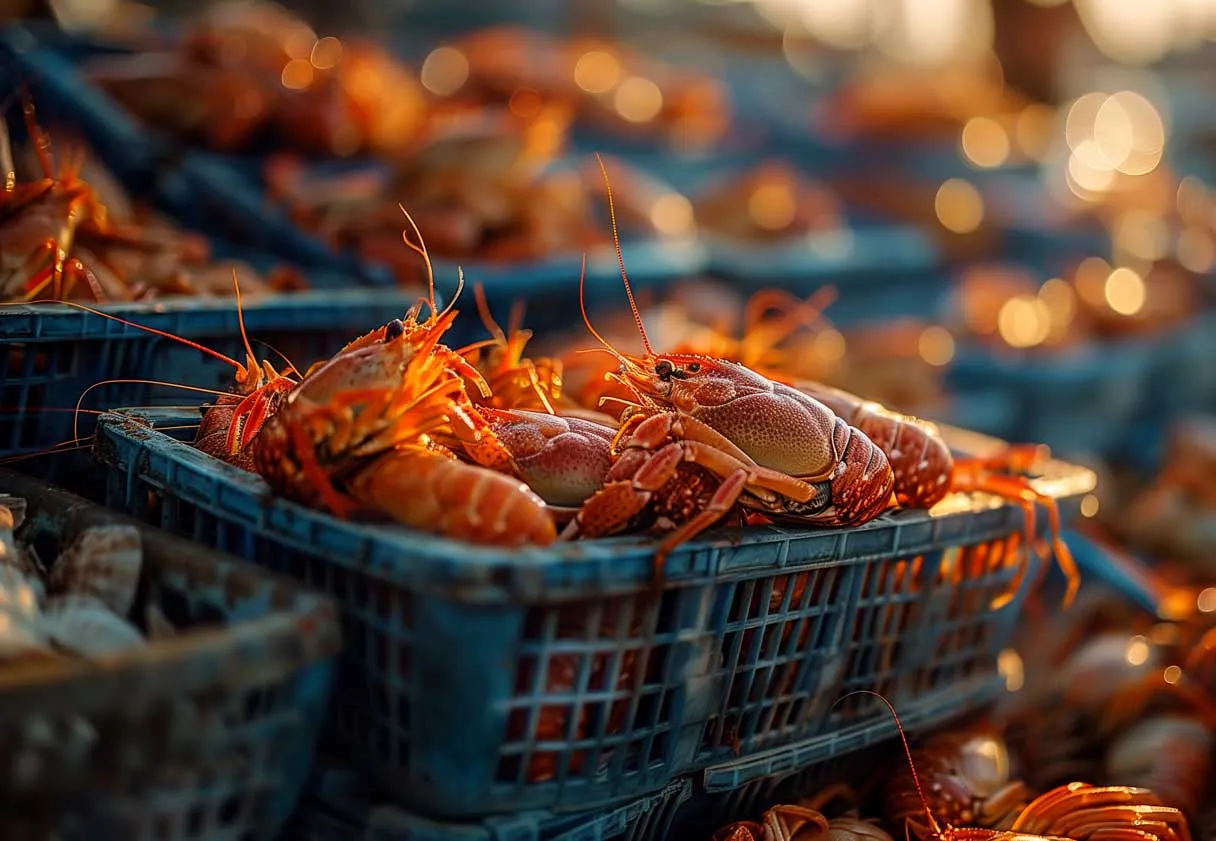
From today, 15 November, the closed season for surface prawn and mangrove crab fisheries comes into force in Mozambique, covering the years 2024-2025. This measure, promoted by the Ministry of the Sea, Inland Waters and Fisheries (MIMAIP), has as its main objective to ensure the sustainability of fishery resources and allow the recovery of stocks, which have been declining worryingly in recent years because of overfishing and the lack of control over fishing practices.
The closed season applies to industrial, semi-industrial and artisanal fishing on the Sofala Bank, to semi-industrial and artisanal fishing in Maputo Bay and at the mouth of the Limpopo River, and also to artisanal fishing in Govuro district, in Inhambane. In the case of crab, the restriction covers the entire coast of the country, from Cabo Delgado province to Maputo, covering the whole coastal area. In addition, octopus fishing will be banned from 1 January 2025, in the provinces of Cabo Delgado, Nampula and Inhambane, in an attempt to safeguard the reproductive capacity of the species and avoid overexploitation of this resource, so important to the subsistence of local communities.
With the aim of ensuring compliance with the new rules, inspection of fishing activities will be stepped up, involving both government authorities and community representatives. This inspection will include the seizure of illegally caught fish and prohibited fishing gear, as well as awareness campaigns among fishing communities, to ensure that fishers understand the importance of the closed season and are aware of the consequences of failing to comply with the established rules. In addition, training activities are planned to promote more sustainable fishing techniques and economic alternatives for the affected communities, reducing pressure on marine resources during the closed season.
Exceptions to the closed season for scientific research purposes remain valid, and adjustments may be made to these periods based on the results obtained over time. This research work is crucial for assessing the effectiveness of the conservation measures implemented and for adjusting policies so as to better respond to the needs of marine ecosystems and the communities that depend on them. The research will also contribute to a better understanding of the life cycle of the protected species, allowing the development of more effective preservation and management strategies.
These measures reinforce the Mozambican Government’s commitment to more sustainable management of fishery resources, promoting the conservation of marine ecosystems and ensuring that future generations can benefit from these resources. The balance between fishing activity and environmental preservation is essential for the continuity of species and the food security of the country’s coastal communities. In this context, it is equally important to promote cooperation among all players in the sector, including fishers, local authorities, scientists and non-governmental organisations, so that they can work together towards more sustainable and balanced fishing.
The development of partnerships with international organisations and research institutions will also be a crucial part of this process, to ensure that Mozambique can benefit from good practices and fisheries management experience from other parts of the world. Moreover, the involvement of local communities is fundamental to ensuring that the measures implemented are effective and have a real impact on the conservation of resources. In this way, the aim is not only to protect fishery resources, but also to ensure an improvement in the quality of life of the people who depend directly on fishing for their subsistence and well-being.


