
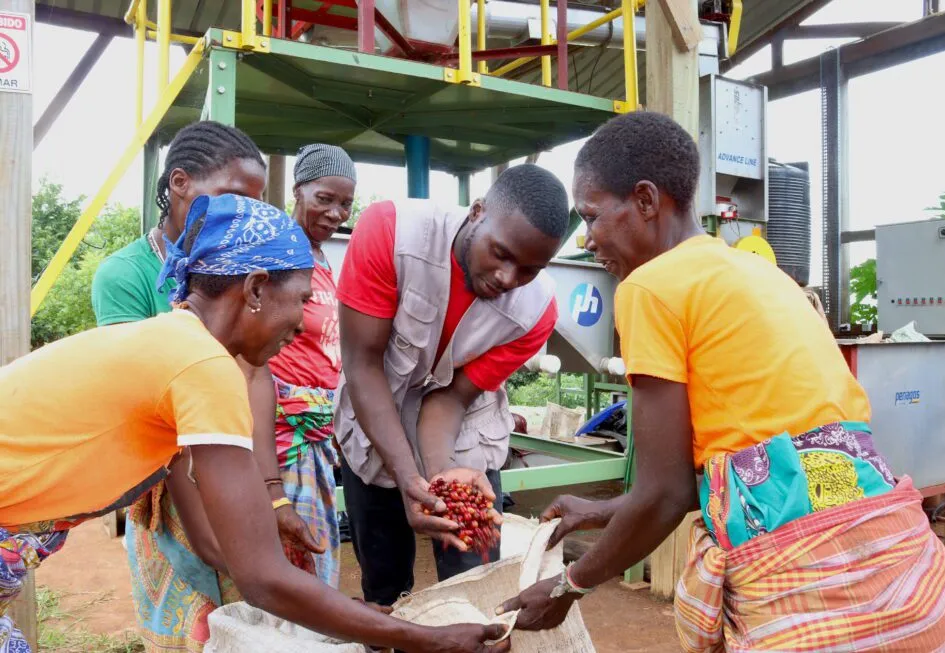
In the district of Gorongosa, in central Mozambique, coffee production is establishing itself as an important source of income for local communities. The initiative is taking place in the Nhanguco area, in the Canda chiefdom, where small family producers are part of a value chain that links agriculture to the economic and social sustainability of the region.
Farmers are currently taking part in the weighing stage of the harvested coffee, a key step for issuing receipts, which will form the basis for the payments to be made at the end of the season. This operation, organised in coordination with Gorongosa National Park, ensures a transparent remuneration model with a direct impact on household livelihoods.
Agricultural activity not only guarantees a regular source of income, but also allows many families to invest in their children's education and improve their living conditions. According to local officials, this approach has strengthened community cohesion and promoted greater economic autonomy.
In Gorongosa, coffee is not just a crop: it is livelihood, education and future for hundreds of families.
The project is also presented as an example of effective collaboration between rural communities and environmental conservation institutions, showing that it is possible to combine human development with the preservation of ecosystems.
With the harvest under way, the expectation is that this year's output will help consolidate earlier gains and open up new opportunities for producers in Nhanguco. The region's trajectory, although still marked by structural challenges, shows consistent signs of progress.


