
Prices have taken a step back in Mozambique. After the pressure of recent months, especially following the fuel supply crisis, July brought deflation of 0.26% compared with June, while year-on-year inflation eased to 7.48%, according to data released by the National Institute of Statistics (INE).
July's Consumer Price Index (CPI) indicates that the country “recorded a fall in prices of around 0.26%” compared with the previous month. The Food and Non-Alcoholic Beverages division had the greatest weight in this movement, contributing around 0.42 percentage points negatively.
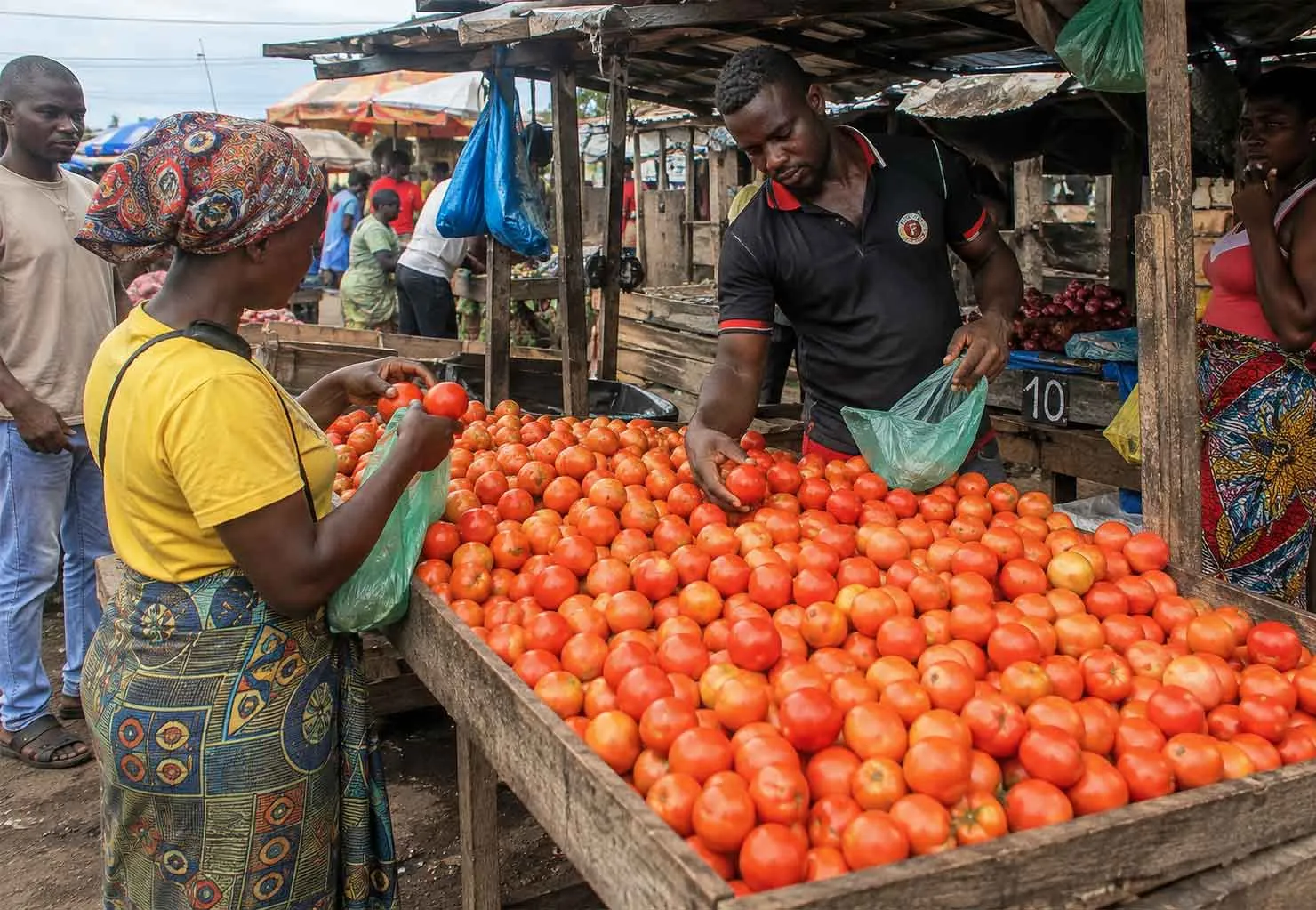
The fall was particularly noticeable in several food products. Tomatoes became 18.7% cheaper, while lettuce fell by 9.3%, cabbage by 9.0%, onions by 8.6% and kale by 7.2%. Reductions were also recorded in the price of coconut, by 2.4%, and live chicken, by 0.8%.
Together, these products took approximately 0.57 percentage points off the monthly price change, becoming decisive for the deflation seen in July.
Not everything, however, became cheaper. In the opposite direction, maize grain rose 5.3% and dried fish 3.3%. The price of chicken pieces increased by 2.7%, horse mackerel by 1.2%, fresh fish by 0.8% and cement by 0.5%. Full meals in restaurants also recorded a rise of 0.4%.
These increases together added approximately 0.19 percentage points to monthly inflation, offsetting part of the effect caused by the fall in the prices of other products.
July's trend comes after months marked by strong pressure on fuel. In April, a supply crisis, linked to the conflict in the Middle East, affected the Mozambican market. On 7 May, the price per litre of diesel jumped 45.5%, while petrol rose 12.1%, helping to accelerate inflation through to June.
With the reversal recorded in July, cumulative inflation since January 2026 stood at 5.12%, below the 5.4% seen up to June. Year-on-year inflation — which compares prices with the same month of 2025 — slowed slightly, from 7.51% to 7.48%.
Despite the monthly deflation, Transport and Food and Non-Alcoholic Beverages remain at the centre of the pressures on the cost of living. According to INE, these two divisions make the largest contributions to both cumulative and year-on-year inflation.
Compared with July 2025, prices in the Transport division rose by 14.87%, while those for Food and Non-Alcoholic Beverages advanced by 12.62%.
The behaviour of prices thus continues to fluctuate after a period in which Mozambique recorded eight months of deflation in less than a year and a half. Four of those falls occurred between April and July 2025, before prices resumed their upward trajectory from August.
Over the whole of 2025, prices rose by 3.23%, according to earlier INE data, a result lower than that recorded in 2024 and also below the Government's forecasts.
In the previous year, cumulative inflation for 2024 had stood at 4.15%, against 5.3% in 2023. Both figures remain well below the peak of almost 13% reached in July 2022, a period marked by a sharp escalation in the cost of living.
The Government had projected inflation of around 7% for 2025, a level also estimated for 2026.
In this scenario, monetary policy remains prudent. On 29 July, the Bank of Mozambique decided to keep the benchmark interest rate at 9.25%, acknowledging a reduction in liquidity in the national currency and anticipating a rise in inflation in the short term, before it returns to single-digit levels in the medium term.
“This decision is underpinned by the reduction in national-currency liquidity in the banking system, resulting from the increase in the reserve requirement ratio last May, notwithstanding the prevalence of high risks and uncertainties associated with the inflation projections,” announced the governor of the Bank of Mozambique, Rogério Zandamela.
The decision came out of the meeting of the Monetary Policy Committee (CPMO), held in Maputo. The body, which meets every two months, thus again opted to leave the rate unchanged.
The same decision had already been taken in March, after a cycle of 12 consecutive cuts over 24 months, which began in January 2024, and was repeated again at the end of May. With July's deflation, prices now give a signal of monthly relief, although the accumulated pressures in transport and food continue to mark the evolution of the cost of living in the country.


