
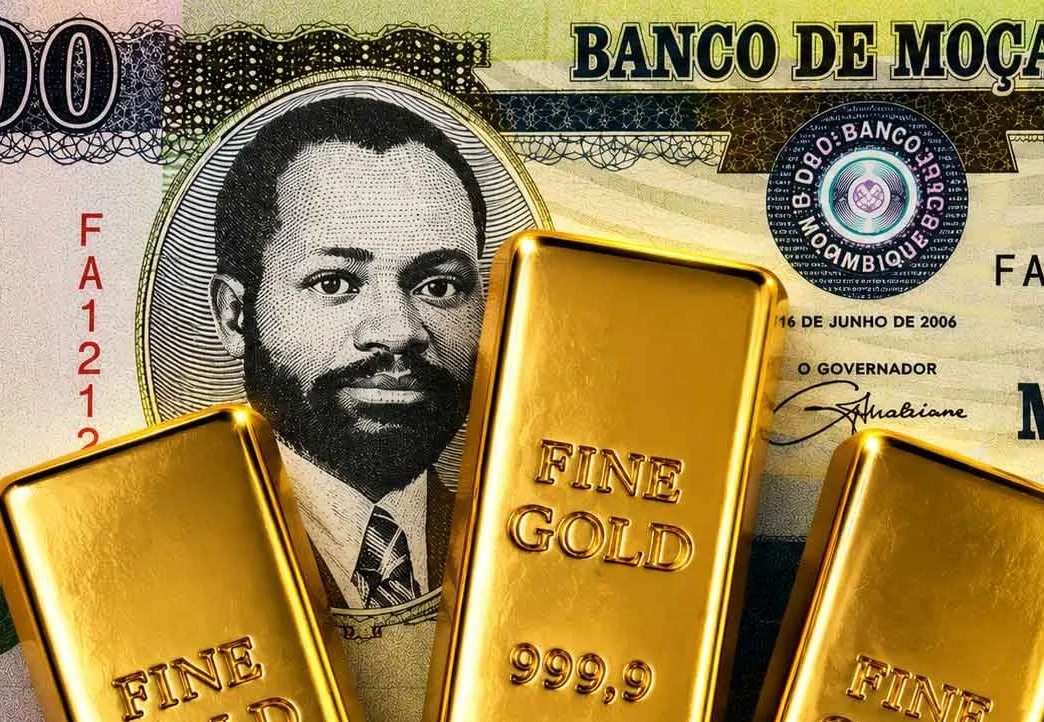
Mozambique's gold reserves soared in 2025, reaching the equivalent of 34.8 billion meticais, a 65% increase on the previous year, according to data released by the Bank of Mozambique. The jump represents a significant strengthening of the country's financial position at a time when gold has again taken centre stage in international markets.
The central bank's financial statements show that, in 2024, these reserves were valued at around 21.1 billion meticais. The new rise adds to the appreciation already recorded last year, when monetary gold increased by 27.1%.
The growth is not the result of a significant increase in the quantities held, but mainly of the surge in the international price of the precious metal. The physical stock remained relatively stable while the value of gold soared on global markets, driven by international demand and the search for assets considered safe in times of economic uncertainty.
The Bank of Mozambique's framework explains that the national foreign-exchange reserves are made up of gold coins, bars or ingots, fine silver and platinum, as well as special drawing rights, foreign currency and other assets expressed in freely convertible currencies.
At a time when gold is gaining strategic weight for the country, the Mozambican Government revealed in March the interest of investors from the United Arab Emirates in setting up the first gold refinery on national territory.
The proposal was presented during a meeting held in Maputo between the Minister of Economy, Basílio Muhate, and representatives of the Arab-Mozambican Chamber of Commerce. According to a statement released by the Ministry of Economy, the project envisages the use of modern technology and international certification standards.
The investment could mark a new stage for the Mozambican mining sector, allowing the country to add value to local gold production before export.
According to the same document, the United Arab Emirates businesspeople also expressed interest in investing in other sectors considered strategic for the national economy, namely agriculture, the food industry and fisheries, areas seen by the Executive as fundamental for diversifying the economy and creating jobs.


