
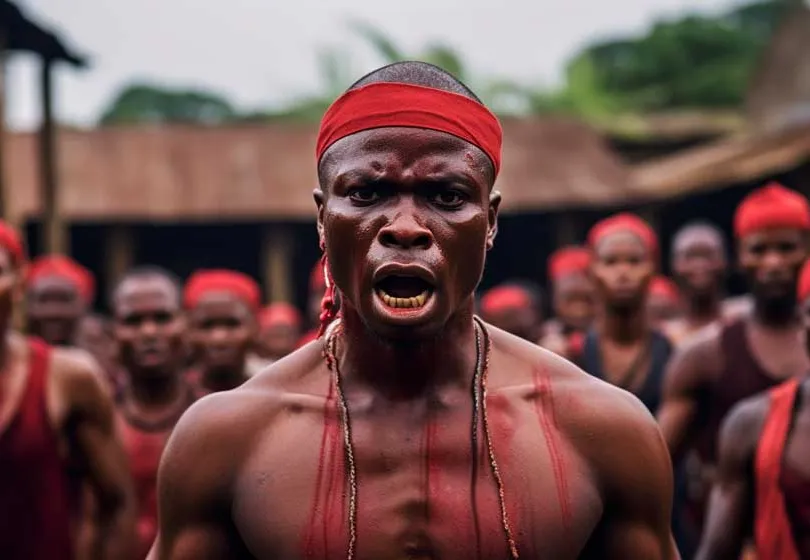
The history of Mozambique is punctuated by various legends and myths, among which the intriguing saga of the Naparamas stands out, a self-organised group that emerged in the 1980s, in the middle of the tumultuous “16-year war” between government forces and RENAMO. It was created by Manuel António, a traditional healer from the district of Pebane.
The Naparamas have their roots in central-northern Mozambique, more precisely in Zambezia province. In 1990, at the height of their existence, they numbered some three thousand warriors, whose action extended beyond Zambezia, reaching parts of Nampula province. Their presence intensely fuelled the imagination of the population who, living under the yoke of fear and deprivation, longed above all for peace.
Wielding bows, arrows and spears with mastery, the Naparamas sought to defend people and their villages from the attacks they were then suffering. It is said that they managed to liberate several settlements, but it was in the realm of the supernatural that their most striking reputation lay. Having previously undergone a “vaccine”, they were considered immune to bullets and were believed to possess impressive mystical powers, even being able to turn into animals and command nature, manipulating weather events such as storms and droughts.
The belief in their incredible capacity for metamorphosis and their alleged immunity to bullets cast a veil of mystery and respect around them. Despite the aura of dread that hung over them, they were revered as protectors of the weak and oppressed, a duality between fear and respect that gave them a fascinating complexity, reflecting the vicissitudes of the country's own history.
Contrary to what the Naparamas' main belief was based on, Manuel António died in combat, in Macuze, in Zambezia province, in 1991, which deeply shook the movement. With the leader gone, the Naparamas disbanded as quickly as they had formed.
Although the powers attributed to the Naparamas were pure fantasy, it is essential to understand that these stories represent a valuable part of Mozambique's oral tradition. They are accounts that offer us a unique and fascinating perspective on Mozambican life and culture, revealing how mystical beliefs and the struggle for freedom are inextricably intertwined in the identity of this country's people.


