
The use of insects in gastronomy has established itself as a global trend, not only in haute cuisine but also in traditional and sustainable food practices around the world. Their richness in protein, minerals and essential fatty acids, combined with a reduced environmental impact, has caught the attention of chefs and specialists. From caramelised crickets served as luxury desserts in Europe to grasshopper tacos in Mexico, insects show impressive versatility, transcending cultural barriers and reinventing palates. This new approach to food is not merely a fashion; it is a way of rethinking the future of global food.
When one speaks of Mozambican cuisine, the mind tends to conjure up images of chicken, fish and seafood dishes with the unmistakable flavours and aromas of coconut, peanut, piri-piri and other local seasonings. However, the consumption of insects, which is very old, is also a tradition. In various parts of the country, especially in the central and northern areas, insects occupy a special place in the local diet, being a rich source of protein and nutrients.
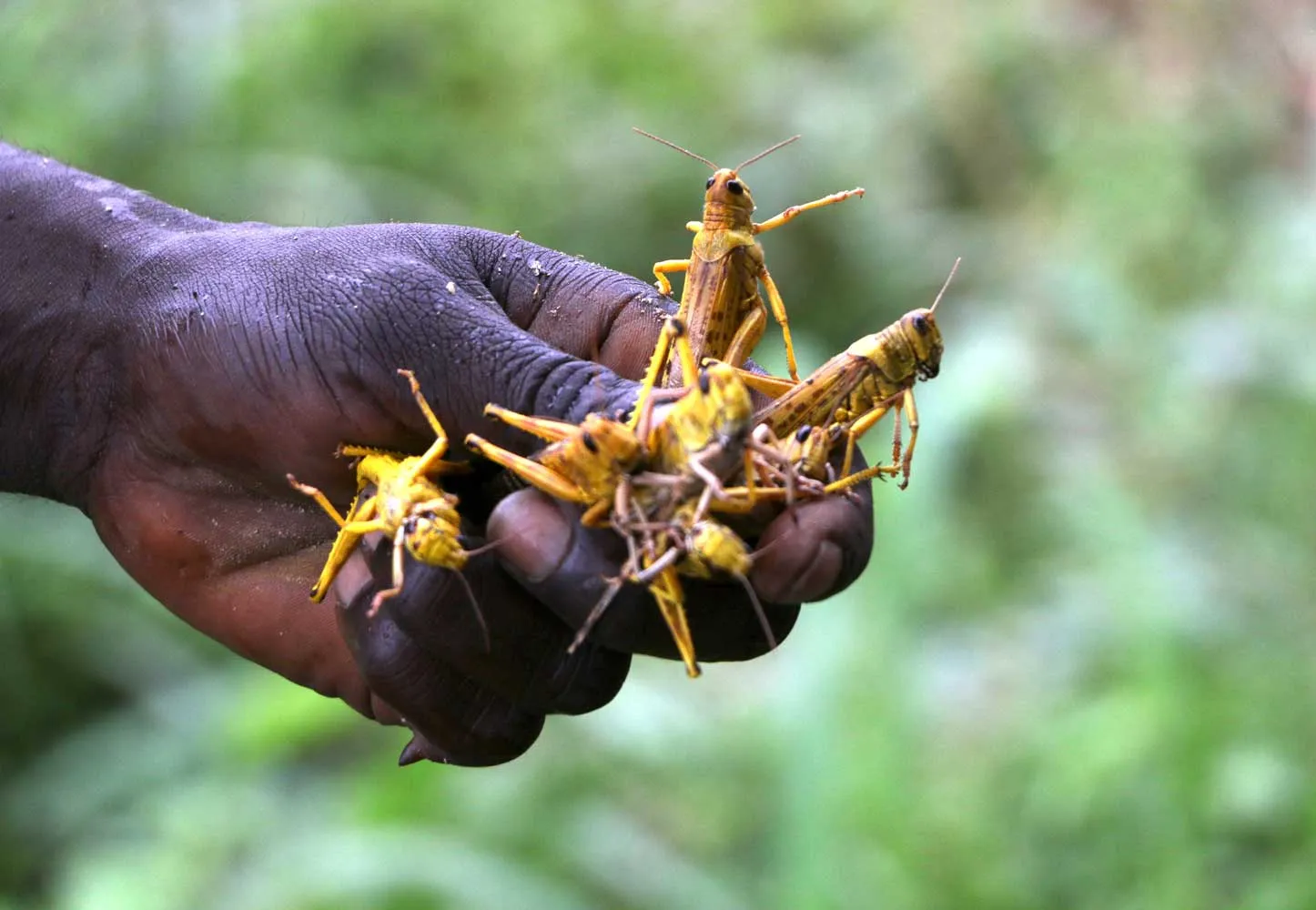
In Zambezia, for example, grasshoppers are a seasonal delicacy that awakens childhood memories and family traditions. During the rains, when the fields bloom and vegetation is abundant, grasshoppers are gathered, prepared and turned into real snacks. After careful cleaning, they are fried in hot oil and seasoned with salt and piri-piri, resulting in a crunchy, spicy taste experience that wins over curious and discerning palates. Some say the taste is close to that of prawns, and the delicacy is sometimes nicknamed the flying prawn. Considered by many a traditional delight, this food is a nutritious option, rich in protein and essential fatty acids.
Another fascinating example is termites, known locally as muchém. They are small winged insects that emerge mainly in the rainy season, when they form great clouds at dusk, a spectacle that many Mozambicans recognise immediately. Caught fresh, the termites are roasted on hot griddles or lightly fried in oil. The taste? Surprisingly velvety, with an earthy note reminiscent of toasted nuts. Moreover, muchém is appreciated for its nutritional qualities, being an excellent source of essential vitamins and minerals.
Why not try these delicacies and discover the taste of tradition?


