
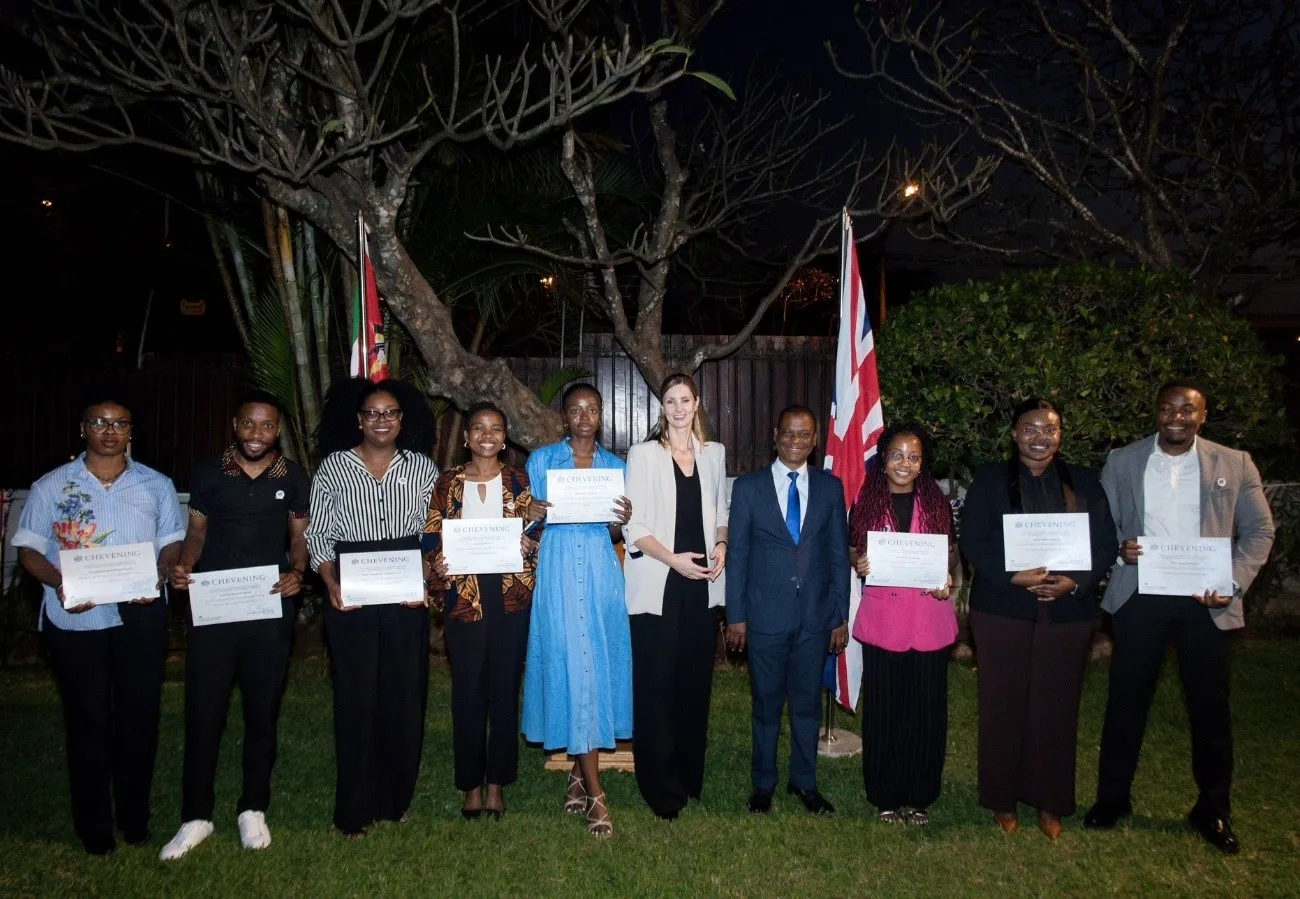
The British High Commission in Maputo this week bade farewell to eight young Mozambicans selected to attend Master's degrees in the United Kingdom under the prestigious Chevening Scholarship. The ceremony, full of symbolism and expectation, marked the start of an academic journey that will run through the 2025/2026 academic year.
The scholars, chosen for their outstanding leadership potential and commitment to Mozambique's development, will deepen their knowledge in key areas such as Urban Planning, Social and Development Studies, Bioscience and Natural Resources Law. These skills, it is believed, will be fundamental to driving sustainable transformation in the country.
The event was attended by the National Director of Higher Education, Pedro Comissal — representing the Minister of Education and Culture, Samaria Tovela —, as well as representatives of the Mozambique Scholarship Institute (IBE) and partners of the Chevening programme.
“These scholars represent the best of Mozambican youth,” stressed the British High Commissioner, Helen Lewis. “They were chosen for their leadership potential and commitment to the country. Chevening is not just an academic opportunity — it is a platform for creating leaders capable of driving positive change and strengthening ties between Mozambique and the United Kingdom,” she declared.
On the Mozambican side, Pedro Comissal underlined the importance of bilateral cooperation, saying that “the departure of this group represents a significant milestone in the relationship between the two countries. We believe these students will return better prepared to contribute actively to the national development process.”
Chevening is the British Government's global scholarship programme, funded by the Foreign, Commonwealth & Development Office (FCDO) and its partners. It is aimed at candidates with high leadership potential and a spirit of public service. The scholarship fully covers the costs of a Master's degree at leading British universities and provides privileged access to international networks and knowledge.
The president of the Chevening Alumni Association in Mozambique, for her part, highlighted the impact of the experience: “Being part of the Chevening community is transformative. These scholars will join a global network that will support them on their return to the country, where they will be able to apply what they have learned for the common good.”
Since its creation, the programme has benefited some 400 Mozambicans. Currently, 12 Mozambican students are at British universities, due to return next year.
Chevening has become a key part of British diplomacy, promoting shared values, leadership and a global network of former scholars committed to development. The United Kingdom's commitment to education and capacity-building strengthens its strategic partnership with Mozambique, aligning with pillars such as good governance, inclusive economic growth and climate resilience.


