
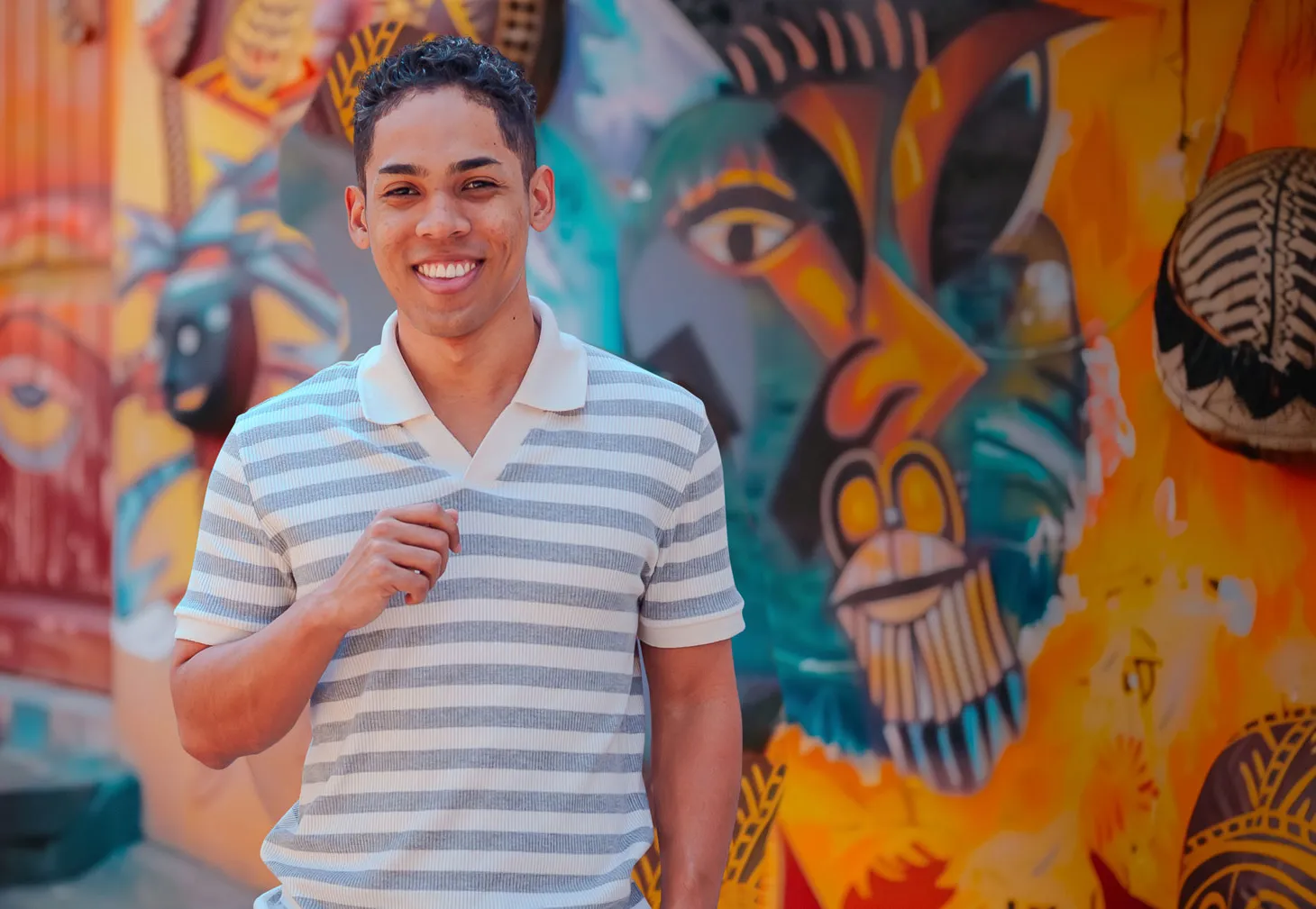
Xonguila had the pleasure of speaking to Noslen Araújo, a rising young talent in Mozambican comedy. At just 16 years old, with intelligent and authentic humour, he began his journey in stand-up comedy and quickly won over audiences. As well as being a comedian, Noslen is an influencer and storyteller, combining social observations and personal stories in a captivating way. His unique and innovative style has increasingly established him as one of the most promising talents in entertainment in Mozambique.
You began your stand-up comedy journey at the age of 16. Can you share a particular moment or event that cemented your passion for comedy?
Seeing one of my favourite comedians, Trevor Noah, perform live was undoubtedly one of the most memorable moments of my life. It was impressive to see how he managed to connect with an audience of more than twenty thousand people, making each person feel part of an intimate conversation. Trevor Noah taught me that being a comedian is not just about making people laugh, but also about being intelligent and offering fascinating perspectives on the world around us.
Your comedy style combines observational humour, personal stories and social commentary. How do you balance these elements to make sure your performances are both entertaining and thought-provoking?
What makes my stand-up shows entertaining and thought-provoking is that the material is based on my real life. That authenticity creates a special connection with the audience.
Connecting with the audience is fundamental to your work. Can you tell us about a moment when that connection was particularly strong or memorable for you?
Every moment I have spent on stage has been memorable for me. Each show not only celebrates the art of comedy in Mozambique but also offers an opportunity to make a positive impact on society.
You have already reached significant milestones in your career and worked with major brands. What impact have these collaborations had on your development as a comedian and your visibility nationally?
The message behind these collaborations with major brands is that they believe in me. That not only motivates me to keep pursuing my dreams, but also provides investment for my creative projects, giving my career a significant boost.
Your dream is to become an international comedian. What unique challenges do you face in trying to expand your audience beyond Mozambique?
One of the unique challenges I face when trying to expand my audience beyond Mozambique is that comedy is still in its early stages on the local scene. I feel I have a responsibility first to introduce Mozambican audiences to the art of stand-up comedy and impress them with my performances.
How do you see comedy in Mozambique having developed in recent years, and how does it compare with countries such as Brazil or Portugal? Are there any emerging talents we should look out for?
The trajectory of comedy in countries such as Brazil and Portugal is very similar to the path Mozambique is following. It has always started with dreamers and lovers of the art. Over time, comedy evolves and opens many new doors. We have several emerging talents in Mozambique. We should keep an eye on everyone who believes in their potential.
Comedy can be a powerful tool for social commentary. Is there a particular subject or social issue you think is especially important to address through humour?
There is no specific subject that is important for that. Every subject is better received when accompanied by humour. Laughter is a universally recognised language and an excellent way to communicate new information.
If you could perform anywhere in the world, where would it be, and why?
If I could do a stand-up comedy show anywhere in the world, it would be in New York, United States. I am passionate about the history of comedy in that city. Many legends and masters of comedy have performed on its stages, and I want to be one of them.
What has been the harshest criticism you have received about your work? How do you deal with that kind of criticism?
Incredibly as it may seem, I have never received criticism of my work. Perhaps because the community is still small, we treat one another with a great deal of consideration and compassion.
Do you think there are limits to humour? If so, what are they, and how do you navigate those boundaries in your performances?
I believe there are limits to humour. No comedian should offend anyone. I always try to respect everyone, because we share the same goal: to be happy.


