
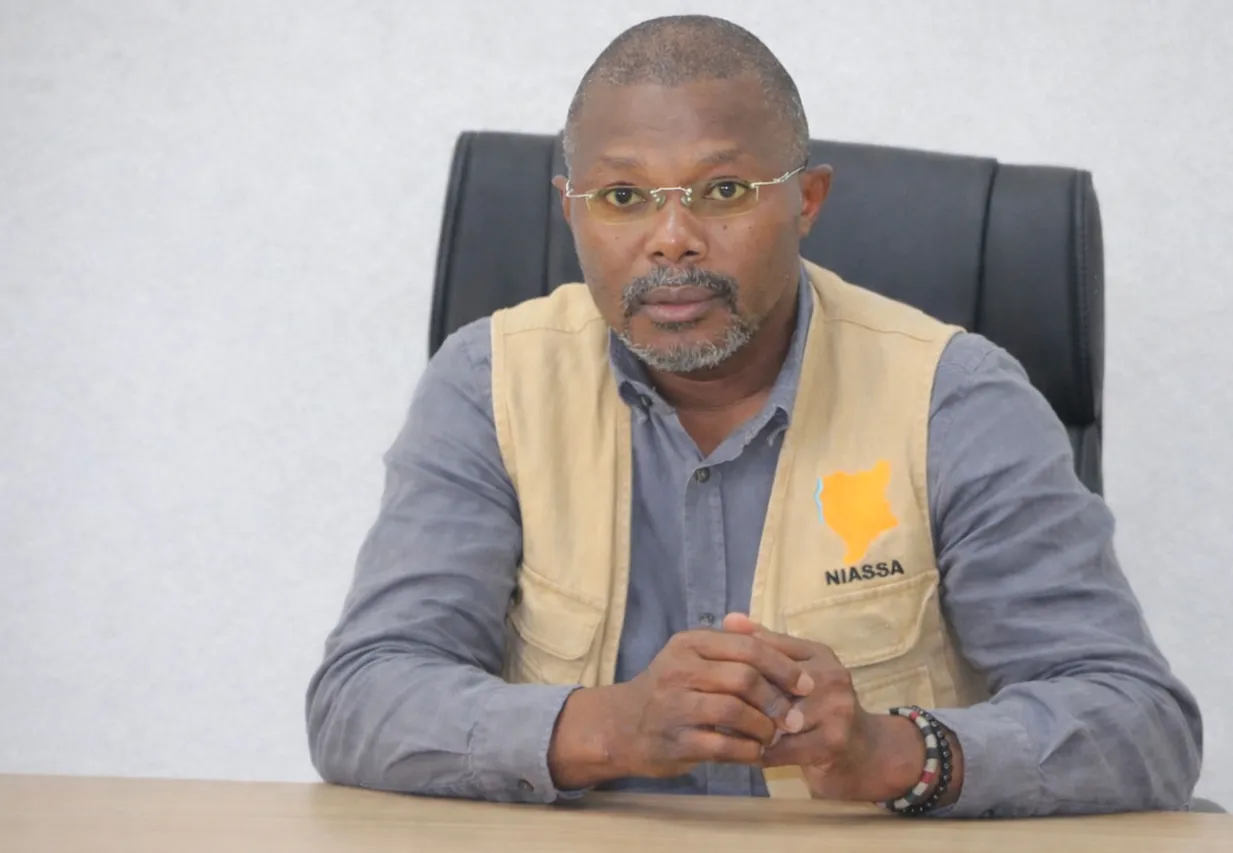
At a time when Niassa is seeking to establish itself as a strategic hub of development, FORIN 2026 reinforces the commitment to attracting investment and to making the most of the province’s agricultural potential. In this interview, Mauro Pius, the event’s spokesman, takes stock of this second edition and points to the ways of turning opportunities into concrete growth.
FORIN 2026 marked the second edition of the Niassa Investment Forum. What main objectives guided this edition?
Overall, the central aim of this event was, fundamentally, to attract public and private investment and to consolidate strategic partnerships for the development of agriculture and agro-processing, driving sustainable industrialisation and positioning Niassa as the agricultural capital of Mozambique.
What progress has been made since the first edition, and what concrete results can already be pointed to?
Since the first edition, held in 2023, important milestones have been reached, above all with regard to the approval of nine new projects, namely Niassa Multi-Service Company, Macadamia do Planalto, New Star Mining Construção, Zimatha Timber and General Supplies, M-Canturk, Mining Hua Building Materials Co., Golden Dream Mining, Mozambique Mining Field PTY and Read Soil Agriculture and Trading. All these projects are geared towards agriculture and industry, with an overall value of approximately 18.5 million US dollars, and are capable of generating about 320 jobs.
Niassa has been presented as one of the provinces with the greatest economic potential in the country. What opportunities were highlighted during FORIN 2026?
Some of the main opportunities highlighted within FORIN 2026 were the geostrategic location of Niassa province; its potential in terms of vegetation cover, being the largest and least explored province in the country; the available arable land, around 10.3 million hectares (of which around 4.8 million hectares are available and around 222,500 hectares have DUATs, the land-use rights, that could be turned into partnerships); abundant agricultural production; the availability of three river basins, the Rovuma, the Lúrio and the Zambezi; and road infrastructure.
Which strategic sectors were in the spotlight at this edition, and which show the greatest growth potential?
The strategic sectors in the spotlight at this edition were agriculture and agro-processing. In terms of growth potential, agriculture has been showing signs of progress, although only tentatively.
What profile of investors did you manage to attract to FORIN 2026?
With this event, the province managed to attract investors with high potential, in terms of financial capital, to invest in large-scale agriculture and agro-processing.
How does FORIN 2026 intend to turn Niassa’s potential into concrete investment?
Through the promotion and widespread adoption of large-scale agriculture and the installation of agro-processing capacity at local level, diversifying the local economy and, consequently, promoting the creation of more jobs.
What direct benefits could emerge for local communities from holding this event?
We believe that, with this event, and as we said beforehand, FORIN 2026 aims to attract more investment, which should give greater momentum to the development of our province, for the common good.
What structural projects or specific initiatives were presented during FORIN 2026?
Throughout this event, which was attended by various bodies and personalities, a range of projects were presented within the framework of our province’s opportunities. Some of the main structural projects focused on the need to promote and expand large-scale agriculture and commercial agriculture, as well as to install agro-processing capacity at local level, with the aim of increasingly diversifying our economy and creating more jobs.
How important is FORIN 2026 in positioning Niassa within the national economic landscape?
It is our understanding that FORIN 2026 was one more opportune space for Niassa to focus on and reveal, once again, its great potential and opportunities, to anyone who truly has an interest in investing in this part of our beautiful Mozambique.
What are your expectations for the medium- and long-term impact of FORIN 2026 on the province?
As this is, once again, a space in which Niassa will place itself on the international stage with regard to its potential and opportunities, our expectations include the sharing of experiences from various parts of the country and the world on the ways agriculture is practised in its various dimensions, with an emphasis on large-scale agriculture and commercial agriculture, as well as experiences of the mechanisms for practising agro-processing at local level.


