
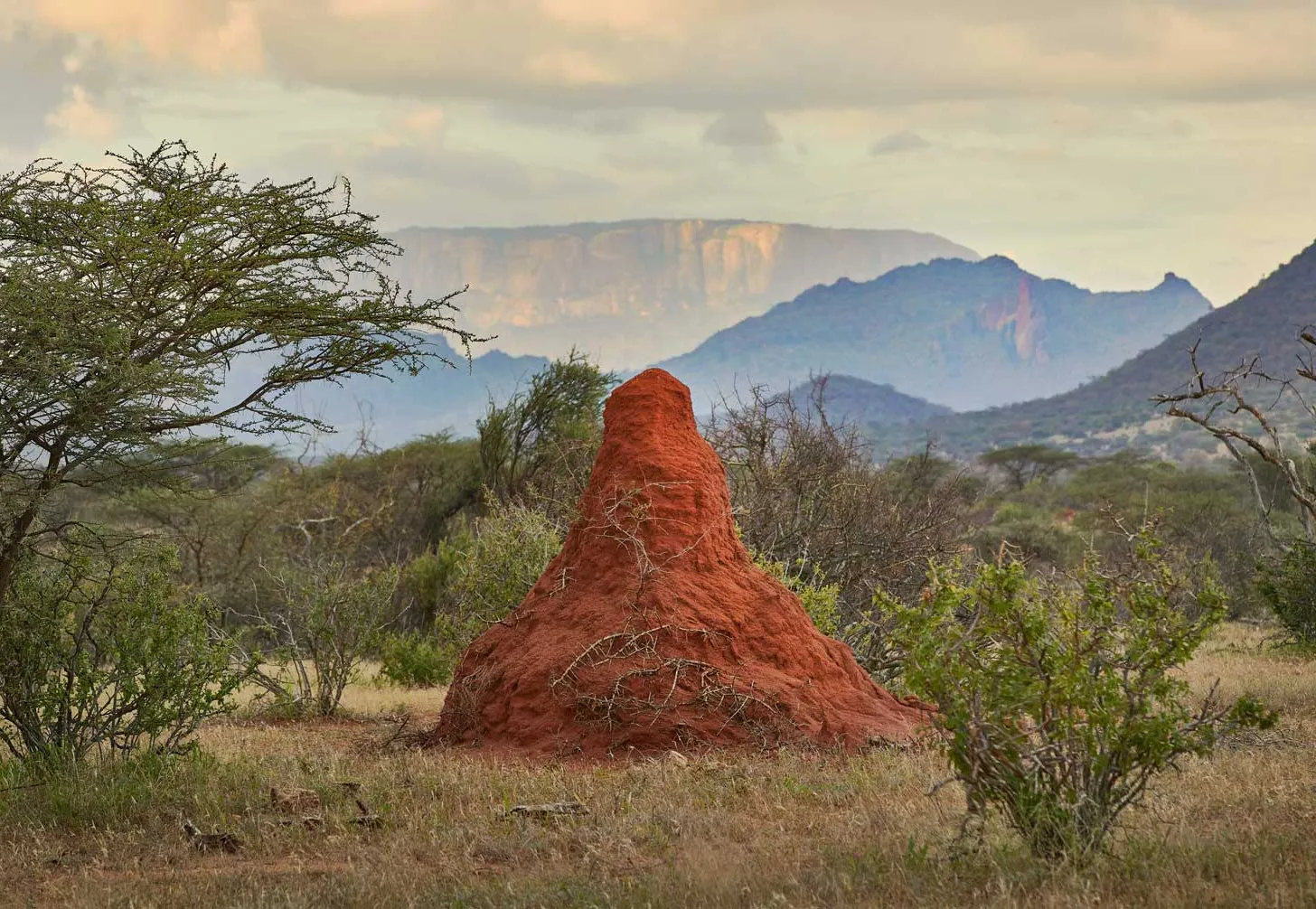
All over Mozambique, mysterious structures emerge that are the product not of human engineering but of the tireless labour of termites, insects also known as cupins or, locally, muchém. These complex formations – termite mounds, or muchém mounds – draw attention not only for their shape and stature, which can be impressive, but also for the crucial role they play in the ecosystems in which they stand.
Far from being mere accumulations of earth, termite mounds are masterpieces of natural engineering and architecture whose complexity challenges our understanding. Each mound is the result of the collective effort of millions of termites, who build internal labyrinths of tunnels and chambers for various purposes, from housing to ventilation and temperature regulation. Their size varies, and they can reach remarkable heights on Mozambican soil, natural testimonies to the sophistication and efficiency of those tiny yet ingenious builders.
Termites play an ecological role of incalculable value. Through the process of decomposing dead organic matter and reintegrating it, they contribute significantly to the soil's nutrient cycle, enriching it and maintaining its fertility. In addition, the tunnels they create promote soil aeration and water infiltration, which are fundamental to the health of the ecosystem.
The presence of these structures is not a feat of termites that can be seen in isolation. It is, rather, a manifestation of the interconnectedness of wildlife in Mozambique, since termite mounds shelter not only termites but also a diversity of other species. From small mammals to reptiles and a variety of insects, many find refuge and food in and around the mounds, in a coexistence that underlines the importance of termite mounds as ecological pillars, supporting a rich biodiversity. It is also worth saying that these termites form part of the diet of some Mozambican communities.
Despite their ecological and nutritional importance, and the fascination they inspire, termite mounds face threats arising from human activities, such as agricultural expansion and urban development. It is imperative to conserve these structures and the ecosystems they support, for they offer the opportunity both to protect Mozambique's unique biodiversity and to better understand the complex ecological processes that sustain life on Earth. By valuing and protecting muchém mounds, we help maintain the health of the planet, ensuring that future generations too can marvel at these fascinating works of nature and benefit from them.


