
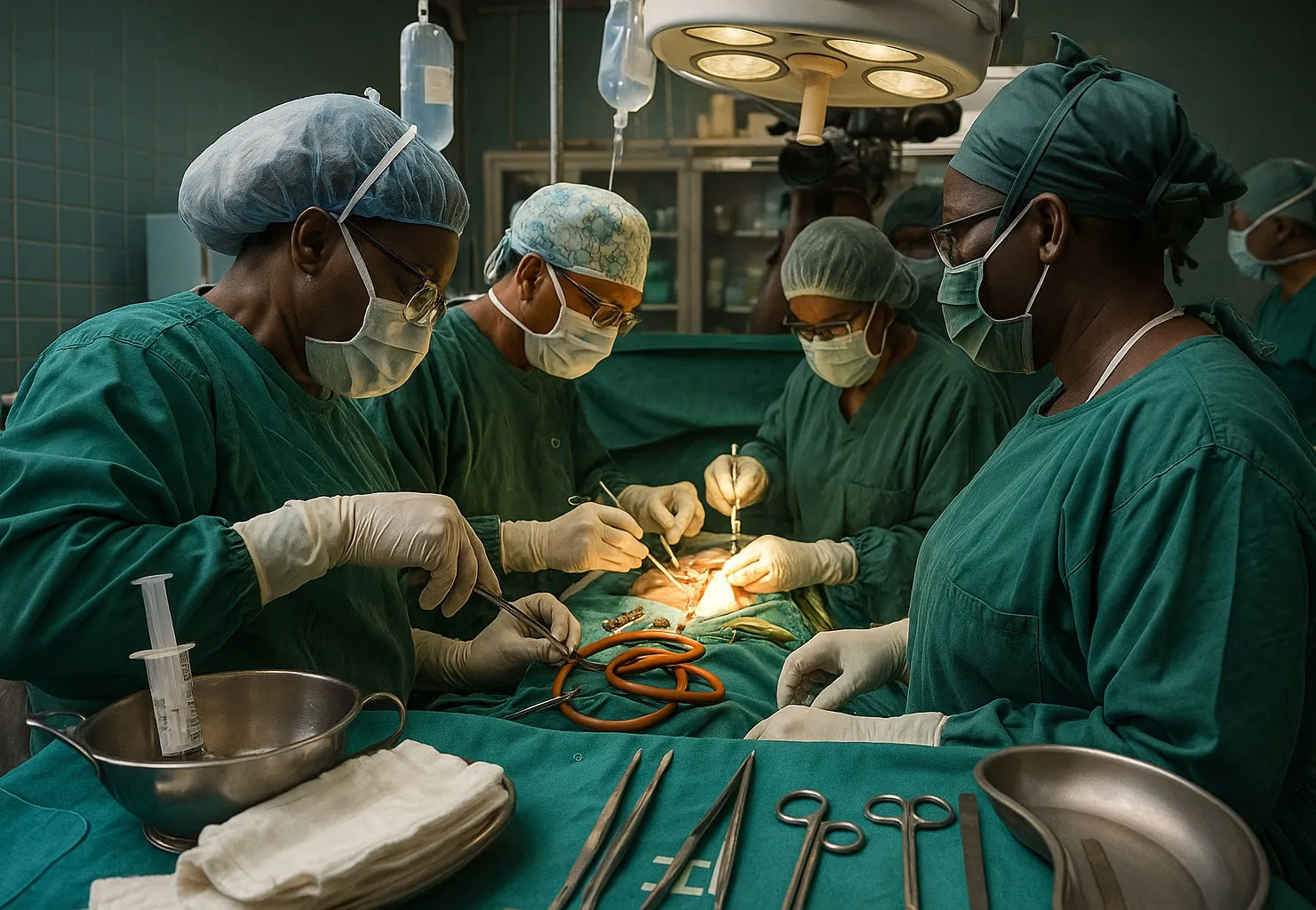
Mozambique wants to speed up training in the face of a shortage of doctors
Mozambican health authorities announced today their intention to accelerate and expand the training of specialist doctors, with a particular focus on surgeons, in a direct response to the shortage of professionals that continues to compromise access to surgical care in several provinces of the country.
"The ideal ratio is to have 20 surgeons per 100,000 inhabitants and we are well below that", said Matchecane Cossa, head of the National Surgery Programme, on the sidelines of a meeting of the Technical Group for the Development of the National Plan for Surgery, Obstetrics and Anaesthesia, held in Maputo.
According to Cossa, provinces such as Cabo Delgado, Niassa, Inhambane, Gaza and Manica have the lowest numbers of surgeons nationally, with an average of only one to two professionals per region. In addition, the imbalance between surgeons and anaesthetists makes the situation worse. “An operation involves the doctor and the anaesthetist. At the moment, there is one anaesthetist for every ten surgeons in these provinces”, he explained.
Currently, the Mozambican health system still depends heavily on the support of foreign doctors, of various nationalities, who provide essential surgical services. “But we want to reach the point where we, Mozambicans, can provide our own surgeons, anaesthetists and obstetricians”, the official stressed, advocating a sustainable and self-reliant response.
One of the central objectives is to draw up a national plan with clear targets, aligned across all players in the surgical sector, so that the country can retain and train its own professionals. “We have often transferred patients to countries such as India and South Africa to have surgery. But why can’t we develop that capacity here at home? Nothing is stopping us”, said Cossa, pointing out that the country has trained and qualified nurses to support the process.
The transfer of patients between hospital units also represents a significant budgetary burden. “We have patient transfers to Maputo, Beira or Nampula, and that entails high costs because of the lack of local capacity”, he added.
At present, Maputo leads in the training of specialists, with a more advanced centre. However, provinces such as Sofala, Nampula and Zambézia have already begun their own training programmes. The challenge is to ensure that this expansion also reaches the most deprived provinces, such as Cabo Delgado and Niassa. “We want training to be accelerated and truly comprehensive”, he argued.
Mozambique’s health sector also faces structural difficulties, aggravated by strikes and work stoppages over the past three years, driven by demands over pay and working conditions from doctors and other professionals.
According to the latest data from the Ministry of Health, the country currently has 1,778 health facilities: 107 posts, three specialised hospitals, four central hospitals, seven general hospitals, seven provincial hospitals, 22 rural hospitals and 47 district hospitals.


