
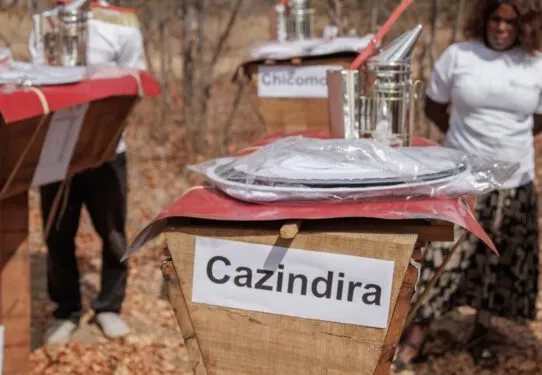
In an initiative that combines environmental conservation with community development, the Mozambican authorities have launched an ambitious project to produce about 100 tonnes of honey a year in the buffer zone of Magoé National Park, in the central province of Tete.
Called the Community Economic Empowerment Project, the programme has a budget of 20 million meticais (approximately 313,000 dollars) and has the support of the Zambezi Valley Agency. The funds are earmarked for the purchase of 4,000 beehives, training for local communities and the installation of a honey processing unit.
According to Nelson António, Director of Technical and Financial Assistance at the Zambezi Valley Agency, beekeeping will play a dual role: besides generating sustainable income for the population, it will help reduce conflict between humans and wild animals, particularly elephants.
“Elephants are afraid of bees. Studies show that they avoid areas with hives, as stings in the eyes, trunk and inside the ears are extremely painful”, António explained.
The strategy consists of installing hives suspended from fences around the machambas (smallholdings). When an elephant touches the fence, the bees are disturbed and the animal moves away, reducing the destruction of crops – one of the main sources of conflict between communities and wildlife.
Nelson António also stressed that beekeeping represents a viable economic alternative: “The production of honey and other derivatives with commercial value reduces direct dependence on the park’s resources, such as hunting, firewood gathering or cultivation within protected areas. With sustainable economic opportunities, there is less incentive for illegal hunting.”
Present at the launch, the Secretary of State for the Sea, Maritime Affairs and Fisheries, Momade Juízo, highlighted that the project is expected to benefit about 500,000 households. He also stressed that this initiative fits within the government’s priorities, which is committed to biodiversity conservation as an engine of community development.
“We believe that, by promoting sustainable livelihoods in conservation areas, we will be building communities that are more resilient and committed to protecting our natural resources”, concluded Juízo.


