
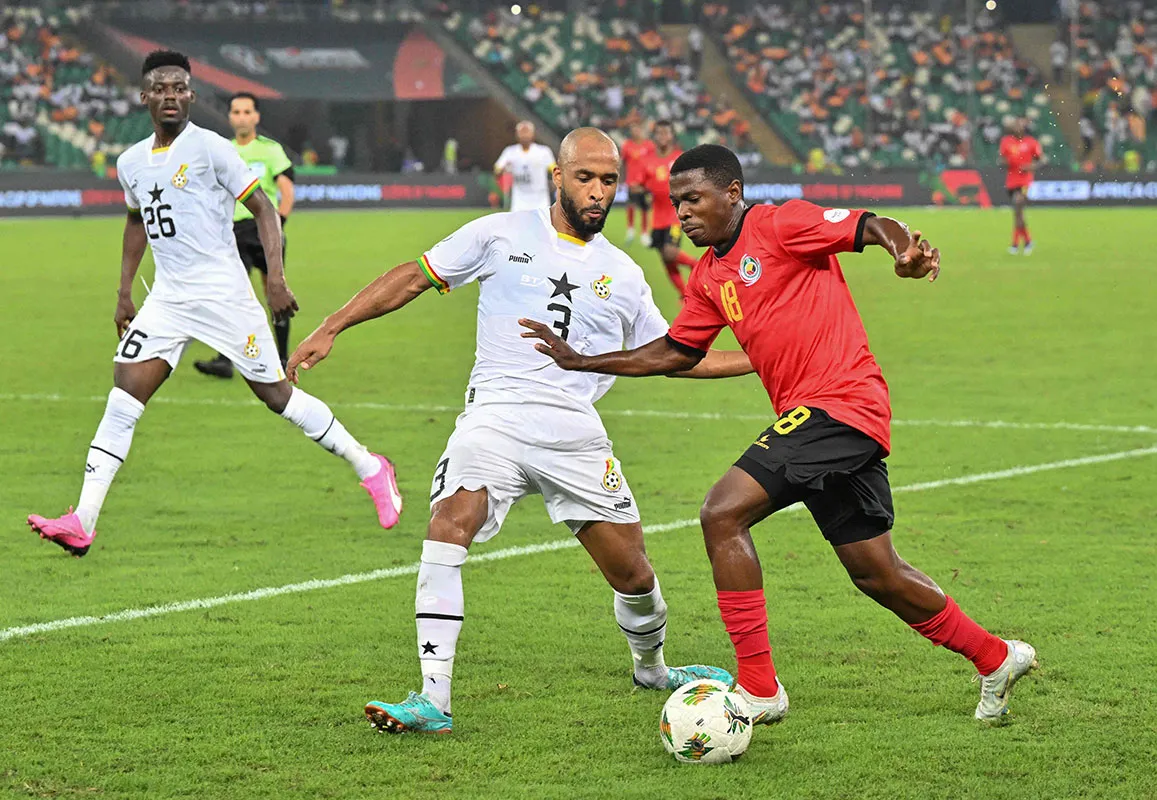
At the most recent edition of the Africa Cup of Nations (AFCON) 2024, the Mozambican national football team put in a performance that will undoubtedly mark a turning point in its history. With a balanced mix of young talent and experience, the Mambas demonstrated not only their ability to compete at the highest level, but also their potential for future achievements on the international stage.
From the start of the tournament, the team, led by the astute and visionary coach Chiquinho Conde, relied on a flexible tactical approach, able to adapt to the different challenges it faced. This tactical versatility, combined with unwavering discipline on the pitch, allowed Mozambique to exceed expectations and advance through the stages of the competition, leaving a trail of hope and pride throughout the country. And, despite the setback of the defeat to Cape Verde, Mozambique drew 2-2 with two of Africa's best national sides, Ghana and Egypt. The Mambas managed to display quality football, notable for their defensive solidity and quick counter-attacking, making the most of the speed and technique of their forwards. Standout players included Bruno Langa, Reinildo Mandava, Mexer, Alfons Amade, Ricardo Guimarães and Geny Catamo, among others. This performance not only reinforced the team's standing on the African scene, but also served to inspire a new generation of Mozambican footballers, who now see in their national coach a model of success to follow. Mozambique's participation in AFCON 2024 transcended the purely sporting aspect, becoming a symbol of unity and determination. In every match, the team showed that, even against renowned opponents, collective strength and hard work can overcome seemingly insurmountable obstacles.
Looking to the future, it is impossible not to nurture the hope that this generation of talent can lead Mozambique to its first qualification for the football World Cup in 2026. With continued development work and technical improvement, combined with the unconditional support of their fans, the Mambas have every chance of turning this dream into reality. Beyond World Cup qualification, the legacy of this AFCON performance could be the consolidation of Mozambique as an emerging force in African football, able to compete on equal terms with the continent's more traditional sides. This positive outlook should encourage investment in sport, from youth level to elite performance, thus guaranteeing a bright future for Mozambican football. All that remains is to keep supporting the Mambas, in the certainty that the road to success is only just beginning. The nation is united in support of its team, with eyes fixed on the horizon of 2026, where the dream of an entire nation may finally come true.


