
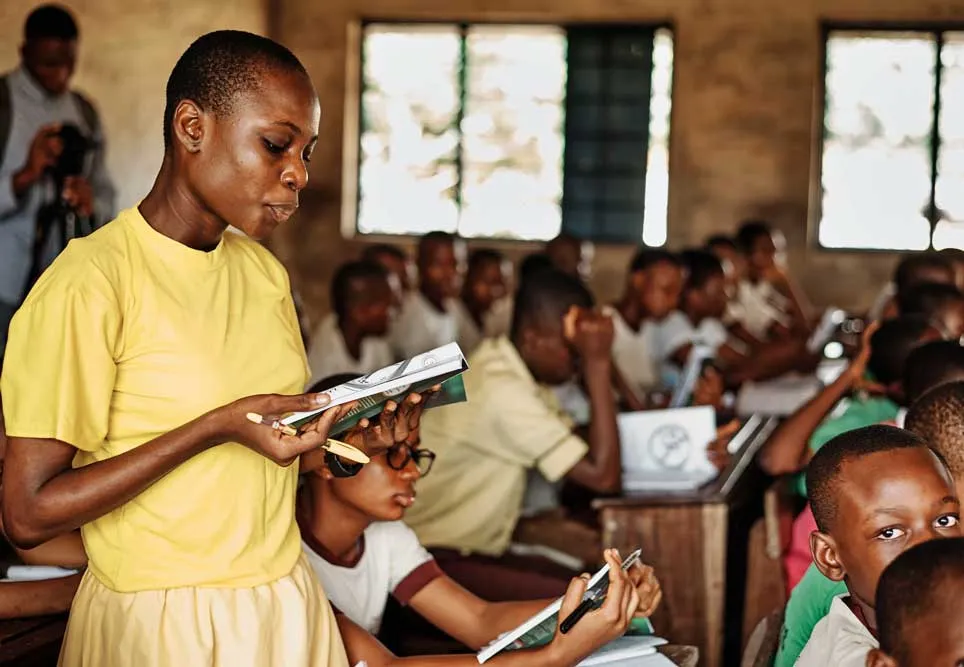
With an eye on Mozambique's educational horizon, the Government of the United States of America, through its Agency for International Development (USAID), is making an ambitious move in the fertile ground of bilingual education. It is an educational programme that, within five years, has the bold goal of expanding to more than 4,000 primary schools in Cabo Delgado, Nampula, Niassa and the provinces of Zambézia.
In the complex landscape of Mozambican education, there are sombre obstacles that hinder progress: limited access to quality education in remote areas, teachers with very poor training and latent gender disparities, challenges that this programme aims to tackle.
The SABER project, an acronym that evokes wisdom and which stands for the programme to Improve Learning Outcomes in Primary Education, is allied with Mozambique's Ministry of Education and Human Development (MINEDH). More than a mere programme, SABER presents itself as the largest bilingual education model in the country, with a vision of reaching 2.2 million students eager for knowledge.
At the heart of this project are the pillars of training the masters of education - teachers and school principals. There is also a deep concern with improving learning materials, a passionate encouragement to use reading diagnostic tools, and a vehement call for the involvement of parents and the community in building education.
The Director of the USAID Mission in Mozambique, Helen Pataki, expressed the US Government's unwavering commitment to expanding access to education. At the core of her message was the determination that students should learn to read more quickly in their own language, which, she said, will enable a faster understanding of numbers and more comfortable communication, minimising school dropout.
The delivery of SABER is the work of World Education and a consortium of local partners that includes: Associação Progresso, MEPT – Movimento Educação para Todos, NANA and UATAF. Coordination is meticulous, and USAID's deep investment, which amounts to $60.4 million in this programme, is firmly guided.
Over the next five years, USAID's gaze will remain attentive, with an investment of more than $150 million in education and capacity building. Support for education is not a mere chapter; it is a pivotal part of the US Government's assistance to Mozambique, which, in partnership with the Government of the Republic of Mozambique, provides more than $800 million in assistance annually, in a narrative of growth, economic prosperity and stability.


