
The Government of Mozambique has approved an ambitious energy transition strategy, with a projected budget of 80 billion dollars, aimed at reducing the country's dependence on fossil fuels. This strategy, which runs to 2050, has as its main objective the sustainable development of the Mozambican economy, with a strong focus on attracting international financing.
As reported by the Bloomberg agency, the first steps of this strategy, approved on 21 November by the Council of Ministers, include the addition of 2,000 megawatts of hydroelectric capacity by 2030. This increase in hydroelectric capacity will be complemented by the expansion of the transmission grid, thus facilitating the integration of more renewable energy sources.
The full programme will be presented by the President of the Republic, Filipe Nyusi, at the upcoming United Nations Climate Change Conference (COP28), to be held from 30 November to 12 December in Dubai. This announcement is eagerly awaited, as it will position Mozambique as a potential global leader in development aligned with climate goals.
Mozambique's Energy Transition Strategy highlights the country's vast potential in natural and energy resources, underlining the importance of sustainable growth that at the same time contributes to the global reduction of greenhouse gas emissions.
In the African context, Mozambique is following in the footsteps of other nations seeking international financing for their energy transition strategies. Senegal, for example, recently secured climate financing of 2.7 billion dollars to support its own transition.
Marcelina Mataveia, Mozambique's national director of energy, revealed that talks have already begun with countries such as Belgium, Germany, the United Kingdom and the United Arab Emirates on financing this ambitious plan, the details of which will be revealed at COP28.
Despite being one of the poorest countries in the world, Mozambique is rich in natural resources, including hydroelectric, wind, solar and natural gas, as well as having significant reserves of lithium and graphite, crucial to the green transition.
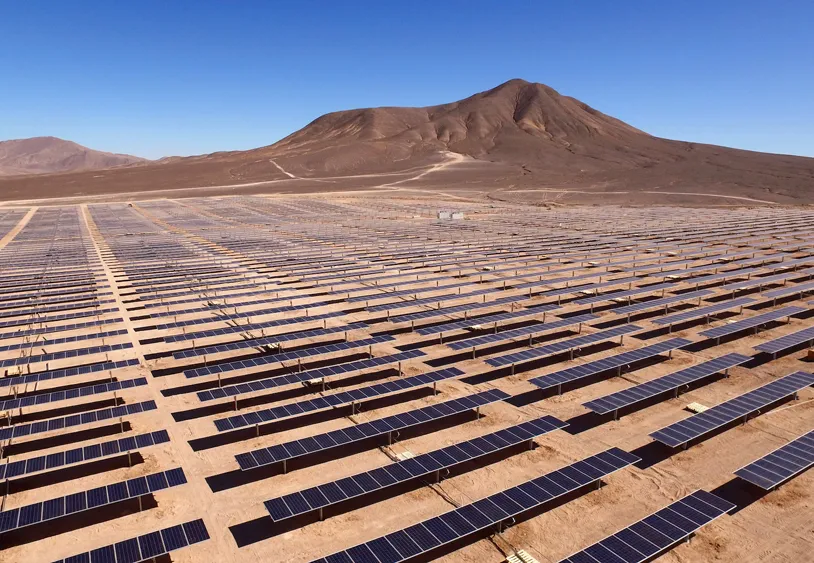
The Mozambican government also announced its intention to hold auctions for the construction of private solar and wind power plants, as well as the creation of “green industrial parks” for mineral processing. In addition, it intends to increase the proportion of ethanol and biodiesel in petrol and diesel, encouraging the use of electric and compressed natural gas vehicles.
With these measures, Mozambique aims to achieve universal access to electricity by 2030, marking a significant step on its journey towards a more sustainable energy future that is less dependent on fossil fuels.


