
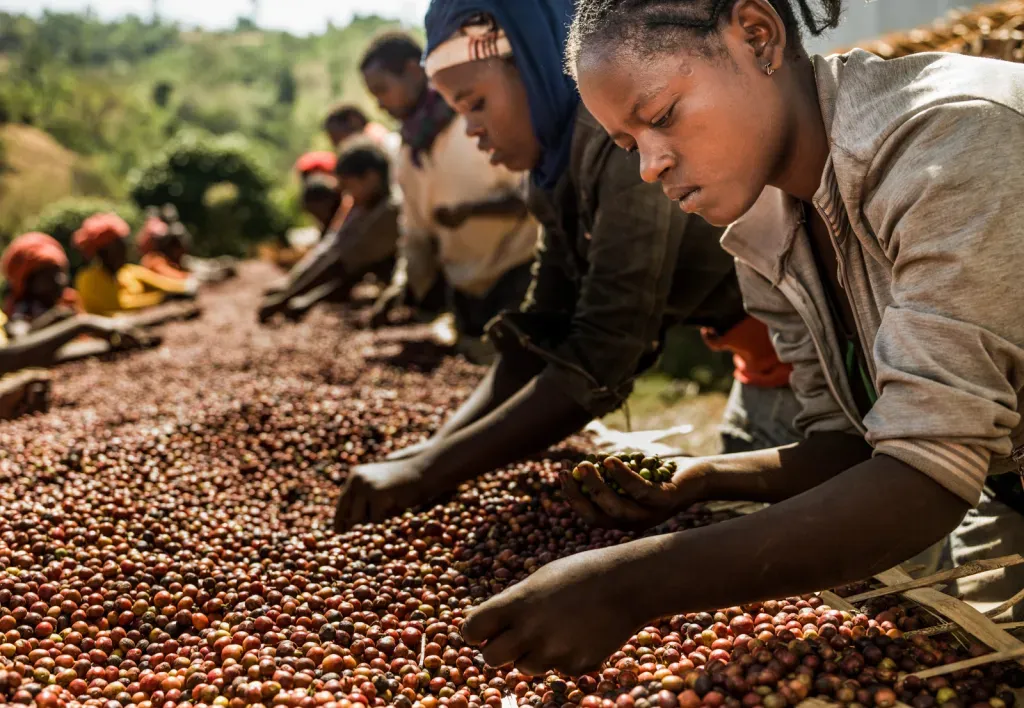
The promotion of coffee growing in Mozambique is a strategic vector for increasing economic competitiveness, with an emphasis on enhancing and optimising the value chain. During the event marking International Coffee Day, organised by the Ministry of Agriculture and Rural Development (MADER), Tiago Luís, head of the Rural Technologies Department in the National Directorate for Local Economic Development, stressed that the initiative aims not only to strengthen sustainability but also to equip producers to meet the demands of global markets. Experts invited to the event emphasised good agricultural practices and productive inclusion policies as pillars for the advancement of the sector.
Mozambique’s membership of the International Coffee Organization (ICO), formalised approximately a year ago, has consolidated access to technical assistance networks and more demanding markets. The provinces of Manica, Sofala and Cabo Delgado are emerging as the main producing regions, contributing significantly to the national economy. The ICO also promotes the implementation of international quality and sustainability standards, which are indispensable if Mozambique is to establish itself as a relevant player in the global coffee industry.
The consolidation of coffee as a strategic crop has had the support of international partnerships that provide financial resources, technical support and knowledge exchange. These initiatives make it possible to build the capacity of smallholders through comprehensive training programmes, logistics and access to innovative technologies, promoting the productivity and quality of the coffee produced. Moreover, the government has encouraged cultivation in areas that were previously marginalised, contributing to the socio-economic inclusion of rural communities.
The development of the coffee sector also places coffee alongside natural resources of high strategic value, such as oil, natural gas, gold and sugar. Such economic diversification is essential to increase the country’s resilience to fluctuations in the global market, creating opportunities to generate sustainable income for thousands of Mozambican families. The national strategy not only increases economic competitiveness but also positions Mozambique as a model of sustainability and social inclusion in the global agricultural context.
In this context, coffee emerges as a catalyst for economic transformation, with the potential to have far-reaching impacts by integrating sustainable practices, increasing productive efficiency and consolidating international partnerships that strengthen the country’s competitiveness.


