
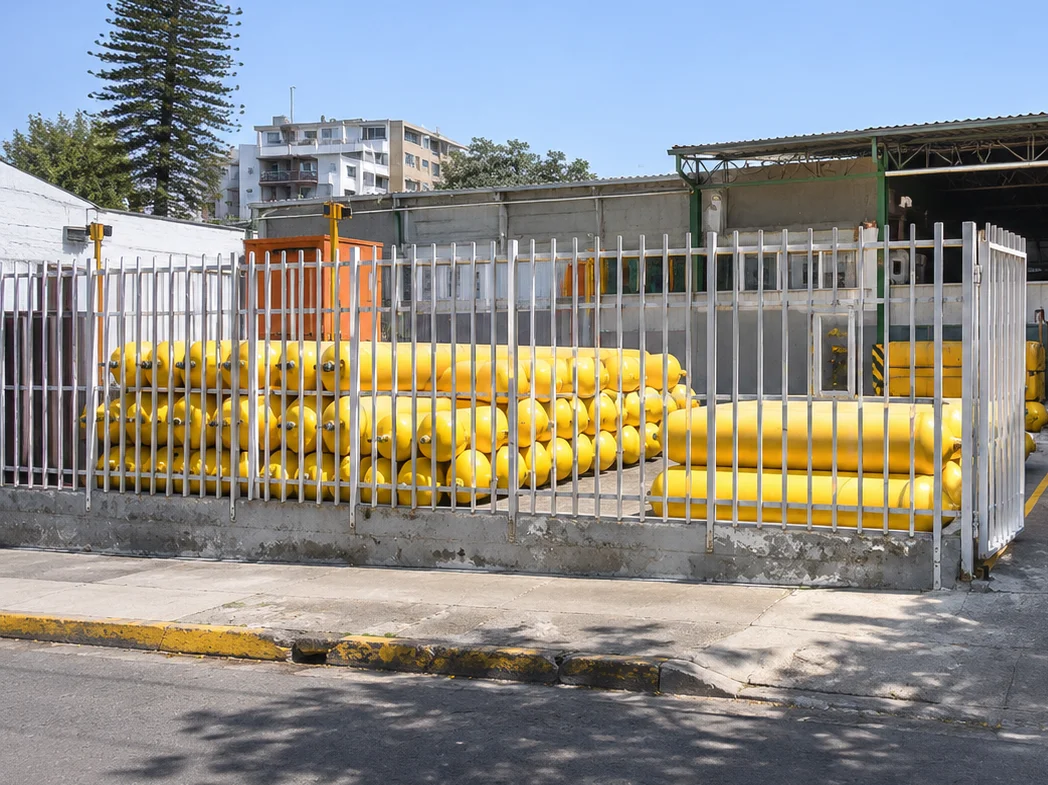
The Mozambican government is moving ahead with plans to establish eight new compressed natural gas (CNG) filling stations across the country's three southern provinces, in an effort to reduce dependence on conventional fuels and find alternatives to the crisis that has disrupted transport, agriculture and household life. The facilities are expected to become operational in 2027.
The announcement was made on Wednesday, 4 November, by the Minister of Mineral Resources and Energy, Estêvão Pale, during a parliamentary session in which MPs raised questions about the difficulties in securing petrol and diesel supplies across the country.
According to the minister, the project forms part of a broader strategy to expand access to natural gas for vehicles, supported by investment in new refuelling infrastructure. Of the eight planned stations, three will be established in Maputo city and province, two in Gaza and a further three in Inhambane.
“The Government is promoting wider access to natural gas for vehicles through the implementation of a structured programme that includes financing the expansion of natural gas refuelling infrastructure,” Estêvão Pale explained.
The initiative also includes measures to increase the use of natural gas-powered buses in public transport, as part of efforts to diversify the energy sources used in the transport sector and ease pressure on conventional fuel consumption.
However, the minister acknowledged that expanding the natural gas refuelling network would not provide an immediate solution to the difficulties facing the country.
“It is important, however, to make clear that these alternatives will not immediately resolve the current supply constraints,” he cautioned.
Government steps up measures to secure fuel supplies
While preparing medium-term energy solutions, the government is seeking to contain the effects of a crisis that continues to affect various sectors of the economy, with direct consequences for households, transport operators and agricultural producers.
Among the measures introduced is a temporary ban on the re-export of fuels intended for domestic consumption, although the regular transit of petroleum products to other countries remains permitted.
The government has also decided to strengthen the operational capacity of Petróleos de Moçambique (Petromoc), enabling the state-owned company to release additional fuel supplies and serve retail operators, regardless of whether they have existing contracts with other distributors.
“We have strengthened the operational capacity of our company, Petromoc, enabling it to make additional volumes of fuel available and supply retail operators, irrespective of whether they have existing contracts with other distributors,” the minister said.
At the same time, loading operations have been intensified at the country's four main fuel terminals, located in Maputo, Beira, Nacala and Pemba.
According to Estêvão Pale, these facilities may extend their operating hours and carry out operations on Saturdays whenever necessary, in order to speed up distribution and minimise supply difficulties.
Fuel crisis triggered queues and police deployment
Fuel shortages reached particularly critical levels between April and May, when dozens of vehicles formed queues outside filling stations that still had petrol and diesel available.
The pressure on filling stations prompted an increased deployment of officers from the Rapid Intervention Unit (UIR) of the Police of the Republic of Mozambique, tasked with maintaining security and managing the influx of motorists, motorcyclists and residents seeking to purchase fuel in containers.
At the time, the government attributed some of the difficulties to worsening instability in the Middle East, a region that plays a crucial role in supplying petroleum products to the Mozambican market.
According to the authorities, approximately 80% of the fuel imported by Mozambique originated in that region and passed through the Strait of Hormuz, one of the world's most important maritime routes for international energy trade.
The impact of the conflict on international markets and supply chains has therefore heightened the vulnerability of a country heavily dependent on imported fuels.
These external pressures have been compounded by domestic financing difficulties. The Bank of Mozambique acknowledged constraints on access to foreign currency needed to import petroleum products, a situation linked to the reported lack of financial capacity among some companies operating in the sector.
Fuel imports exceeded $236 million
Despite the supply difficulties, central bank data show a slight reduction in Mozambique's fuel import bill during the first three months of 2026.
In the first quarter, Mozambique spent $236.4 million (approximately €203.5 million) on fuel purchases from international markets.
This represented a 1.4% decrease compared with the same period in 2025, when imports totalled $239.6 million (approximately €206.3 million).
Meanwhile, the supply crisis, coupled with rising international oil prices, prompted the government to revise regulated fuel prices in May.
The decision resulted in a 45.5% increase in diesel prices and a 12.1% rise in petrol prices, pushing up costs for consumers and economic sectors dependent on these fuels.
Against this backdrop, the government is seeking to accelerate energy diversification, with natural gas for vehicles emerging as one of the alternatives for the transport sector.
Although the eight new filling stations represent a step forward in expanding the refuelling network, they are not expected to become operational until 2027. In the meantime, Mozambique remains dependent on emergency measures designed to ensure the availability of fuel on the domestic market.


