
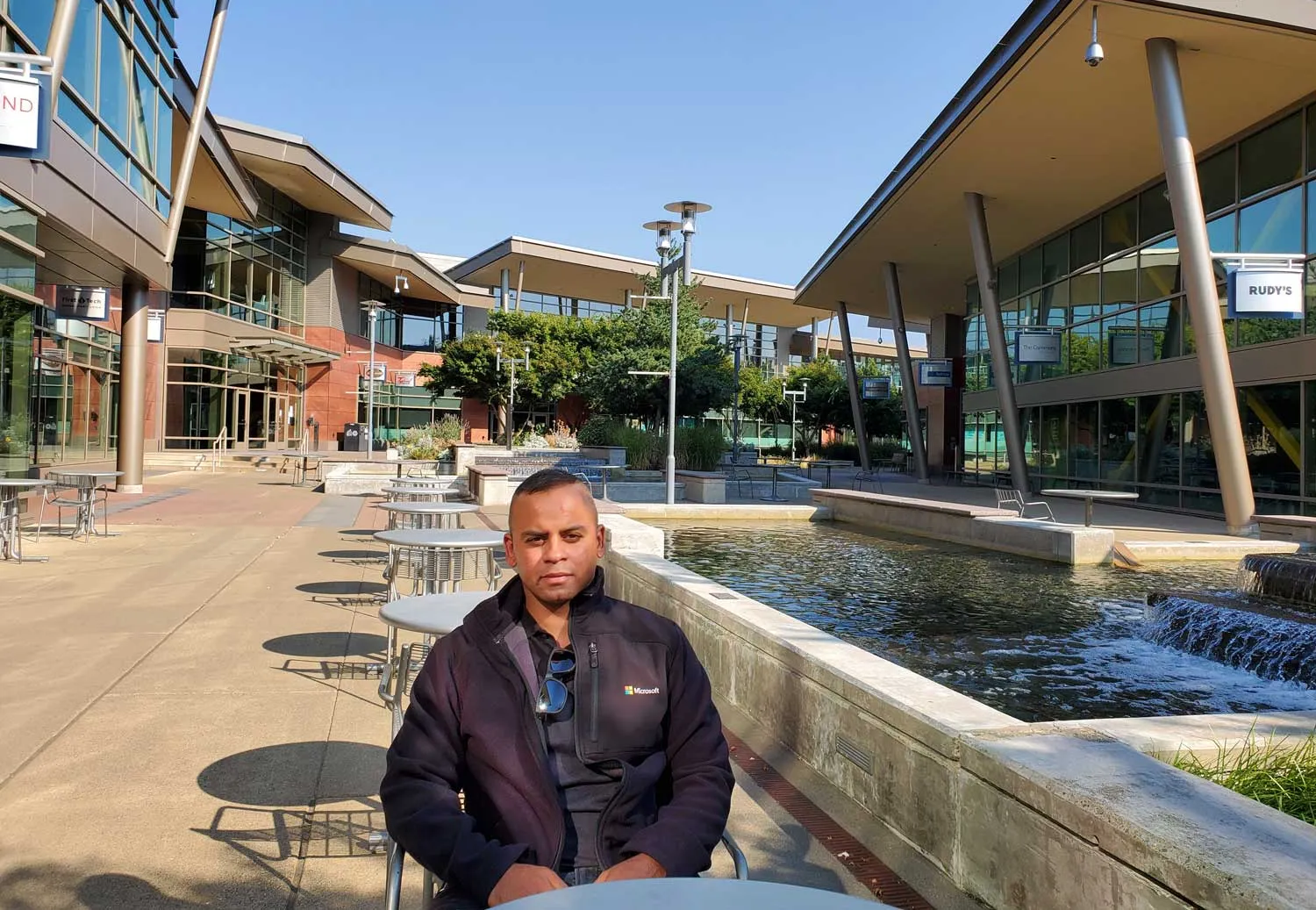
The global technology giant is extending its African talent recruitment programme to Mozambique. It is the first time in its history, in more than 30 years of presence in Africa, that Microsoft has recruited talent in the country to join its workforce as Software Engineers. Cláudio da Silva, senior data and artificial intelligence consultant at Microsoft, who happens to be Mozambican, spoke exclusively to Xonguila magazine, explaining the process for selecting candidates for the coveted vacancy.
Exactly 47 years ago, in the same year that Mozambique declared its national independence (1975), Microsoft (Nasdaq:MSFT) was born, the world's leading company in software, services and solutions that help people and businesses reach their full potential.
“I am proud to lead the initiative, and it would be an enormous satisfaction to be able to bring Mozambican talent to work at Microsoft's headquarters in Redmond.”
– Cláudio Da Silva, in charge of implementing the programme in Mozambique
The North American multinational has been present in Africa for at least three decades, with major investments in science and technology and related fields that have had an impact on the continent's economic growth. Last year, the company created the Africa Transformation Office (ATO) division to boost investment and accelerate sustainable digital growth in Africa “driven by Africans for Africa”. “Last year Microsoft established the Africa Transformation Office with the mission of working on Africa's digital growth strategy, focusing on five main areas: Digital Infrastructure, Skills Development, SMEs, Start-ups and Strategic Partnerships. More recently, a new subsidiary was created, the Africa Regional Cluster (ARC), which will be responsible for strategic initiatives across the continent,” said Cláudio Da Silva, the company's senior consultant. According to Da Silva, who holds a master's degree specialising in Data Mining and Data Warehousing, Microsoft plans to support more than 10,000 African start-ups over the next 5 years. The idea is to create a series of programmes on the continent, through strategic partnerships with start-up accelerators and incubators. “Over the coming years, the company is expected to support the empowerment of around 10 million SMEs in Africa through technology, infrastructure, skills development and strategic partnerships aimed at boosting job and wealth creation on the continent. Various forms of support are also planned to accelerate the growth of around 10,000 African start-ups, along with investments in the continent's start-up ecosystem,” explained the expert, a native of the city of Beira. Microsoft Garage is another example aligned with the digital strategies to better meet Africa's needs. “These incubation centres are part of the efforts to accelerate technological innovation on the continent. Finally, the expansion of Azure cloud data centres to African regions (in Johannesburg and Cape Town) in 2019 represented a significant milestone for the continent, making it possible to attract new business opportunities and global investment, as well as to improve access to the internet and cloud services across Africa,” argued Da Silva about the prospects opening up for Africans with Microsoft's ongoing initiatives on the continent.
Mozambique's “turn”
The dream of many young Africans, in particular Mozambicans, who are technology enthusiasts, of working at one of the largest companies in the world in this technology field is close to becoming reality. Microsoft is seeking to recruit talent in Mozambique to join its workforce. The initiative forms part of a continent-wide Microsoft programme that aims to reach and recruit African talent to join its workforce as Software Engineers for the teams in Redmond, in the United States, and Vancouver, in Canada. “For this vacancy, Microsoft is looking for recent graduates or final-year students on a bachelor's or master's degree in engineering, computer science or related fields. With the ability to demonstrate knowledge of the fundamentals of computer science, including data structures and algorithms. And who also have programming experience in one of the object-oriented languages (C#, C++, Java, Python, etc.),” explained the person in charge of implementing the programme in Mozambique. Cláudio Da Silva could not be more honoured and proud of himself for leading the transformative programme in the country that saw him born: “When this opportunity arose within the company, I felt it was my duty, as the Mozambican that I am, to include the name of our country on the list of potential countries to seek talent to join Microsoft's workforce in the US. I am proud to lead the initiative, and it would be an enormous satisfaction to be able to bring Mozambican talent to work at Microsoft's headquarters in Redmond”.
The application process started in August and covers the entire national territory, with no age or gender limits. Interested people from all provinces and with diverse profiles are encouraged to apply. Candidates who are selected will be invited to the first stage of interviews. Vacancies close as soon as they are filled after the final interviews. “At the moment, I am already working with the largest universities in Mozambique to publicise the programme, to prepare and support candidates, and also to make known the culture, skills and values that Microsoft looks for, so as to boost the students' skills and thus allow them to be adequately prepared to reach the final stretch of the recruitment process”. This is the process, which is running in parallel in other African countries. The leaders in each country, who head the programme initiative, work directly with the universities and provide assistance and support in preparing the candidates. But this relationship does not end there; the support will be ongoing. Even after joining the company, they will receive support on Microsoft's culture, mentoring, onboarding, on-the-job training and, what is more, they enter the Microsoft Aspire Experience track, which is a two-year experience of learning and professional development for recent graduates. “Let us hope for more similar programmes that benefit the African community and, in particular, Mozambique, from Microsoft as well as from other technology companies of the same size,” said Da Silva, optimistic about the future.
But why Africa?
Africa is a continent on the rise for scientific and technological capabilities, and there is an abundance of untapped opportunities. Almost 60% of the continent's population is under 25 years of age. According to the 2020 African Youth Survey, 78% of young people are interested in pursuing a career in technology. Global giants such as Microsoft are interested in empowering and capitalising on this talent and have recently invested heavily in Africa. In 2019, Microsoft and the African Development Bank launched Coding for Employment, to equip young Africans with demand-driven information and communication technology skills, so as to position them competitively for the global job market.
“Microsoft has been investing in Africa for some time, committing to developing talent on the continent. One of the company's priorities is the digital skills training of students, start-up developers, SMEs, the unemployed and more disadvantaged communities, where around 30 million Africans are expected to be reached in the near future,” revealed Da Silva. The African Development Bank's Coding for Employment programme has set up information and communication technology centres with partner universities in every country where it operates and has provided digital skills training to more than 150,000 young people. The aim is to expand the programme to 130 centres of excellence across the continent over a period of 10 years and to create millions of jobs, creating synergies with the public and private sectors around the world, to provide agile, collaborative, demand-driven skills to empower young people to become true innovative players in the digital economy.
Microsoft's Africa Development Centres (ADC), located in Lagos and Nairobi, are also an example of a success story for the company on the continent. "In Nairobi, for example, Microsoft already has more than 450 full-time employees, and the number is growing, working in areas such as software engineering, machine learning, data science, market research and infrastructure, among others," he said, adding that Microsoft's projects in Africa will enhance the talent of Africans. “I believe this type of initiative will help raise the visibility of African talent in technology and establish Africa as an innovation hub, since Microsoft has been betting heavily on the African technology market, reinforcing strategic partnerships and its commitment to developing talent,” concluded Da Silva.
With these long-term investments, which reflect a strong commitment by Microsoft to Africa, it is hoped that the next great scientific or technological breakthrough of the 21st century will take place on African soil.


