
Maputo - The Greater Maputo metropolitan region is preparing for a significant improvement in its urban mobility. As part of the “MOVE Maputo” Mobility Project, work is due to begin on rehabilitating 17 kilometres of roads in the cities of Maputo and Matola.
This ambitious project, under the aegis of the Ministry of Transport and Communications (MTC), has as its highlight the rehabilitation of Avenida 24 de Julho. This road, which links Avenida da Tanzânia and Avenida da Zâmbia in the Mozambican capital, will be renovated over 3.2 kilometres, with work due to start shortly.
Fátima Artur, who heads the coordination of “MOVE Maputo”, stressed that, in addition to the rehabilitation, a third uphill lane is planned for the avenue. Other roads, such as Avenida da ONU and the links between Avenida Fernão Magalhães and Avenida 25 de Setembro, will also be worked on, covering around 1.7 kilometres.
In the Municipality of Matola, tendering processes are under way for the asphalting of several stretches, namely Molumbela/Kongolote, Estrada Circular/Boquisso and Estrada Circular Matlemele/Nwamatidjana.
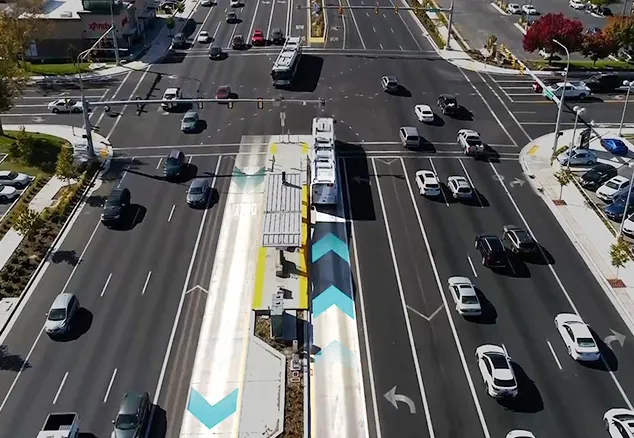
These actions form part of a broader project to build corridors for the Bus Rapid Transit (BRT), an initiative financed by the World Bank to the tune of 250 million US dollars. This BRT corridor will have a segregated section of 22 kilometres, linking the centre of Maputo to the Missão Roque roundabout, passing emblematic places such as the Combatentes and Juventude squares. In addition, there will be extensions on non-segregated roads, totalling 32 kilometres, which will connect areas such as Albazine, Zimpeto, Matola Gare and Marracuene, spread across six distinct routes.
Artur indicated that the works are expected to intensify in the second half of next year. Before then, a detailed survey will be carried out of the infrastructure that could be affected by the project's route. At the same time, the sector is looking for a specialist consultant to map the BRT corridor in full and identify potential resettlement needs.
This project represents a significant milestone for mobility in Maputo and Matola, promising to transform the commuting experience of Mozambicans and contribute to more harmonious and efficient urban development.


