
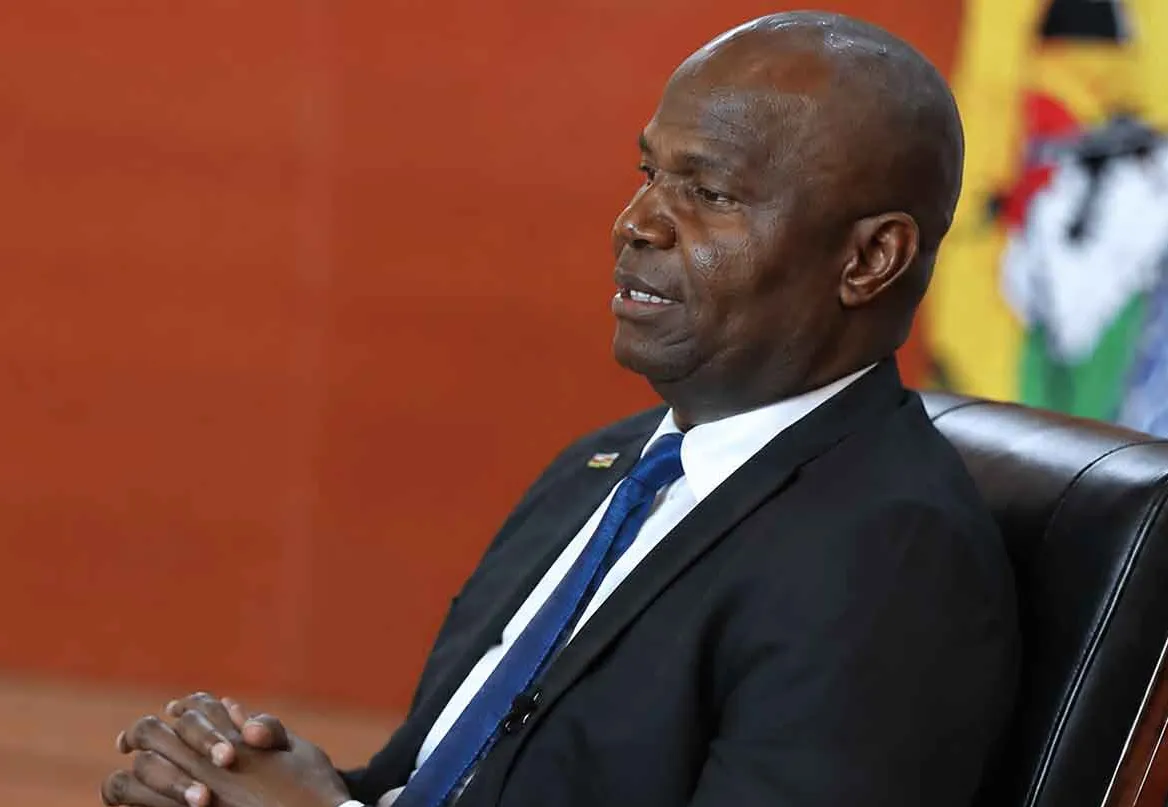
More than 1,500 Mozambicans crossed the border to Portugal in the first half of this year to fill vacancies in sectors facing shortages of professionals, a movement that the President of the Republic, Daniel Chapo, regards as a sign of the growing closeness between the two countries.
The figure was revealed by the head of state in an interview with Lusa, ahead of his official trip to Lisbon. According to Chapo, around 800 of the workers left through the National Employment Institute, while the rest were recruited by private agencies, under the labour mobility mechanisms agreed between Mozambique and Portugal.
“From January to June alone, more than 1,500 Mozambicans left Mozambique for Portugal, around 800 of them through the Employment Institute,” said Daniel Chapo, stressing that the aim is to strengthen this path of cooperation.
Recruitment is aimed at areas where Portugal faces labour shortages, including transport, metalworking and construction. The process involves the Portuguese Institute for Employment and Vocational Training, as well as private bodies responsible for selecting workers.
For the Mozambican President, the community's presence in Portugal has been marked by positive integration. More than 15,000 Mozambican citizens currently live in that European country, a community that Chapo describes as one of the best integrated.
“I would like to urge that it continue like this, to be a humble community, a community that obeys Portuguese laws, because it is the territory where they are living,” he said.
The head of state recalled that the relationship between the two peoples must be based on mutual respect, noting that Portuguese citizens living in Mozambique must likewise comply with Mozambican law.
500 million euro credit line enters decisive phase
Besides labour mobility, the agenda for the presidential visit to Portugal includes deepening economic cooperation, notably the 500 million euro credit line intended to support Portuguese companies investing in Mozambique.
Daniel Chapo expects the first disbursements could happen as early as the second half of this year, once the necessary procedures between the two countries have been completed.
“We are working to ensure that during this second half of the year there will already be disbursement of the funds and that the projects that have been defined can really get under way,” he declared.
The agreement stems from instruments signed during the sixth bilateral summit between Mozambique and Portugal, held on 9 December in Porto. Among the commitments made was a line of financial guarantees for projects linked to Mozambique's sustainable development and to the activity of Portuguese companies in the country.
According to Chapo, the projects have already been submitted and are awaiting approval so that the funds can begin to be used.
“We have already submitted the projects that are to be carried out in Mozambique. The credit line has a specific objective, which is to finance the Portuguese companies that are investing in Mozambique,” he explained.
The President also indicated that any expansion of the credit line will depend on an assessment of how the projects are carried out and of whether the commitments made are met.
Portugal called on to invest in Mozambique's “new era”
During the interview, Daniel Chapo also made a direct appeal to Portuguese businesspeople: invest in Mozambique now, before the main opportunities are taken.
The warning comes as major Liquefied Natural Gas (LNG) projects advance in the Rovuma basin, in the north of the country, valued overall at around 50 billion dollars over the next five to ten years.
“I invite Portuguese businesspeople to position themselves, because the time is now. And tomorrow may be too late,” he said.
For Chapo, the current stage of implementing the megaprojects is precisely when most opportunities arise for national and foreign companies, through supply, construction, logistics and service contracts.
“Earth needs to be moved, equipment needs to be acquired, construction works and logistics are needed, as is the supply of resources or food products. This is where the project really distributes the money to everyone,” he said.
The President highlighted sectors such as transport, infrastructure construction, agriculture, tourism, industry and the blue economy as areas with potential for Portuguese companies.
Energy and logistics as engines of growth
Beyond gas, Daniel Chapo pointed to renewable energy as one of the country's major strategic bets, arguing that Mozambique can establish itself as an energy hub for Southern Africa.
“Mozambique has sun from January to December,” he said, stressing the potential for investment in dams, solar plants and gas-powered energy projects.
The head of state also highlighted the planned investments in national ports, roads, pipelines, special economic zones and industrial parks as opportunities to strengthen the Portuguese business presence.
Mozambique's geographical location, according to Chapo, puts the country in a privileged position to serve as a regional connecting platform.
“Not only for Portugal, but for the whole European Union market, the 27 member countries, but also for other continents, such as Asia and the United States,” he said.
Economic relationship keeps rising
The Mozambican President described diplomatic and political relations between Maputo and Lisbon as “excellent”, arguing that the next step must be to deepen the economic and trade component.
Portugal remains among Mozambique's main economic partners. Official data indicate that more than 1,100 Portuguese companies export to the Mozambican market, while Portuguese direct investment exceeds 2 billion euros.
In 2025, Portuguese exports of goods and services to Mozambique exceeded 500 million euros, placing the African country among the significant destinations for Portuguese investment abroad.
Currently, more than 40,000 Portuguese citizens are registered in Mozambican territory and there are more than 400 companies with Portuguese capital operating in the country.
With Mozambican workers reinforcing Portuguese sectors and Portuguese companies seeking space in the country's major projects, Maputo and Lisbon are trying to turn their historic bond into an economic partnership of a new scale.


