
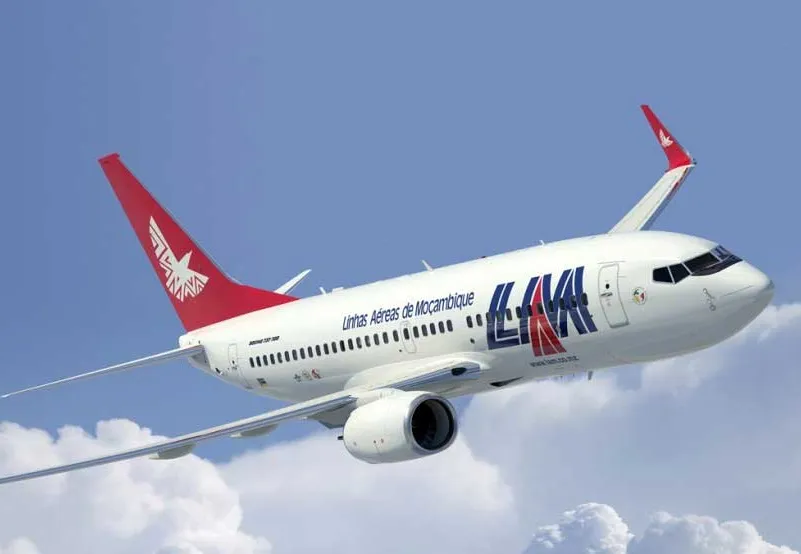
The Mozambican minister for Transport and Communications has stressed that developing new international routes is one of the keys to the revival of Linhas Aéreas de Moçambique (LAM), adding that the airline needs an adequate period to become relevant again.
Mateus Magala, in an interview on Friday evening after the pioneering flight between Maputo and Lusaka, the capital of Zambia, said that exploring more international routes is one of the answers to the challenges facing LAM.
For Magala, Mozambique's national carrier must make concrete and substantial progress to secure its recovery. His vision for the future involves exploring new destinations in Africa and beyond, in search of profitable routes.
LAM's inaugural route between Maputo and Lusaka, the southern African city that hosted the Lusaka Accords 47 years ago - a historic agreement signed between the Mozambique Liberation Front (Frelimo) and the colonial authorities, which paved the way for Mozambique's independence in 1975 - was described by Magala as a milestone.
As for LAM's current interim management by the South African airline Fly Modern Ark, Magala said that the government will weigh the next steps carefully, without confirming whether the carrier will be privatised.
His main aim is that, in the near future, strategic decisions will be taken that can catapult the Mozambican airline to a significant position in the civil aviation landscape.
However, the minister insisted that caution is needed so as not to repeat the mistakes that led LAM into insolvency.
In May, LAM's new management committee announced that the company had emerged from insolvency after recovering, since April, 47.3 million dollars in debts owed by the State and private parties, although there is still a risk of collapse.
According to Sérgio Matos, a member of the company's management committee, LAM's indebtedness has been reduced, improving the ratio between debt and equity and thus allowing the company to emerge from insolvency.
The strategy for LAM's recovery also involves reviving the Maputo-Lisbon route and exploring new destinations, such as Brazil, India, Dubai and China.


