
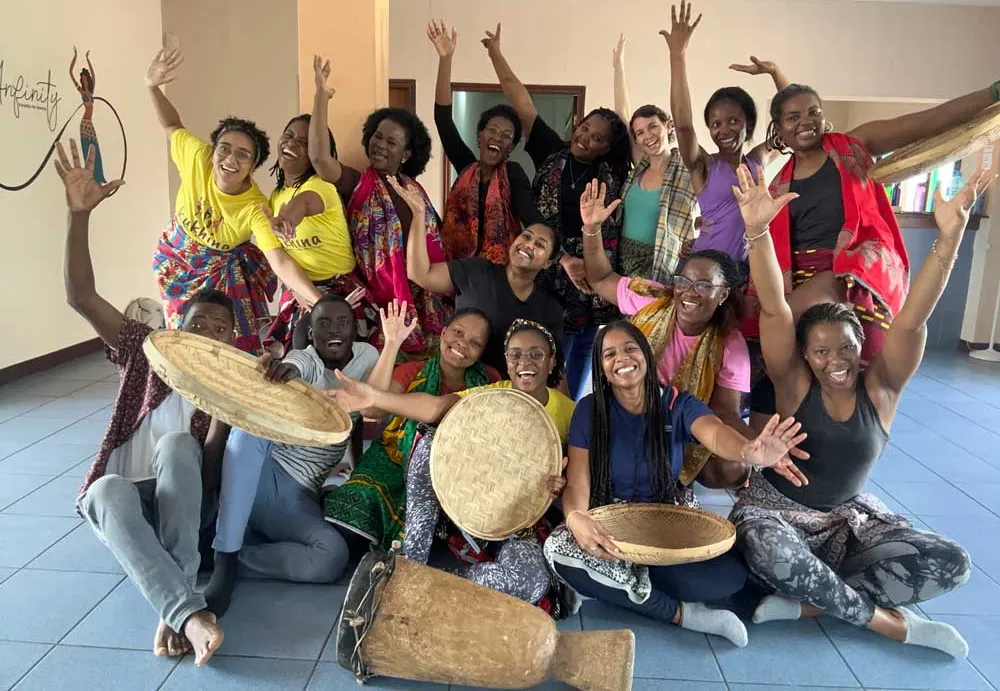
In the heart of Mozambique beats the rhythmic pulse of traditional dances, a cultural treasure that often remains forgotten. Born of this yearning to revive this rich tapestry of movements and rhythms, the Kukhina project has emerged, an initiative that aims to promote and invigorate national dance on several fronts.
Driven by the passion of two dancers who, in days gone by, in the effervescence of youth, danced together, Kukhina came about after a break of almost a decade in which life, with its professional, marital and maternal paths, drew them away from dance. But true love, as they say, never disappears, and it was the desire to dive back into the world of dance, combined with the realisation that many Mozambicans were unaware of the beauty of their traditional dances, which risk being lost in the sands of time, that gave rise to this captivating project. Kukhina saw the urgency of valuing, safeguarding and promoting Mozambican heritage.
Recently, Kukhina gave a performance at the Hakuman Centre, where the marrabenta, a dance familiar to the residents of Maputo, was the star. Joy radiated from every face, from children to adults. There, stripped of the hardships of daily life, they danced, laughed and relived memories.
Kukhina holds monthly workshops, in which you do not just learn to dance: you delve into the history of each dance, the techniques for tying the capulana and the use of specific utensils. And the impact is tangible. Women of all ages, from places as far apart as Indonesia, Japan and the United States, come together to celebrate and learn. However, Kukhina’s dreams go beyond the workshops. The vision is to create a documentary that gives a voice and visibility to the dances they practise and promote. And for this, any support – from participation and knowledge to outlets for publicity – is welcome.
The path has not been free of challenges. Many dances remain undocumented, requiring an endless search among older generations and traditional dance groups. Each story gathered is a piece of the intricate jigsaw puzzle of Mozambican culture. Kukhina’s dream involves establishing a dedicated space, putting on shows, and creating literary and audiovisual works. All so that the legacy of Mozambican dances can shine, not only in Mozambique but also beyond its borders.
In the end, whether through the vibration of the drums, the melody of the songs or the fervour of every dance step, Kukhina wants every Mozambican to feel proud of their heritage. And, whatever their generation, for everyone to be able to rediscover and celebrate the beating heart of Mozambican culture.


