
In a world where information circulates at the speed of a click and disinformation spreads just as fast, journalism faces one of the greatest challenges in its history: adapting to the digital age without losing rigour, ethics and credibility. It was precisely in this context that Vodacom Mozambique decided to act.
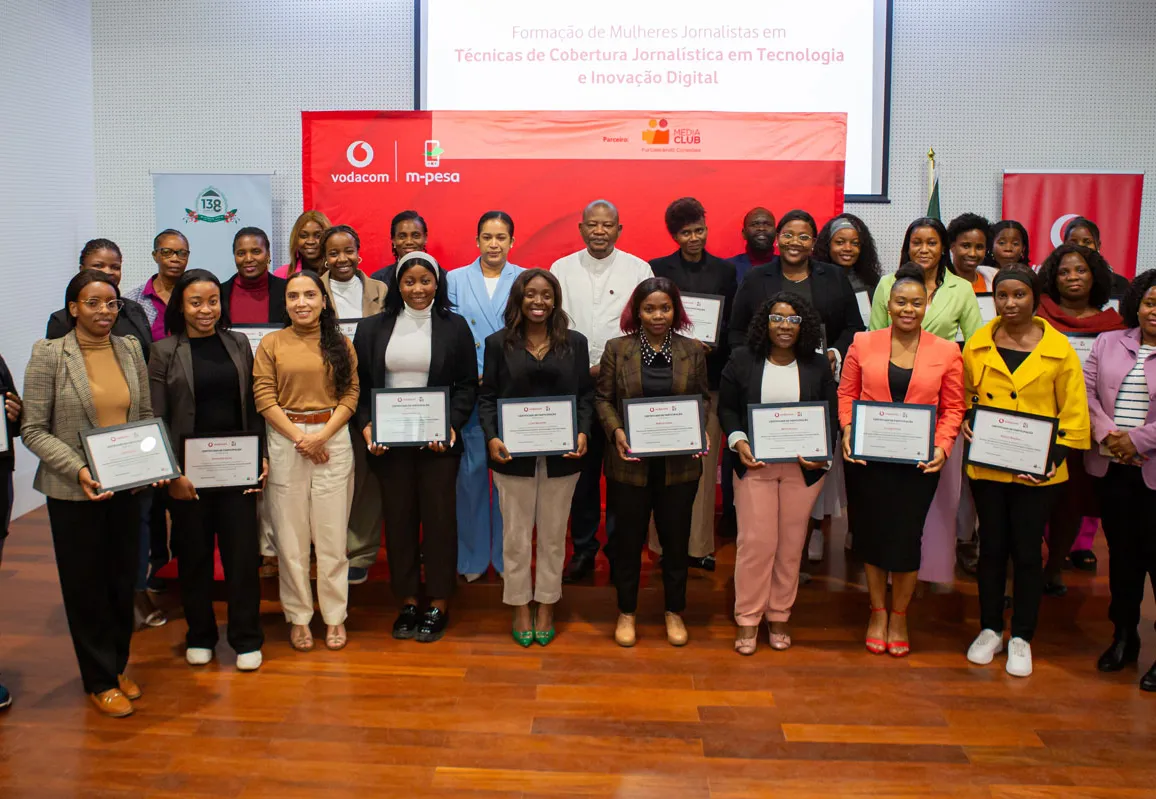
On 29 April, the company held a capacity-building session for women journalists from various media outlets, reinforcing its commitment to digital inclusion, technological literacy and the promotion of responsible journalism.
The initiative, carried out in partnership with the National Union of Journalists (SNJ) and the Media Club, formed part of the celebrations of Mozambican Women's Day and Mozambican Journalists' Day, marked throughout the month of April.
More than a simple training session, the meeting served as a space for joint reflection on the challenges and opportunities that the digital world poses for journalism. At a time when digital platforms play an increasingly central role in the production and dissemination of content, the participants discussed topics such as fact-checking, combating disinformation, ethics in content production and the use of technology as a tool for social inclusion.
The training also addressed issues relating to the intersection between technology and human rights, with a particular focus on the protection of women and children in the digital space. Also on the table was the need to develop a critical view of the gender stereotypes frequently reproduced in digital media.
“As a telecommunications and technology company, we feel a responsibility to contribute to strengthening the media ecosystem, especially in critical areas such as digital literacy and journalistic ethics. We believe that women journalists play an essential role in building a safer, more inclusive and more responsible digital space,” said Cláudia Manjate, Director of Government Relations & Institutional Engagement at Vodacom.
With this initiative, Vodacom Mozambique reinforces its position as an active partner in promoting digital skills and strengthening a more robust, inclusive information ecosystem, prepared to respond to the challenges of digital transformation in the country.


