
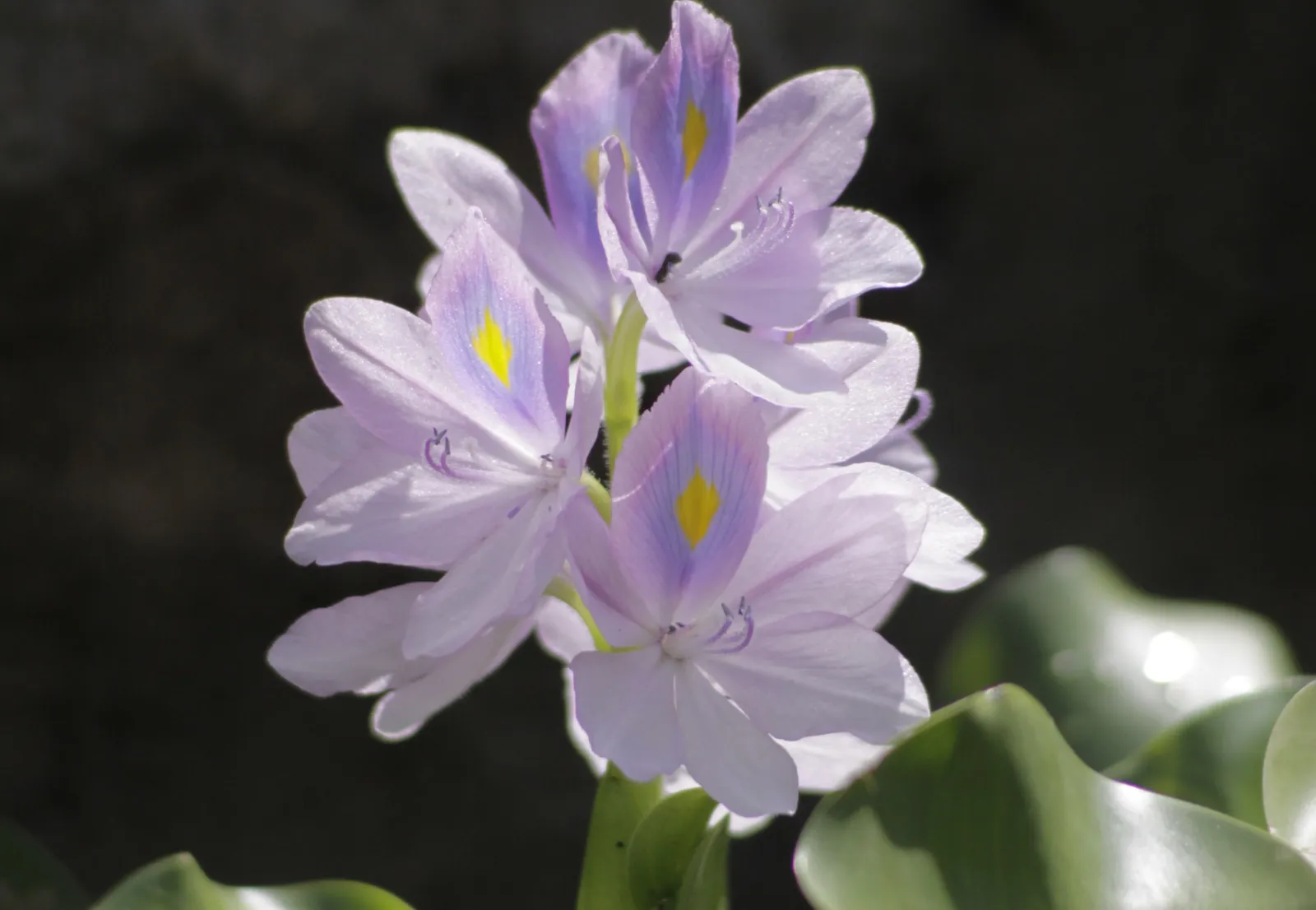
Water hyacinths from Gorongosa National Park for the benefit of communities
Water hyacinths are free-floating perennial aquatic plants whose leaves can rise above the surface of the water to a height of up to 1 metre. They prefer slow-flowing rivers or freshwater lagoons, and reproduce rapidly. They are attractive when in flower, but because they are not native to many of the places where they are found (they originate in South America) and grow very rapidly, they escape human control and often become harmful. They are therefore considered invasive plants and can pose threats to environmental and economic well-being.
The hyacinths are turned into compost by the Park’s agricultural team, and this compost is provided free of charge to local farmers
But there is also good news about this plant: the water hyacinth absorbs nutrients and, as it decomposes, those nutrients are returned to the soil (including the essential elements nitrogen, phosphorus and potassium that are wanted in soil additives). The water hyacinth is thus an excellent organic fertiliser, making soils more suitable for agriculture. Indeed, compost made from water hyacinth appears to perform better than chemical fertilisers made in factories. Thanks to its fibrous qualities, the water hyacinth also improves soil texture.
In Gorongosa National Park, as the floodwaters recede after the rainy season, workers are able to collect easily the dried water hyacinths left behind. In the next stage, the hyacinths are turned into compost by the Park’s agricultural team, and this compost is provided free of charge to local farmers.
Taking part in this activity are former guerrillas involved in the Disarmament, Demobilisation and Reintegration (DDR) process under the Peace Agreement signed in 2019, who benefit from the opportunities created for them and their families by the Peace Clubs initiative. These clubs are one of the general human development activities that Gorongosa National Park has under way for approximately 200,000 people living nearby.


