
Hloyase
Written By: Nuno Soares
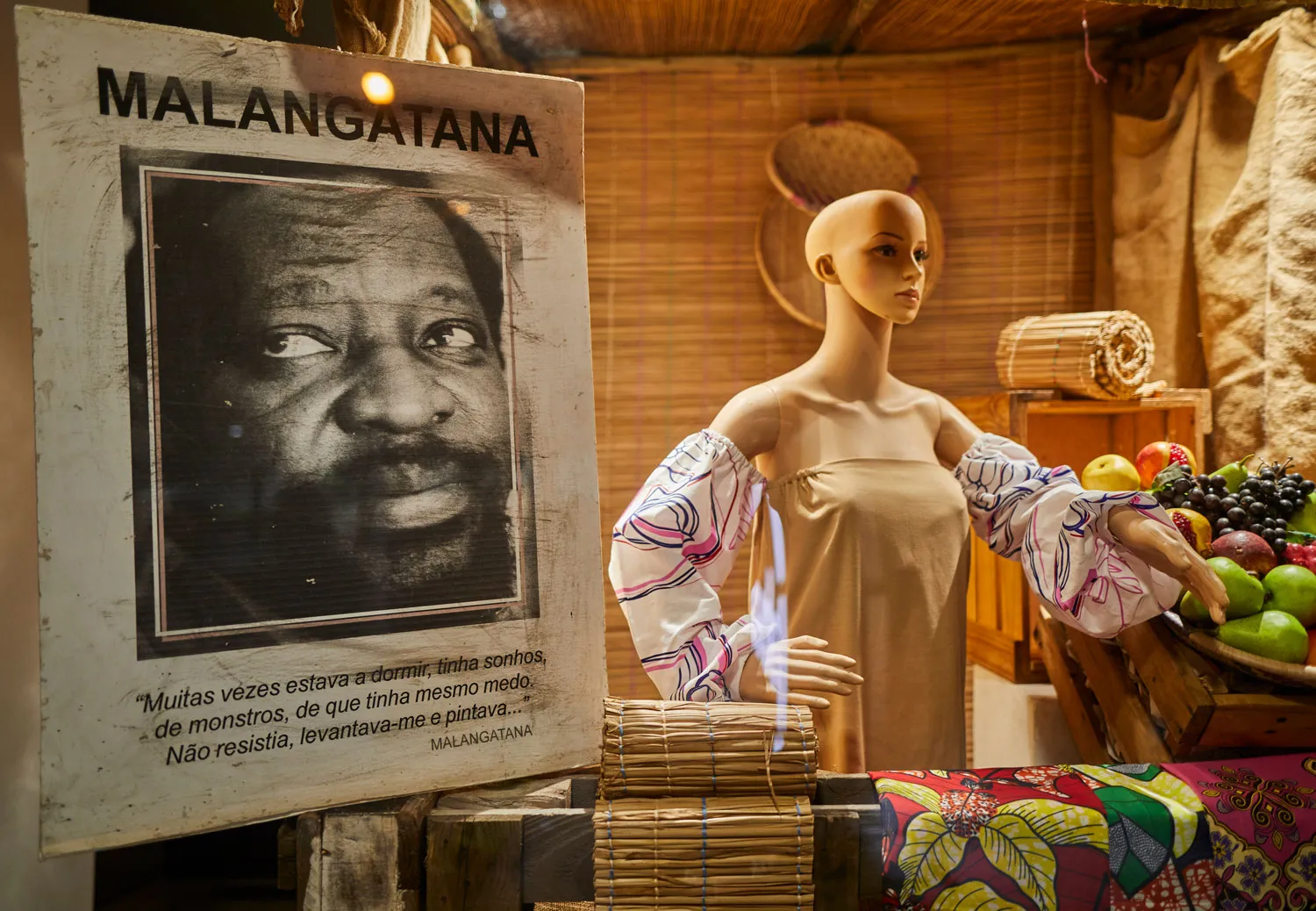
The Malangatana Foundation, in partnership with Mozambique Fashion Week (MFW), officially launched, on 3 February, Mozambican Heroes' Day, Hloyase, a clothing brand inspired by the paintings of the renowned artist Malangatana Valente Ngwenya. The initiative, which is a tribute, comes in the year in which this icon of Mozambican culture would have turned 85.
Hloyase, the name of Malangatana's mother, the muse of his creations and of his first studio, is a 100% national brand, which was first presented in a collection by the designer Shaazia Adam at the last edition of Maputo Fashion Week. It presents a youthful and refreshing concept, in prints and ready-to-wear made from fabrics suited to our climate, namely viscose, linen and cotton. Because of the restrictions caused by covid-19, the pieces are sold entirely on the digital forum, on the brand's online platforms, with home delivery. The items are also on display at the Premier Branch of Absa Bank Mozambique until the end of March, continuing the project begun by this bank in 2020 in partnership with the MFW production. The initiative also has the institutional support of the Ministry of Culture and Tourism.
Hloyase, a clothing brand inspired by Malangatana's brushstrokes
About Malangatana:
Malangatana Valente Ngwenya was, and remains, Mozambique's best-known visual artist, having raised the name of the country to the four corners of the world. He was born on 6 June 1936, in Matalana, on the outskirts of the capital. At the age of 12, he moved, in search of work, to Lourenço Marques (now Maputo), where he worked in various trades. In 1953, he was a ball boy at a tennis club, which enabled him to enter education. He was encouraged to draw and paint by the biologist Augusto Cabral and, later, by the architect Pancho Miranda Guedes. He first exhibited in 1959, at the Visual Arts salon, and held his first solo exhibition in 1961. A man of many talents, he worked in several art forms, such as drawing, watercolour, tapestry, ceramics, engraving, monumental sculpture in iron and cement, and murals. He was also a playwright, poet, singer, dancer and musician. Arrested by the Portuguese political police, the PIDE, in the 1960s, he was incriminated for having links to the Mozambique Liberation Front (FRELIMO). After Mozambique's Independence, proclaimed in 1975, he took part in several national and international exhibitions. In the 1990s, he served in political office as a member of parliament, and was re-elected in 2003. His name is associated with the creation of several cultural institutions, such as the National Art Museum, the Centre for Cultural Studies, the present National School of Visual Arts, the Matalana Cultural Centre and various other arts organisations. He was recognised as Grand Officer of the Order of Prince Henry, won the Nachingwea medal for his contribution to Mozambican culture, and was named UNESCO Artist for Peace. He received an honorary doctorate from the University of Évora and the decoration of Commander of Arts and Letters awarded by the French government”, among other prestigious distinctions and awards. He died on 5 January 2011, in Matosinhos, Portugal.


