
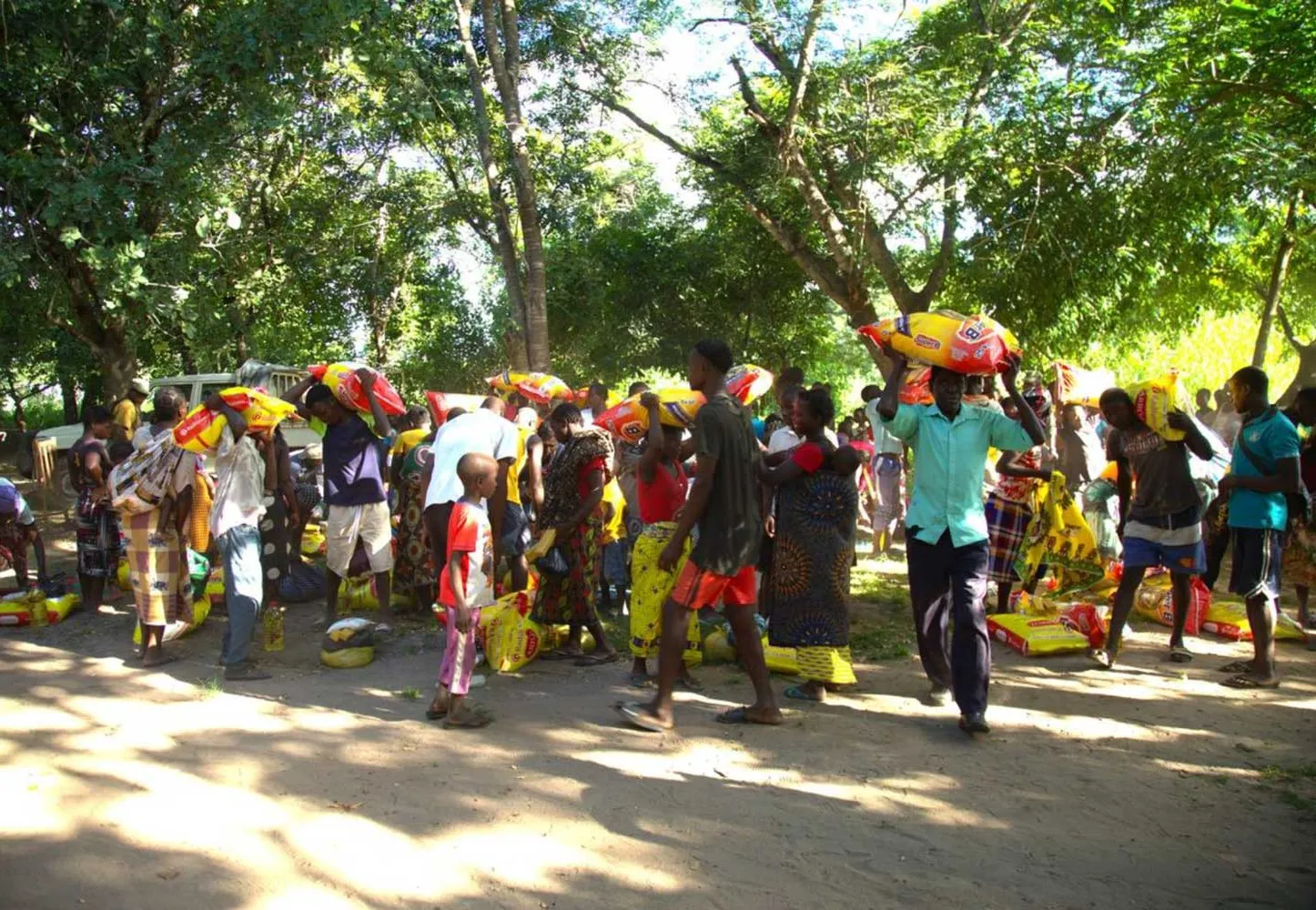
In a gesture of commitment to the communities that share borders with Gorongosa National Park, the Gorongosa Restoration Project has launched a food distribution programme to support 3,500 families affected by poor harvests caused by the late rains at the start of this year.
The action has supplementary funding from the Greg Carr Foundation, a long-standing partner of the park's restoration initiative. The measure aims to respond to the growing food insecurity faced by farmers in the Gorongosa Sustainable Development Zone, who grow, with limited resources, essential crops such as maize, sorghum, sesame, vegetables, fruit and cashew trees.
Despite the climatic adversity, the project's managers emphasise the merit of the farmers themselves. “They are tireless, intelligent and resilient workers. With little, they feed their families and sustain their homes.”
The support consists of delivering food kits to each family, containing:
25 kg of maize flour
25 kg of Mariana rice
5 kg of beans
2 litres of cooking oil
1 kg of salt
2 kg of dried fish
2 bars of soap
powdered milk
The operation is coordinated by Gabriela Curtiz, a member of the Gorongosa Project team, who liaises with local authorities, including Maria da Graça, head of the Pungué locality, and Elisa Langa, representative of Gorongosa National Park.
Despite the worrying picture, there is room for hope: the rains have finally started to fall, allowing farmers to prepare for a new growing season in the coming months. In the long term, the Gorongosa Project is betting on community capacity-building, on strengthening food and cash reserves and, eventually, on installing irrigation systems to mitigate the effects of climate variability.
The project's philosophy is clear: ecosystem conservation goes hand in hand with human development. The health of nature sustains people's well-being, and they, in turn, are the greatest defenders of their land.


