
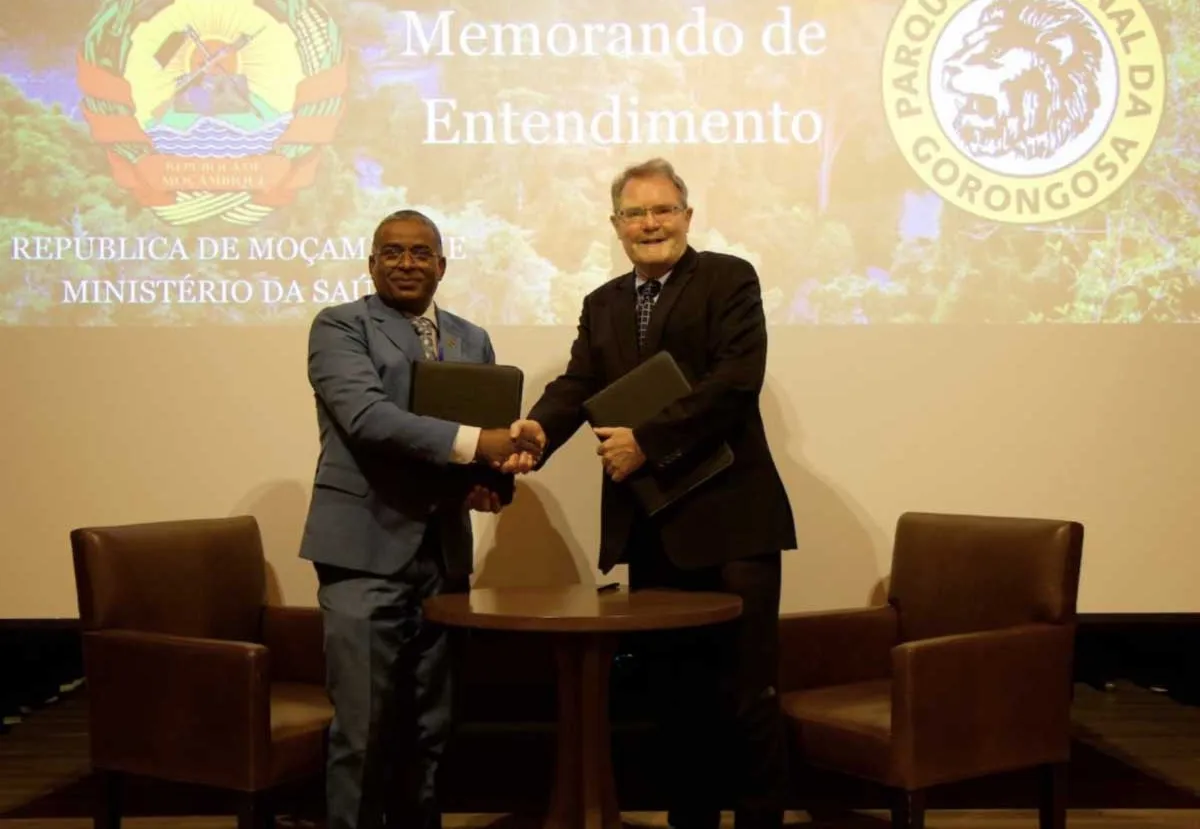
Mozambique's Ministry of Health and the Gorongosa Project have joined forces on an official mission to the United States of America, led by the Minister of Health, Ussene Isse, with the aim of raising funding and strategic support for the building of a Regional Hospital and a Health Research Centre in the heart of Gorongosa. This joint action, marked by the signing of a Memorandum of Understanding, underlines a national commitment to building resilient health systems, focused on the development of rural communities.
The initiative seeks to channel funds from philanthropic foundations, renowned academic institutions and international strategic partners, notably the University of Pittsburgh, a global reference in medical research. The aim is ambitious: to turn Gorongosa into a centre of excellence in clinical care, professional training and scientific innovation, while promoting sustainable solutions based on local biodiversity.
The future hospital – conceived as a teaching hospital – will integrate specialised care, teaching and applied scientific research, serving as a pillar of human development and of the strengthening of the National Health System. In parallel, the research centre will include a unit for the study of medicinal plants, with the aim of making the most of the region's vast natural heritage, promoting the production of medicines and the fight against the main diseases affecting the Mozambican population.
Greg Carr, President of the Gorongosa Project, did not hide his enthusiasm for the collaboration:
"I had the opportunity to spend several days with Minister Isse, listening to his plans for health in Mozambique, and I was impressed by his leadership."
The American executive also highlighted the shared vision between the parties: that environmental conservation and human progress are interdependent causes. “We are building systems that will outlive us”, said Carr, reinforcing the symbolism of this partnership for the country's future.
During its stay in the US, the Mozambican delegation is holding meetings with international organisations and leading foundations, consolidating health diplomacy as a strategic vector for development. For the Government of Mozambique, this mission lends political legitimacy and international profile to the negotiations, boosting medium- and long-term commitments in an area critical to national well-being.
The strengthening of international alliances thus emerges as a pragmatic response to the structural challenges of the health sector, and sets Gorongosa, once a symbol of destruction, as the stage for a rebirth in the name of science, education and human dignity.


