
Gaza wants to turn its natural resources into an economic engine capable of producing, processing and delivering goods to national and regional markets. At the heart of this ambition is the Limpopo Valley, identified as the main piece of a portfolio of investment opportunities that should lead agriculture, industry, energy and logistics to work as parts of a single chain.
The Gaza Provincial Government is preparing projects aimed at attracting investment in agriculture, agro-processing, livestock, tourism, energy, fisheries, aquaculture and logistics. The opportunities are due to be presented at the Gaza Province International Investment Conference, scheduled for November 2026, in the district of Bilene.
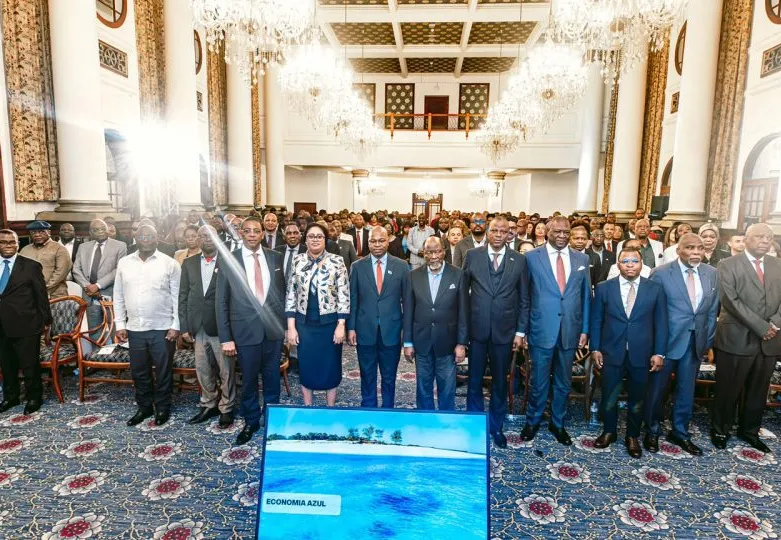
The event was launched on 10 September, in Maputo, at a ceremony led by the Minister of Finance, Carla Louveira, and the Governor of Gaza, Alfeu Cuna.
According to information published by Notícias, the conference aims to mobilise investors to modernise agricultural production, set up processing units and develop value chains that make it possible to increase the income generated by the province's existing resources.
Behind the initiative is an old ambition: to restore Gaza to a prominent place in the country's food supply. But the strategy now being drawn up goes beyond agricultural production. The provincial government intends to link land, water, production, industry, energy and transport in a market-oriented economic platform.
Agriculture returns to the centre of the strategy
Gaza starts from an advantage built up over decades. The province has experience in producing rice, vegetables, cashew and fruit, conditions that, according to Carla Louveira, could allow the region to regain its prominence in national agriculture.
The challenge is to turn that potential into production on a larger scale and with higher productivity.
To do so, agricultural expansion will depend on mechanisation, a regular supply of inputs, access to finance and sales channels able to absorb the output.
Modernisation, however, does not end with increasing the area under cultivation. It means securing improved seeds, fertilisers, equipment, technical assistance, storage, cold-chain systems, transport and predictable access to markets.
It is precisely the ability to organise these services that may determine whether Gaza manages to attract investors prepared to finance medium- and long-term agricultural projects.
Limpopo Valley becomes the centrepiece
It is in the Limpopo Valley that the strategy gains scale.
With fertile land, available water and one of the largest irrigation systems in Sub-Saharan Africa, the region is the main agricultural asset the province presents to potential investors.
The existence of irrigation reduces dependence on rain alone and creates conditions for regular commercial production cycles. Its full use could increase the production of rice, vegetables and fruit and, at the same time, secure raw material for future industrial units.
But water alone does not solve the problem.
The system needs maintenance, efficient management, energy, roads and mechanisms capable of bringing producers and buyers together. For that reason, the projects taken to the conference will need to clarify the areas available, the costs of use, the rehabilitation needs and the participation models reserved for investors.
Agro-processing seeks to retain wealth in Gaza
Producing more is only one part of the equation. Gaza also wants to process what it produces.
Industrialising agricultural production thus emerges as one of the initiative's priorities. The province wants to attract investment for processing rice, vegetables and fruit, as well as developing the livestock chain.
Setting up processing units could reduce post-harvest losses, extend the shelf life of products and allow them to reach more distant markets.
There is another effect too: a factory creates permanent demand for raw material. For producers, this can represent an alternative to occasional, informal sales, provided they can deliver sufficient quantities, to the required quality standards and in the agreed periods.
This model will require producers to organise, supply contracts to be established and technical assistance systems to be created. On the industrial side, stable energy, water, roads, storage and financing will be indispensable.
Largest cattle herd creates another industrial front
Livestock is the province's second great reserve of economic scale.
Gaza has the largest cattle herd in Mozambique, estimated at approximately 580,000 head, opening investment possibilities that go far beyond traditional cattle rearing.
Breeding and fattening, meat and milk production, animal feed, slaughter, tanneries, refrigeration and distribution are among the activities that could be developed around this herd.
A structured chain would increase the economic value extracted from each animal. It could also stimulate veterinary services, genetic improvement, feed production, the installation of abattoirs and the creation of health certification systems.
Entry into formal markets, however, will depend on the ability to guarantee quality, traceability, preservation and compliance with health standards.
The conference could therefore serve to present integrated projects that bring together large investors, smallholders, input suppliers, processing companies and commercial networks.
Special Economic Zone expected to concentrate industries
One of the structures intended to bring these different pieces together is the Limpopo Agribusiness Special Economic Zone.
The Gaza Government presents it as one of the main instruments for industrialising the province and creating jobs, facilitating the establishment of companies linked to agricultural processing, livestock, storage, logistics and service provision.
The zone's attractiveness will depend, however, on what is actually available on the ground.
Serviced land, energy, water, telecommunications, roads and simplified administrative procedures will be decisive. The applicable incentives, access criteria and responsibilities of the bodies in charge of management will also have to be clarified.
If it operates in an integrated way, the Special Economic Zone could become the link between irrigation, producers, factories and transport routes. Otherwise, investments may remain scattered, increasing logistics costs and making the regular supply of raw material more difficult.
Tourism and conservation widen the opportunities
The provincial portfolio does not end with agro-industry.
Gaza also intends to mobilise capital for tourism and biodiversity conservation, drawing on its extensive coastline, beaches and conservation areas within the Great Limpopo Transfrontier Park.
The Limpopo and Banhine parks offer possibilities for nature tourism, accommodation, transport, catering and conservation-related activities.
The choice of Bilene to host the conference also makes it possible to associate the event with the province's tourism potential.
Turning these resources into businesses will require clear concessions, better access, promotion of destinations, vocational training and a stronger link between the coastal areas and the conservation circuits. Projects will also have to strike a balance between economic return, biodiversity protection and the participation of resident communities.
Fisheries and aquaculture enter the portfolio
Governor Alfeu Cuna also placed fisheries and aquaculture among the sectors with the capacity to receive new investment.
The coast, rivers, reservoirs and other water resources in Gaza can support both fishing and the controlled rearing of species.
Around production, opportunities may arise in processing, preservation, transport and marketing. The cold chain will be particularly important for reducing losses and ensuring that products reach the main consumption centres in suitable condition.
The conference should help to identify available areas, projects, destination markets and ways of linking investors with local producers.
Massingir and solar power can sustain production
No industrialisation strategy works without energy.
In this area, Gaza points to the Massingir Hydroelectric Power Station and its solar potential as assets capable of supporting new investment.
The availability of electricity will be decisive for irrigation systems, refrigerated storage, food processing and the operation of industrial units. Solar projects could supply productive areas far from the grid or complement existing power.
The link between production and energy should therefore occupy an important place in the investment portfolio. Without a regular and affordable supply, agro-industrial projects may face high costs and operational interruptions.
To allow a concrete business assessment, energy projects will have to present capacity, location, costs and financing models that are sufficiently defined.
Chicualacuala opens the door to regional markets
After producing and processing, it will be necessary to transport.
Gaza's logistics strategy rests on the EN1, the Limpopo Corridor railway line and the Chicualacuala Dry Port project, infrastructure that can link productive areas to national markets and to neighbouring countries.
Chicualacuala's location, at the link with Zimbabwe, makes it possible to envisage the creation of a centre for receiving, storing, consolidating and distributing cargo.
A dry port could bring logistics services closer to productive areas, reduce costs associated with customs operations and facilitate the regional circulation of goods.
To work, however, it will have to be efficiently connected to rail and road and have cargo-handling equipment, digital systems and coordination between operators, customs and hauliers.
In agriculture, this machinery will be decisive: output only acquires its full commercial value when it manages to reach consumption centres and processing units within the required deadlines and conditions.
Government promises to speed up procedures
Governor Alfeu Cuna guaranteed stability and easier administrative procedures for investors who decide to develop projects in Gaza.
The promise seeks to reduce the costs and time needed for licensing, access to land and obtaining authorisations.
Delivering on it could be decisive in the comparison between Gaza and other investment destinations.
This will require coordination between the provincial government, municipalities, ministries, regulatory authorities and the services responsible for land, environment, energy and water resources.
The creation of a permanent monitoring mechanism could also prevent the contacts and investment intentions obtained during the conference from becoming stuck in later administrative stages.
The test will be bankable projects
Despite the scale of the ambition, one essential question remains: how many of the assets presented will be converted into projects capable of receiving financing?
The information available identifies sectors and resources, but does not indicate the amount of investment Gaza intends to mobilise, the number of projects that will make up the portfolio, the companies that may be interested or the financing models.
Nor are targets presented for production, exports, job creation or the establishment of industrial units.
These elements will be decisive in turning the International Investment Conference into an effective negotiating platform, and not merely an exercise in territorial promotion.
Investors will need feasibility studies, identified demand, land rights, access to water, licences, cost estimates, expected returns and clear risk-sharing mechanisms.
The portfolio will also have to distinguish between public projects, private projects and public-private partnerships, defining financial and operational responsibilities.
From agricultural granary to agro-industrial platform
The ultimate goal therefore goes beyond restoring Gaza's status as the country's granary.
The Limpopo Valley offers land and water. The herd of approximately 580,000 cattle provides scale for livestock. Massingir and solar potential can supply energy to production. The Limpopo Corridor and Chicualacuala can open the way to regional markets.
The challenge will be to make these pieces work as a single economic system.
When investors gather in Bilene in November 2026, the measure of success will lie not only in the quantity of resources Gaza manages to present. It will lie, above all, in the ability to turn those resources into agreements, financing, factories, production and investments that are actually implemented.


