
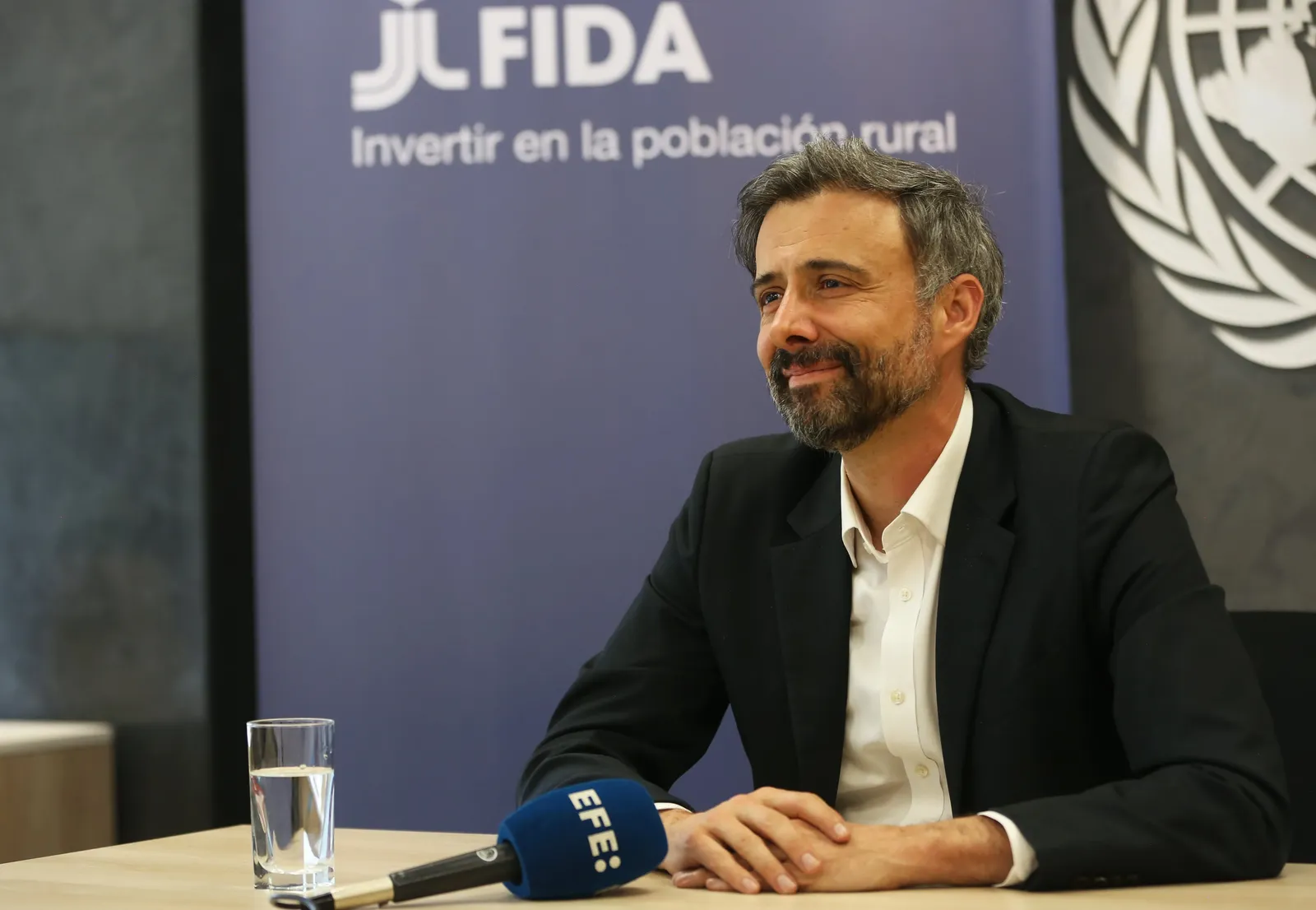
The president of the International Fund for Agricultural Development (IFAD), Álvaro Lario, has said that agriculture in Mozambique needs to evolve from a subsistence model into a productive activity, generating sustainable incomes and jobs, especially for young people and women.
Speaking on the sidelines of the 4th United Nations Conference on Financing for Development in Seville, Spain, after a meeting with the President of the Republic of Mozambique, Daniel Chapo, Lario highlighted that about 80% of the Mozambican workforce is involved in agriculture. “We want that world to be productive, to allow people to live dignified lives in their communities”, he stressed.
During the meeting, mutual commitments between IFAD and the Mozambican Government were reinforced. The partnership has translated into support for small-scale agriculture and fishing, as well as investment in storage and distribution infrastructure and the promotion of small and medium-sized enterprises linked to the sector.
“We know that Mozambique has great potential. Together, we can create job opportunities and the capacity to earn decent incomes from food production”, said Lario.
IFAD’s latest project in the country, intended to strengthen production chains in 11 provinces, initially received 70 million dollars (59.5 million euros), a figure that grew to 200 million dollars (170 million euros) thanks to the partnership with the African Development Bank and the European Union.
Lario added that a new 10 million dollar (8.5 million euro) financing package, from the Environment Fund, is under way and will be applied to initiatives for adaptation to climate change, water resource management and improving soil quality.
“The President’s priority has been clear: to create opportunities for young people”, reiterated the head of the United Nations agency. In this regard, he revealed that solutions such as special agricultural processing zones, capable of generating jobs and adding value to local production, are being considered.
IFAD, the UN specialised agency dedicated to combating hunger and rural poverty, argues that a productive approach to agriculture can be one of the most effective engines of economic growth for developing countries such as Mozambique.


