
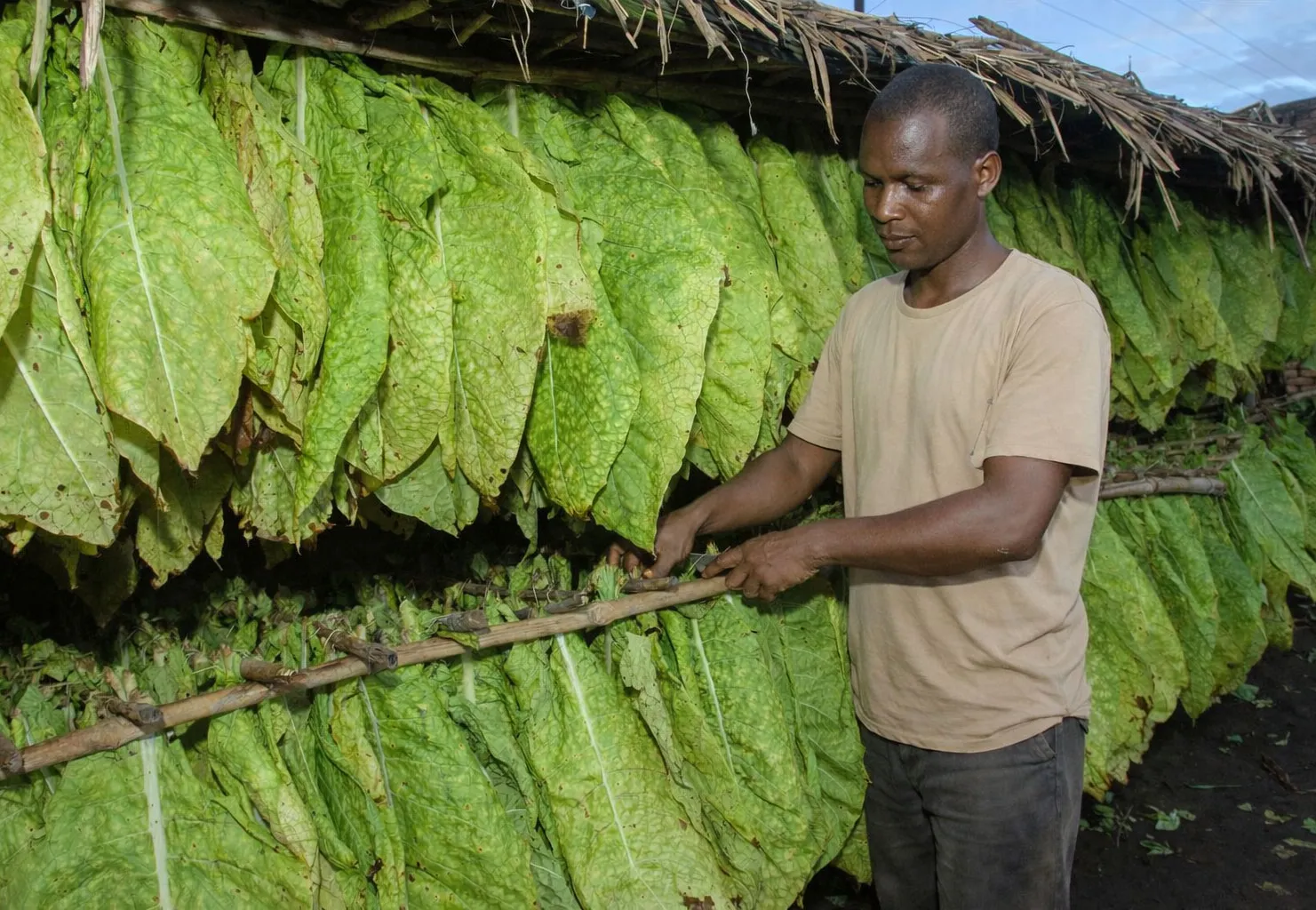
Tobacco continues to assert itself as one of Mozambique's main cash crops, even in a scenario of reduced production. In 2025, the value of exports reached 258.3 million dollars, representing growth of 16% on the previous year, according to data released by the Bank of Mozambique.
The central bank's report, which analyses foreign trade between January and December, reveals a consistent growth trajectory. In 2024, Mozambique exported tobacco worth 217.2 million dollars, while in 2023 that amount stood at 154.2 million dollars, showing the growing importance of the sector in the country's external revenue.
This increase in exports comes, however, in a context of reduced national production. For 2025, total production of 72,380 tonnes was forecast, significantly below the 92,343 tonnes recorded in 2024. The crop occupied an estimated area of 71,000 hectares, also reflecting a decline in the scale of cultivation.
Another report, this time from the Government, on the 2025 budget execution, indicates that the value of tobacco production reached 7,255 million meticais, a fall of 4.1% from the 7,567 million meticais recorded in 2024. National production remains concentrated in two companies: Mozambique Leaf Tobacco and Sociedade Agrícola de Tabaco.
The Mozambican authorities had already warned of the negative impact on tax revenue, attributing part of the reduction in production to the departure of the company BAT for South Africa, a move that directly affected the sector's performance.
The most recent data confirm a trend of volatility. In the 2022-2023 farming year, Mozambique recorded a cultivated area of 76,850 hectares, with production of 65,856 tonnes, which at the time represented a fall of 15% compared with the previous period.
Despite these fluctuations, Mozambique maintains a significant position on the world stage. A World Health Organization (WHO) report, released in 2023, indicated that the country had the eighth-largest tobacco-growing area in the world.
With 91,469 hectares cultivated, Mozambique appeared as the third-largest producer in the African region, behind only Zimbabwe, with 112,770 hectares, and Malawi, with 100,962 hectares. Globally, Brazil stood out with the third-largest growing area, estimated at 357,230 hectares.
The same document also stressed that Brazil and Mozambique were, at the time, the only countries of the Community of Portuguese Language Countries (CPLP) among the world's 50 largest tobacco producers.
Although once classed as a medicinal plant, tobacco is today the target of growing international criticism and restrictive policies, in an attempt to reduce mass consumption. Even so, for Mozambique it remains a strategic crop, able to sustain robust exports even when production suffers setbacks.


