
The wealth hidden beneath the waters off Mozambique's coast continues to attract attention well beyond the country's borders. At a time when Europe is seeking to reduce its energy dependencies and strengthen the security of its supply, Brussels sees Mozambique as a strategic partner capable of playing a significant role in the continent's energy future.
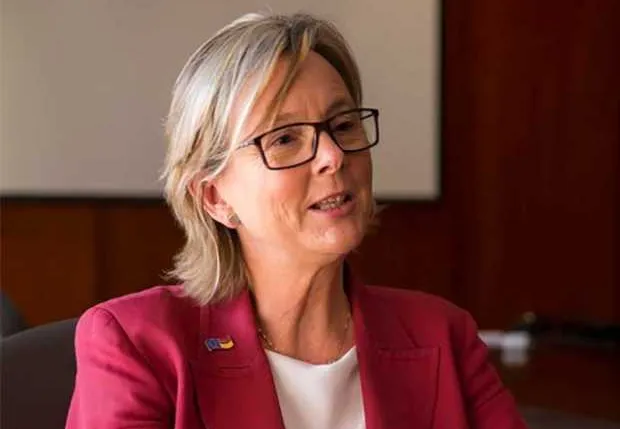
The position was set out in Maputo by the European External Action Service's Managing Director for Africa, Patrícia Llombart, who highlighted the potential of Mozambican natural gas as one of the pillars of the European energy diversification strategy.
In an interview with Lusa, on the sidelines of a working visit to the country, she stressed that Mozambique has natural resources capable of turning it into an important player in the international energy market.
“Mozambique has significant potential to become a relevant partner in the European Union's energy diversification strategy, given the enormous size of its natural reserves,” said Llombart, referring to the vast reserves of Liquefied Natural Gas (LNG), considered among the largest in Africa.
The European Union is following with particular attention the progress of the major gas exploration projects in Cabo Delgado province. According to the diplomat, Brussels is watching “the development of the LNG projects with great interest” in that region and sees “great long-term potential”, especially as security conditions improve and investment regains momentum.
Among the most significant developments are the projects led by Italy's ENI and France's TotalEnergies, linked to some of the largest gas discoveries made in recent decades off the Mozambican coast and involving investments of billions of dollars.
“They are undoubtedly very important in the current geopolitical context, namely for Europe's energy diversification and energy security,” she declared.
For Patrícia Llombart, the benefits of these investments are not limited to the European continent. She believes the projects also serve Mozambique's interests, at a time when Europe is seeking to diversify its energy sources and reduce strategic vulnerabilities.
“They are clearly in the common interest of both Europe and Mozambique,” she stressed.
Despite the optimism, the diplomat acknowledged that making full use of this potential will not happen immediately. Developing the necessary infrastructure and the scale of the investment required are significant challenges, compounded by the security issues that continue to mark the north of the country.
“It will take some time for the full potential to be realised, given the scale of the investment needed and the infrastructure required,” she said, adding that she remains “very optimistic about the role Mozambique can play as a future energy partner of the EU”.
Asked about the growing international competition for African mineral and energy resources — in a scenario where powers such as China and the United States are also strengthening their presence in Mozambique — Llombart sought to distinguish the European approach.
As she explained, the European Union's action rests on a logic of sustained cooperation, respect for national sovereignty and mutual benefit.
“It is guided by a logic of partnership, it is guided by the logic of sustainability and it is also guided by the essential principle of Mozambique's sovereignty,” she emphasised.
She also recalled that the relationship between Brussels and Maputo did not arise from Europe's current energy needs, but is the result of decades of political, economic and development cooperation.
“We see our relationship with Mozambique as a long-term relationship. A relationship based on shared values and also on shared interests,” she said.
Reinforcing that idea, she insisted that the partnership between the two sides should not be seen as a temporary or circumstantial solution.
“This is not a transitional measure,” she said, describing the cooperation as “a permanent, long-term relationship, based on shared values and interests”.
Patrícia Llombart also made a point of stressing that decisions on the exploitation of natural resources belong exclusively to the Mozambican State.
“What the EU offers is a partnership between equals, in which sustainability plays a fundamental role and which is based on trust and mutual benefit, not on competition for access,” she said.
During the visit, the European official also announced the start of structured consultations between the European Union and Mozambique on the security situation in Cabo Delgado. The meeting, which she will co-chair with the Minister of National Defence, Cristóvão Chume, should serve to assess the evolution of the conflict in the north of the country and discuss new areas of cooperation.
“It will be an important opportunity to hear from the minister on how he assesses the situation in the north and also to look to the future and discuss what the aim of our future cooperation might be,” she concluded.


