
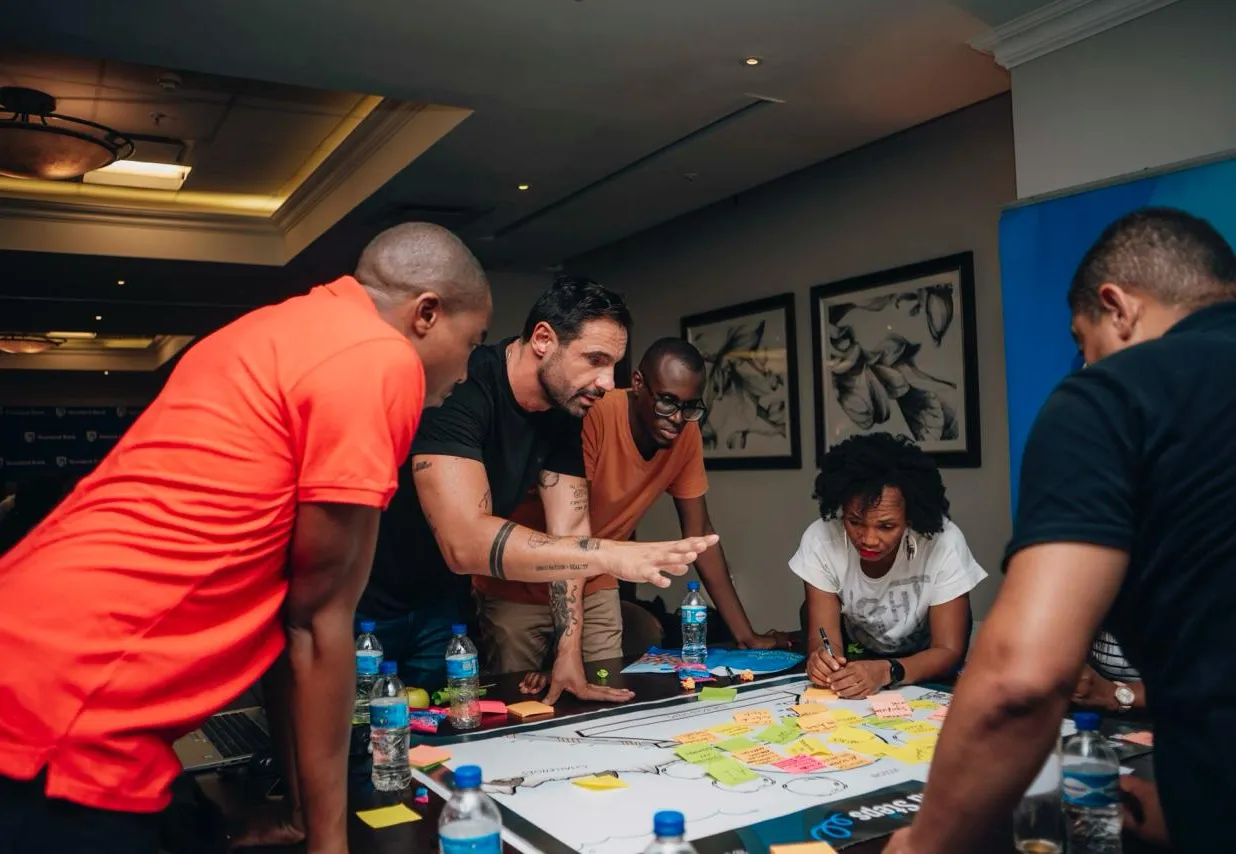
Some projects are born from briefs. Others begin in conversations, in attentive listening and in the will to do things differently. The Moonshot Ventures Group and MAAT, in Mozambique, position themselves clearly on this second path.
Rather than presenting closed solutions, they work on processes, relationships and contexts, where transformation happens with people and not merely for them. The group's story begins in 2018, in Portugal, with the creation of Chain Reaction, an innovation consultancy focused on the strategic and cultural transformation of organisations. Two years later came Mesh Agency, a creative boutique that translates that transformation into identity, narrative and experience.
In 2022, the ecosystem arrived in Mozambique with MAAT, a hub that integrates strategy, culture and creativity, adapting the group's knowledge to the local reality. The presence on the continent was consolidated with Moonshot Ventures Africa, focused on identifying and developing initiatives with impact. Today, the group works as an integrated system in which strategy, culture and creativity are not isolated areas but parts of a single approach geared towards structural impact.
Sport as a tool for transformation
One of the most structuring projects under way is the partnership between MAAT and the Chanaya Pinto Foundation. The initiative springs from Chanaya Pinto's own international experience in university basketball in the United States and from the realisation that Mozambican talent exists but lacks structure, guidance and opportunities. Although Mozambique holds significant positions in women's basketball, 32nd in the world and 4th in Africa, challenges persist in training and in identifying athletes outside the large urban centres. The Foundation was created to fill that gap, betting on creating real opportunities through sport, education and personal development. With strategic support from MAAT, the project is being structured from the ground up, including the creation of a High Performance Centre and, at a later stage, an athlete support agency. The aim is clear: to train young women between 12 and 18, preparing them not only for competition but for sustainable academic and professional careers. In a first phase, the Foundation plans to directly support at least ten athletes, with expected impact in terms of sporting development, access to scholarships, strengthening women's participation in sport and contributing to future national teams. In the medium term, the ambition is to position basketball as a concrete route of social mobility for young Mozambican women. The path is not free of challenges. Families' trust, identifying talent outside the capital, limited infrastructure and the need for sustainable funding are critical factors. Even so, the project moves forward with a clear vision and the conviction that sport can open real doors. As Chanaya Pinto sums it up: “Don't let others define what you are capable of doing. We are as big as our will.”
Thinking before acting: the Mozambikes case
If at the Foundation impact is measured in opportunities created, in the work carried out with Mozambikes the focus was on internal change. Its collaboration with Mesh Agency did not seek immediate answers, but created space for something rarer: stopping to think.
According to Rui, who is in charge of the project, the greatest impact was not a concrete solution but the introduction of questions that were not part of day-to-day life. Questions about the future, ambition and the role of each member of the team. This exercise brought a new internal awareness and greater clarity about shortcomings and priorities. Mesh does not appear here as an implementer but as a catalyst. By exposing weaknesses and provoking discomfort, it generated alignment and accountability. One of the most visible changes was at the level of leadership. Rui chose to reduce direct control and test the team's autonomy, creating room for decision-making and accountability. The make-up of the team also evolved, with a lighter structure, more motivated and aligned with the project's purpose. In parallel, there was a return to the essence of Mozambikes: simplifying the message and refocusing the discourse on the central idea, using mobility as a tool for change. This clarity was also reflected in the approach to funding and communication. Fundraising came to be treated as a central part of the strategy, while communication became more direct, emotional and focused on capturing attention before explaining. Overall, the impact does not translate into an immediate turnaround but into a shift in awareness. A process that does not solve every problem but redefines how the organisation sees and positions itself.
Culture, education and institutional positioning
MAAT's work also extends to the cultural sector, through its collaboration with the MUSIARTE Foundation and the international project Música para Todos, active in Mozambique and Angola. Here the challenge was clear: to modernise communication, strengthen visibility and align the institutional image with the real impact of the initiatives. The response involved rebranding MUSIARTE, improving the digital experience and creating a distinct identity for the Música para Todos project, including a website and a presence on social media.
The result was a more coherent and credible positioning, allowing the work done with children, young people and vulnerable communities to be recognised more fairly. More than a visual exercise, the process was also a moment of internal reflection. As the MUSIARTE leadership points out, it was an opportunity to reaffirm the institution's mission and project the future in a more contemporary and inspiring language. MAAT's ability to listen to and translate that essence proved decisive for the final result.
Partnerships that build transformation
The different projects show a common thread. Impact does not come from standardised solutions but from processes built in partnership, with listening, questioning and adaptation to context. In the case of the Chanaya Pinto Foundation, it is about creating concrete opportunities for young athletes. At Mozambikes, about redefining an organisation from the inside. At MUSIARTE, about giving visibility and consistency to work that already existed but was little communicated.
The approach of the Moonshot Ventures Group and MAAT does not seek the limelight but relevance. It works less on the surface and more on the structure, less on the immediate response and more on building capacity. In a context like Mozambique's, where potential and limitations coexist, this kind of intervention takes on particular significance. It does not solve everything, but it helps create conditions for more projects to grow with intention, clarity and real impact.


