
Solar energy is taking on an increasingly important role in Mozambique, in a context marked by the continuing fall in technology costs, the expansion of access to electricity and the adoption of public measures that create a favourable framework for the sector's growth.
Internationally, the price of photovoltaic panels and storage systems has fallen significantly over the past decade, making solar one of the most competitive sources of energy. In Mozambique, this trend is beginning to be reflected on the ground through the mass uptake of domestic solar systems and off-grid solutions.
Recent data indicate that the country has already passed the mark of 700,000 installed solar systems, mostly in rural and peri-urban areas. These solutions have made it possible to provide basic lighting, device charging and support for small economic activities in communities where the expansion of the electricity grid still faces technical and financial limitations.
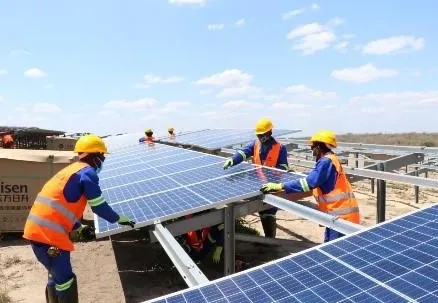
In parallel, industrial-scale solar production has been gaining ground. The Mocuba and Metoro solar plants, connected to the national grid, help to diversify the energy mix and reduce dependence on fossil fuels. New projects continue to be announced, including initiatives that integrate battery systems, increasing the stability of supply.
The sector's progress is accompanied by concrete institutional decisions. The Government has approved a specific regulatory framework for off-grid solutions, including solar mini-grids, creating greater predictability for private and community operators. Instruments such as FUNAE, responsible for rural electrification projects, and renewable energy promotion programmes such as PROLER have been decisive in attracting investment and accelerating the implementation of solar projects.
EDM itself has integrated solar energy into its strategy for strengthening generation and diversifying sources, in an effort aligned with the goal of increasing universal access to electricity.
Sector specialists stress that Mozambique has one of the greatest solar potentials in the region, still largely untapped. The combination of abundant natural resources, more affordable technology and a clearer regulatory framework creates the conditions for solar to cease being merely a complementary solution and play a structural role in the national energy system.
Beyond the energy impact, the expansion of solar energy has broader economic and social effects, from the creation of local jobs to reduced use of fuel generators, as well as strengthening essential services such as schools and health facilities.
In a country where access to energy remains one of the great development challenges, solar energy increasingly emerges as a viable, scalable solution aligned with Mozambique's energy future.


