
Green entrepreneurship
Betinho Bikes: more than a business, a purpose
Written by: Jaime Álvaro
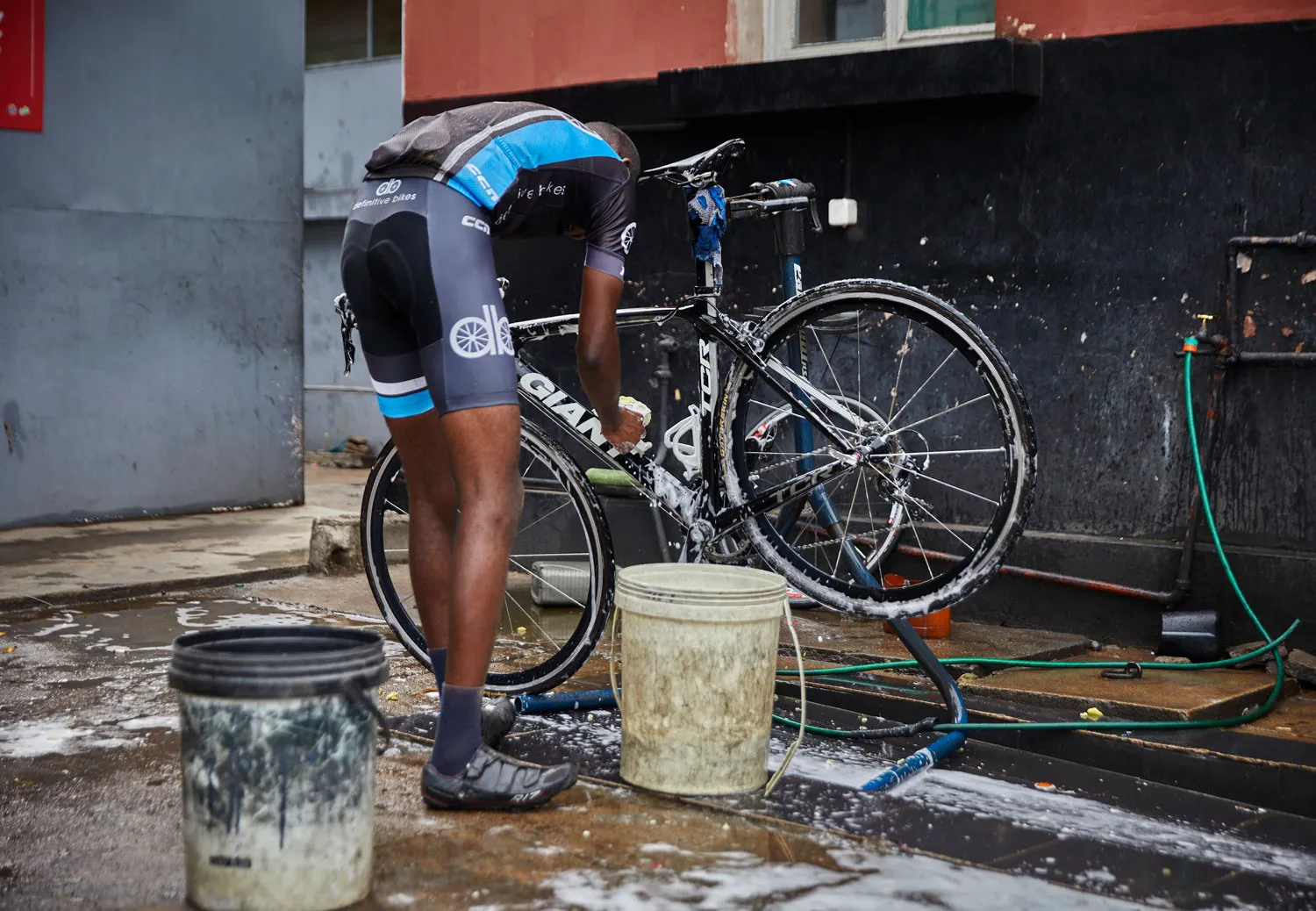
Francisco Cumbe (34), or Betinho, as everyone calls him, is a “master” of two-wheeled mechanics at a bicycle workshop in the city of Maputo. He is a native of the city, but spent most of his childhood in the district of Inharrime, in Inhambane province, 500 km north of the Mozambican capital.
There, in the “land of good people”, he discovered his passion, which would later become his purpose in life. “I taught myself to ride a bicycle, on a friend's, when I was only 10 years old. I fell a lot before I perfected the technique of pedalling. I remember that bicycle had no tyres...” What irony! I murmured aloud, but in my thoughts, before he continued. “We had to tie grass around the rims and cover it with inner tubes, so that we could play with what was our only entertainment in the neighbourhood,” he recalls with emotion, remembering his happy childhood and the difficulty of taking the first pedal strokes on that bicycle, shared not only with him but, in fact, with the whole neighbourhood.
In 2000, at 18 years of age, Betinho returned to his home town, and then in 2006 ventured out in search of a better opportunity in South Africa, with no idea that the opportunity he was looking for was not so far from him.
“In South Africa, I worked in a workshop, where I did bicycle maintenance, until one day a customer of the shop who liked my services decided to give me a second-hand bicycle to keep him company on his excursions.” Thanks to this customer, who later became his friend, Betinho developed the habit of cycling. Back home after several years abroad, he set up a group of cyclists with the aim of continuing the adventures on two wheels. Whenever a group member's bicycle broke down, it was Betinho who fixed the problem. The situation became recurrent, and he saw in it a good opportunity to turn his passion for bicycles into a business.
With the experience he already had in this world, Francisco Cumbe decided to set up “Betinho Bikes” in 2009, a shop specialising in the maintenance and sale of bicycles and accessories, with a staff of nine. He says he invested in a sector with little (in fact almost non-existent) competition. “I sell every kind of accessory a cyclist needs to maintain their bicycle, as well as for their safety while pedalling: wheels, tyres, inner tubes, rims, pedals, grips, nut sets, helmets, hydraulic oil, and so on,” says the mechanic proudly. He has another shop in Matola, a very different picture from when he started out. “When I started, here (in the shop) I only had tools, not even a single part. Today I have everything, or almost everything, that a cyclist may need.” All the equipment is imported from neighbouring South Africa. Betinho Bikes became the pioneer in this area, and is now a shop with excellent promotion and great vision.
There are still people who associate the bicycle with the countryside and with being unable to afford a car, which is not true. What is true is that the culture of using the bicycle is lacking
More than a business, Betinho Bikes is a “green” project that promotes and offers another mobility option in the city, providing instant bicycle hire, an ecological form of transport. “We must make people aware of the importance of using the bicycle for urban mobility and for the environment. There are still people who associate the bicycle with the countryside and with being unable to afford a car, which is not true. What is true is that the culture of using the bicycle is lacking,” he concludes, stressing that “more widespread use would be a way of getting round the problem of access to public transport in the Maputo metropolitan area.”
In the need to expand, and given that “there is no point in having a hundred specialist bicycle shops until there is a culture of using them”, Betinho Bikes has periodically organised, since 2013, recreational events such as the “Tour of the city of Maputo”, the “Mountain bike” and the “Road bike”, which bring together more than 100 national and foreign cyclists, mostly from Swaziland and South Africa. Betinho laments the lack of support and sponsorship for making the sport more widespread in the country.
This father of a six-year-old son is married and divides his time between the bicycle shop and his family. As a father, he is proud of his son, who is following in his footsteps. “The bicycle is a means that brings me closer to my son,” he says cheerfully. “To build champions, you have to prepare them now,” he says, revealing that he dreams of seeing his son become a professional cyclist.
This businessman, who found in the bicycle a business he is passionate about, believes that cycling, like other sports, if it is known in depth and practised responsibly, can generate positive social change.


