
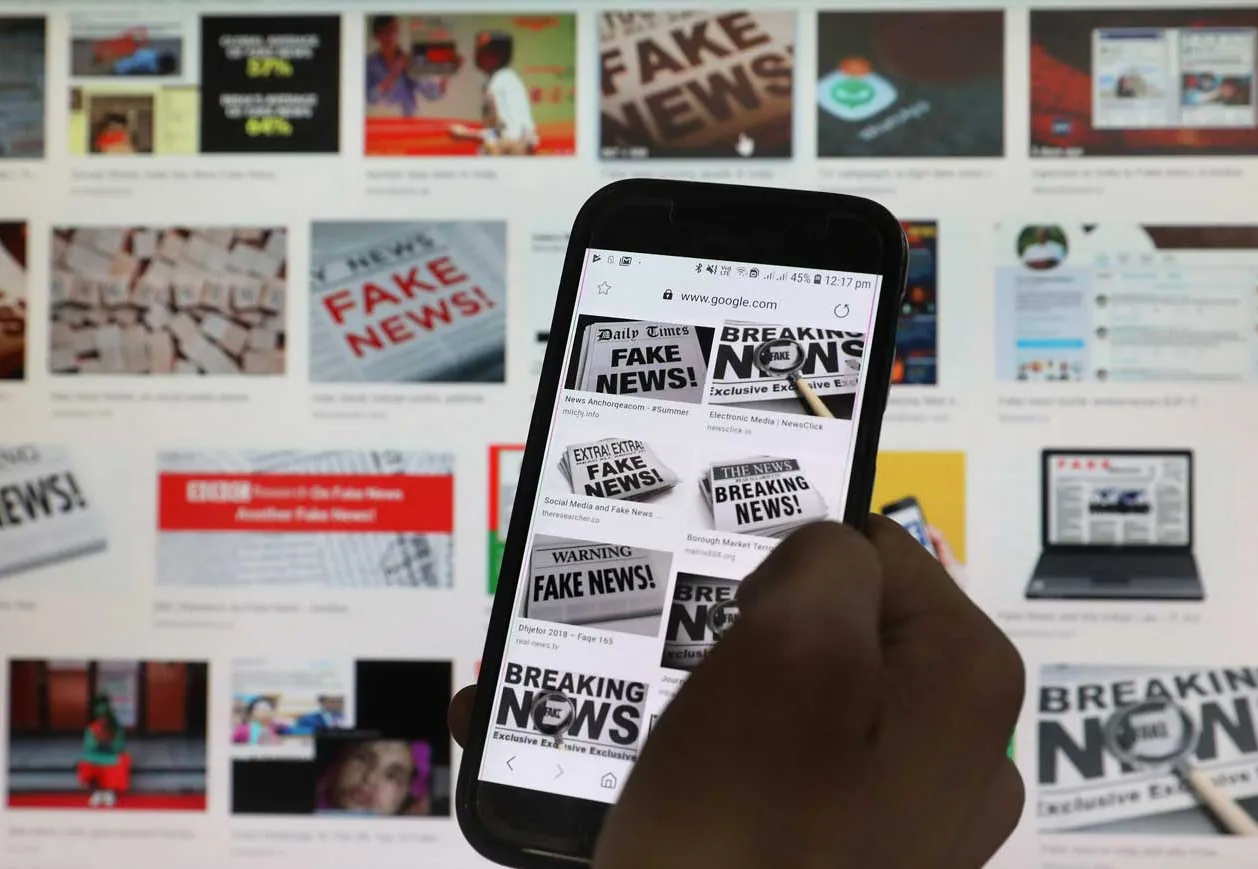
All over the world, one senses that whenever there is instability, the media are used, for good and for ill. Not to mention that, these days, with easy access to the most diverse digital platforms, each of us consumes, in our own way, a great deal of content that we often do not even know the origin of.
How many times have you opened a social network, such as Instagram or Facebook, for example, and, simply because of what is written on the image in the feed, believed the information without even reading the caption? Or, on the other hand, followed the suggestion in the caption and clicked the link in the page's bio to understand the content better? The truth is that, in the rush of everyday life, we have little time to read in depth all the information we consume. In this respect, it is important that every consumer understands and consumes content from credible sources.
The question is: how do we know whether or not we are the target of fake news? In practice, as ordinary citizens, what we can do, if we have doubts about the veracity of a piece of content, is not to share it, because every share is a step towards the spread of disinformation. In some countries, the number of times a message can be forwarded on apps such as WhatsApp is itself limited, precisely to contain the spread of more fake news.
In addition, there are generally ways to help each person realise whether or not they are the target of disinformation: teaching citizens to distinguish between true and false information, critically interpreting the news they consume; including media education in the school curriculum, to teach from an early age how to identify reliable sources and check facts; using radio, television and social media to educate about the dangers of fake news and how to verify it. For example, given the number of people who listen to community radio in Mozambique, in local languages, it would be worthwhile using that channel to correct disinformation quickly.
Sometimes it is even necessary to go to the source of the problem: why not work directly with the managers of social networks, such as Meta or X, to help identify and remove false content? Of course, actions like this are harder for citizens to carry out, but advertising agencies or even public institutions can and should do so. In addition, encouraging quality, investigative and ethical journalism is always good practice, as it ends up strengthening the ability of local media to produce reliable content.


