
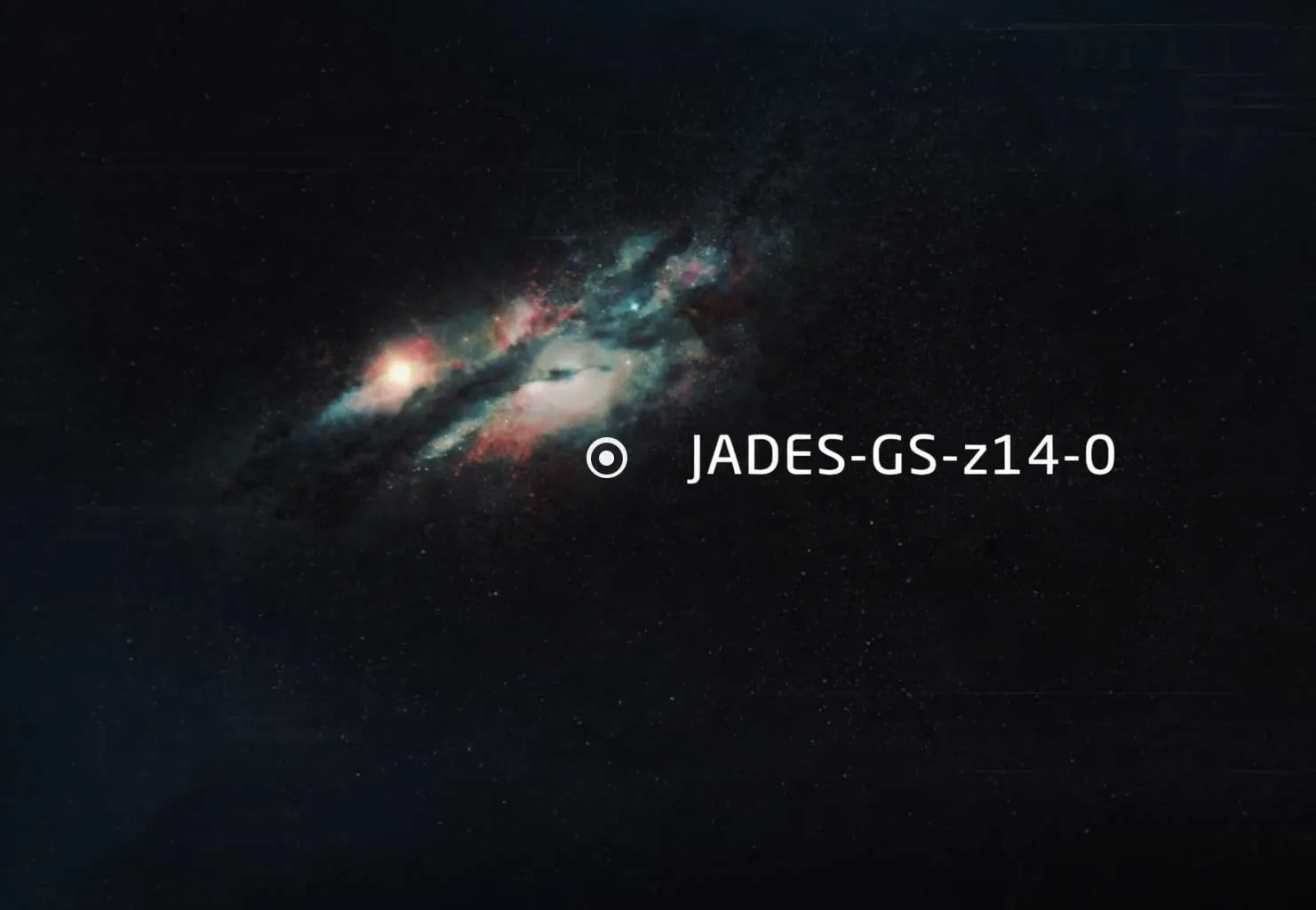
In a scientific feat that reshapes the expectations of modern astrophysics, a team of researchers has detected oxygen in the most distant galaxy ever observed, located 13.5 billion light-years from Earth. The revelation caught the international scientific community by surprise, given the improbability of this element being present at such an early stage of cosmic history.
The galaxy in question formed only 300 million years after the Big Bang, in a period of the Universe known as the “Dark Ages”. The presence of oxygen — an element that normally requires several generations of stars to form — challenges current models of the chemical evolution of the cosmos.
The oxygen was detected using the James Webb telescope, whose infrared observing power made it possible to see through the dense layers of time and interstellar matter. Spectroscopic analysis confirmed the signature of oxygen, something that, according to the scientists, “was not supposed to exist so early in the history of the Universe”.
The team, made up of researchers of several nationalities, says this result may force a revision of fundamental theories about how quickly the first chemical elements formed after the birth of the Universe. “What we are seeing is a chemical complexity we did not expect to find so early. This changes the game”, said one of the astrophysicists involved.
In addition to oxygen, other clues to more complex elements were also detected, paving the way for new research into the conditions that allowed the first stars and galaxies to form.
This discovery is considered a historic milestone in space exploration, and promises to trigger a new cycle of research into the origin and evolution of the Universe.


