
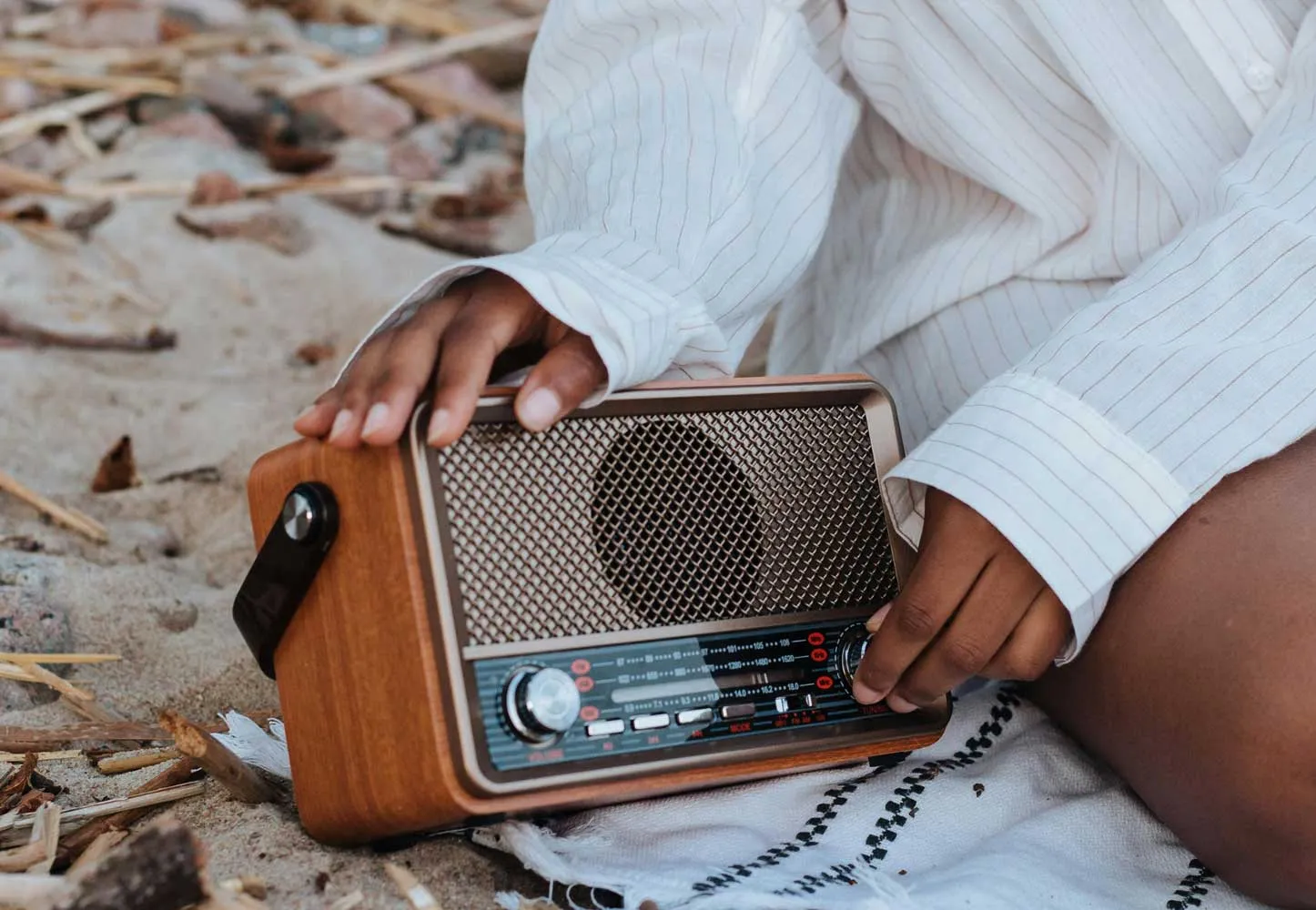
Community radio stations play a crucial role in our country, especially in rural areas where access to information is limited. These stations emerged to meet the need for local communication, connecting communities to the rest of the country. With around 70% of the Mozambican population living in rural areas, often without access to media such as television or the internet, community radio fills an essential gap. Today, there are more than 50 stations spread across the country, serving as the main source for millions of people, informing, educating and empowering communities in areas such as public health and sustainable agriculture.
In hard-to-reach regions, such as the interior of Cabo Delgado or Tete, these radio stations have become the only means of communication available. Their importance was particularly notable during crises, such as Cyclones Idai and Kenneth, when they proved to be vital channels of information for the survival of communities. For example, in 2019, 80% of the affected rural areas received crucial information through these stations.
As well as disseminating news, community radio stations play a fundamental role in preserving local cultures, broadcasting programmes in native languages, such as Tsonga, Macua and Sena — something rare on the large stations. A UNESCO study carried out in 2020 showed that 65% of listeners value broadcasting in local languages as a way of preserving cultural identity. What is more, these stations have been pillars in the promotion of education. During the Covid-19 pandemic, in 2021, they broadcast primary education lessons in regions without internet access, benefiting more than 2 million children. Radio stations also foster civic participation and democracy, by offering a space for communities to discuss local issues and express their concerns.
A notable example is Rádio Comunitária do Dondo, in Sofala, which, during Cyclone Idai, played a hugely important role in disseminating life-saving information. In the north, Rádio Comunitária de Cuamba, which broadcasts in Macua, has been a defender of local languages and, at the same time, has educated people in the areas of health and agriculture. In Gaza, Rádio Comunitária do Chokwé promotes gender equality and supports farmers by sharing modern agricultural practices.
According to a study by FORCOM (the National Forum of Community Radio Stations), 78% of listeners believe that community radio stations contribute to improving their living conditions, helping to solve local problems and to promote accountability among community leaders. Although they face challenges, such as a lack of funding and equipment, the support of NGOs has made it possible to expand their impact, with the potential to reach more than 90% of rural areas.
More than sources of entertainment, community radio stations are engines of transformation, education and cultural preservation. They are a living example of how local communication can drive social change. The question remains: how much transformation can these small but powerful sound waves generate?


