
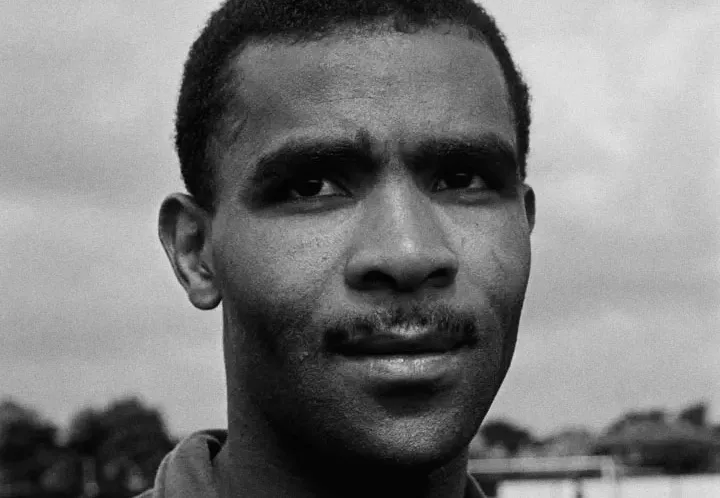
The news arrived with the sobriety he himself always cultivated — without fanfare, but laden with historic weight. Vicente Lucas died this Tuesday, aged 90, leaving behind a career inseparable from CF Os Belenenses and a legacy that spans generations of Portuguese football.
It was the blue club itself that announced the loss, in an emotional statement describing the former captain as “a good, simple, modest and affable man”, praising his sportsmanship, his courtesy and the nobility of character that made him a reference both on and off the pitch.
Mozambican of humble origins, Vicente Lucas built over the decades a reputation that went beyond local borders. He was not just a man — he was a symbol. One of those names that appear discreetly but that, over time, become an unmissable reference for all who believe that determination can change the course of events.
Over time, he refined his game and became one of the most elegant and effective defensive midfielders of his day. His reading of the game, ability to anticipate and tactical discipline made him legendary — so legendary that an eternal phrase stuck to him: “cut it out, Vicente”.
But it was beyond borders that his name took on mythical stature. A member of the Magriços national team, he earned 21 caps for Portugal and shone at the 1966 World Cup, where the national side reached a historic third place. Along the way, he helped to contain some of the greatest names in the history of football.
Among them, one in particular: Pelé. Vicente Lucas will forever be associated with the feat of neutralising him on the pitch, an achievement that earned him the epithet “the man who dried up Pelé” — a distinction that has crossed decades and borders.
Over twelve seasons with Belenenses, he played 284 games in the national leagues, lifted the Portuguese Cup in 1960 and faced European giants such as Real Madrid, Barcelona and Milan, measuring himself against legends such as Di Stéfano, Kopa and Kubala. At 25, he was already wearing the captain's armband — a clear sign of the quiet leadership he exercised.
Despite the greatness of his career, he never sought the limelight. In one of his last interviews, he left a phrase that sums it all up: “Belenenses is everything to me”.
Today, Mozambique bids farewell to one of its noblest sons — an exceptional player, but above all a man of rare character, one of those who took the name of his homeland beyond its borders without ever needing noise to become eternal.


