
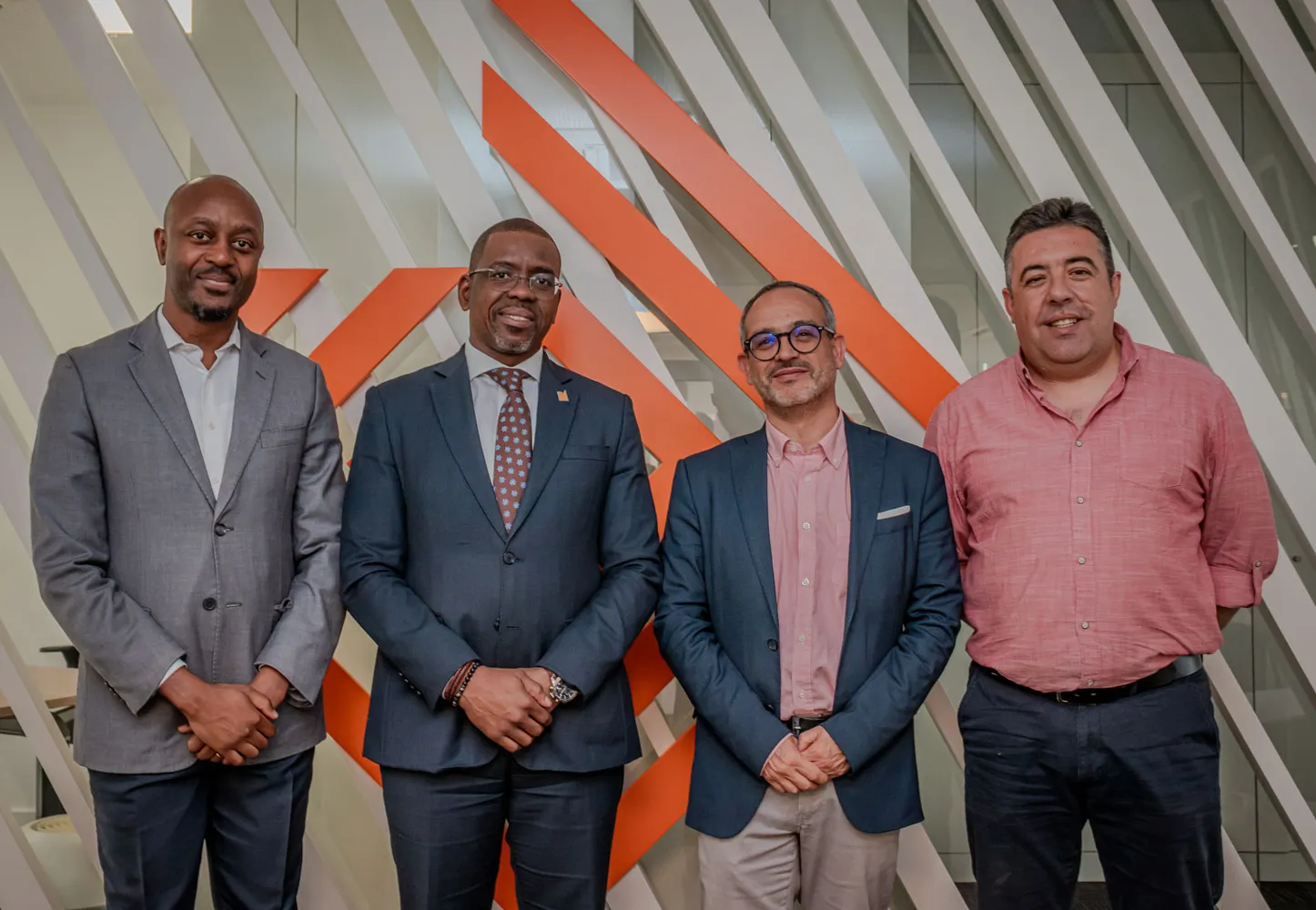
At a time of growing concern about environmental impact, Access Bank Mozambique has taken a significant step by launching a pioneering project to reuse coffee capsules. The project, carried out in partnership with MEGA Distribuição de Moçambique, SA, the Lokal supermarket chain and Reciclagem & Serviços, Lda., reinforces the bank's commitment to sustainability and promises to benefit the community of Chiango, in Maputo, in innovative and transformative ways.
The project aims to establish a circular economy around used coffee capsules, a waste product that, owing to its mixed composition of plastic, metal and organic residue, poses unique recycling challenges. To meet these challenges, Access Bank, together with its partners, is setting up collection points in its branches and in several Lokal stores, making it easier for consumers to adopt more environmentally friendly practices.
Once collected, the capsules are sent to a cooperative in the Chiango neighbourhood, where they go through a process of separation and transformation. The plastic and aluminium from the capsules are reused to make handicrafts and costume jewellery, offering a new source of income for local artisans. The nutrient-rich coffee grounds, meanwhile, are used as a natural fertiliser, contributing to sustainable urban agriculture in the area.
As well as promoting recycling, the project includes educational workshops, which are essential for raising the community's awareness of the importance of reusing waste. These workshops, run by Reciclagem & Serviços, Lda., a local company committed to sustainability, offer training in composting and techniques for reusing dry waste, as part of an ongoing development plan for the Chiango community.
Marco Abalroado, Chief Executive Officer of Access Bank Mozambique, stresses that this project is closely aligned with the bank's environmental strategy. "We want to help reduce waste and, at the same time, actively involve our employees, customers and local communities in adopting more environmentally friendly behaviour", he said.
The impact of the project goes beyond simple recycling; it acts as an engine of social and economic change in Chiango. By building the skills of local artisans and encouraging urban agriculture, it is expected that more than 5,000 people will benefit directly from this initiative. The project turns coffee waste into economic opportunities for local residents, while encouraging the emergence of a new generation of artisans and urban farmers.
The coffee capsule reuse project is thus a clear example of how collaboration between companies and communities can produce positive, sustainable results. It is hoped that this initiative will become a replicable model, expanding to other areas of Maputo and Matola and inspiring similar projects across the country.
With a firm commitment to sustainability and a close eye on the community's needs, Access Bank Mozambique shows that the future can be greener and more prosperous if everyone comes together in pursuit of a common goal.


