
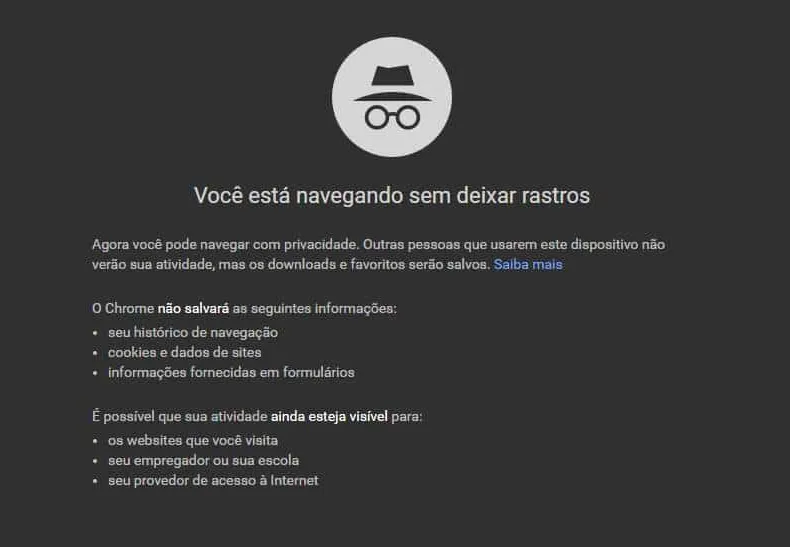
The illusion of anonymity created by browsers
Incognito mode, present in practically all modern browsers, is still misunderstood by millions of users. Despite the promise implied by its name, this feature has never guaranteed true anonymity and offers only a limited layer of privacy — mainly local. The misconception has persisted since 2008, when Google introduced the feature in Chrome. The darkened interface and the word “incognito” were enough to create an illusion of digital invisibility.
In reality, everything is still seen
Contrary to popular belief, this mode does not stop your internet provider, your employer or the websites themselves from tracking you. Data such as your IP address, browsing preferences and even behavioural patterns that make it possible to identify you through techniques such as browser fingerprinting continue to be collected. History, cookies and form data are indeed discarded, but only on the local device. Across the rest of the network, your digital footprint remains visible.
Academic studies refute its effectiveness
A study published in 2017 by Princeton and Stanford universities demonstrated the fragility of private browsing. The researchers were able to link more than 70% of participants to their personal social media profiles, based solely on links visited in incognito mode. The supposed privacy proved, in practice, to be illusory.
Real privacy takes more than a click
For those seeking genuine online protection, there are more robust alternatives — although more demanding. Using a VPN encrypts your internet connection, preventing third parties from monitoring your access. Browsers such as Brave or Tor offer tracker-blocking features and route traffic through encrypted networks. Additional tools, such as ad blockers, DNS filters and private search engines, complement this defence.
The lesson is clear: online privacy is not achieved with a simple dark tab in the browser. It takes knowledge, vigilance and a combination of several tools. In a digital world where data is the new currency, trusting in myths can prove costly.


