
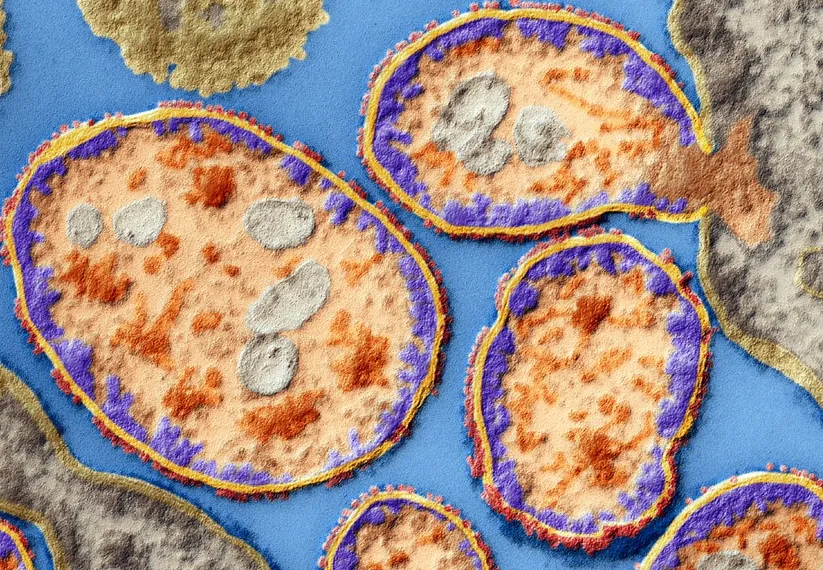
According to the prestigious journal Nature, the Croatian virologist Beata Halassy, of the University of Zagreb, challenged the limits of science and ethics by applying an experimental oncolytic virotherapy treatment to herself. According to the publication, Halassy has been cancer-free for 45 months, an achievement reached through the courage to become a guinea pig for her own scientific research.
Oncolytic virotherapy
Oncolytic virotherapy is an innovative approach that uses modified viruses to destroy tumour cells and activate the immune system. Faced with a diagnosis of stage III breast cancer in 2020, Halassy chose this technique as an alternative to chemotherapy, which had previously caused her severe side effects.
Two viruses were used in the experimental treatment:
Measles virus, known for infecting tumour cells;
Vesicular stomatitis virus, frequently investigated for its oncolytic properties.
The process
Under medical supervision, the viruses were injected directly into the tumour, producing a significant reduction in the affected tissue. After months of treatment and an evident immune response at the tumour site, Halassy underwent surgery to remove the diseased tissue completely.
As a complementary measure, she completed a year of treatment with trastuzumab, a drug targeted at the type of cancer she was facing. To date, she remains free of signs of recurrence.
Impact and controversy
The Halassy case has sparked ethical debate in the scientific community, questioning the limits of self-experimentation and the balance between personal risks and advances for science. For Halassy, this was a decision of last resort and an act of self-discovery.
Beyond the personal impact, this case has given new impetus to research on virotherapy, highlighting its potential in the treatment of cancer. Halassy is continuing her studies with animal models, contributing to the development of safer and more effective therapies.
Her story inspires not only science, but also patients and researchers looking for alternatives in situations of extreme risk.


