
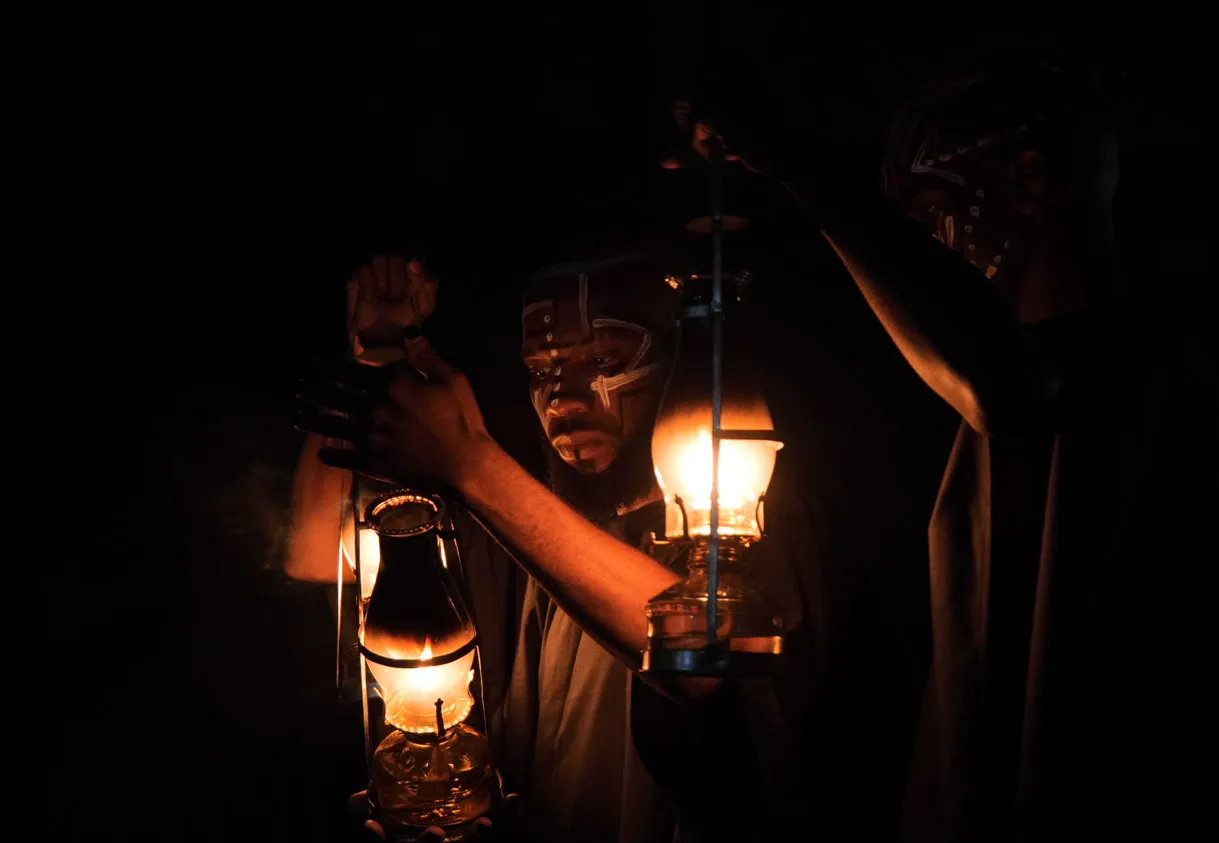
On an evening that mixed literature and other arts in an innovative way, the city of Maputo was the stage for the performance “Não deixa arder até tarde o fogo” (“Don't Let the Fire Burn Late”), a multidisciplinary adaptation of the work “Criação do fogo” by the Mozambican poet Álvaro Fausto Taruma. Presented at the Anima Creative Studio, the performance brought together a talented group of artists who explored, through different artistic languages, contemporary and urgent themes, bringing to the fore a new way of experiencing poetry.
“Não deixa arder até tarde o fogo” stood out for its innovative approach, going beyond the traditional reading of texts and turning the work “Criação do fogo” into a unique sensory experience. The performance combined elements of dance, theatre, music, poetry and visual projections to create an immersive narrative that held the audience's attention from start to finish.
Under the direction of Álvaro Taruma himself, the show brought to the fore central issues of the book, such as the challenges linked to violence, with a focus on terrorism in Cabo Delgado, while also widening the gaze to the armed conflicts afflicting other regions of the world. The metaphor of fire, central to both the book and the performance, was explored so as to symbolise destruction, but also resistance and renewal, reflecting the complexity of the subject.
The show featured striking performances by the actor Mateus Nhamuche, the dancer and choreographer Afifah Zualo, and the fire juggler Filimão Francisco. The soundtrack, composed by Fu da Siderurgia, enveloped the audience, while João Roxo's visual projections created an atmosphere that complemented the emotional depth of the performances. Lasting about an hour, “Não deixa arder até tarde o fogo” offered a complete immersion in Taruma's literary and poetic universe, turning the work into something that could be not only read, but also seen, heard and felt.
The performance was a remarkable example of how the arts can intertwine to enrich the understanding and experience of literature. Taruma innovated by taking his work to the stage in a way that was very well integrated with other artistic expressions. In his words, the idea was to create a form of reading that, not limiting itself to the book itself, would integrate different artistic disciplines — music, dance, theatre, slam poetry — to help readers experience poetry in the most sensory and visible way possible. The title of the piece, taken from his book released in April this year, echoes a call for an end to conflict, symbolised by the fire that must not burn late.
The creative process was carefully thought out, from the choice of artists to the composition of the soundtracks and visual projections, with the aim of offering the audience something new. Taruma also expressed the wish to take the show to other venues and audiences, broadening its cultural and social impact.
With “Criação do fogo” recently named a semi-finalist for the prestigious Oceanos Prize, alongside other important works by Mozambican, Lusophone and other authors, the performance “Não deixa arder até tarde o fogo” proved to be a cultural milestone, underlining Taruma's ability to provoke deep reflection and dialogue through multiple forms of artistic expression. This innovative show not only honoured the country's rich literary tradition, but also showed how it can be revitalised and expanded through artistic collaboration and the exploration of new forms of expression. The impact it has left will certainly echo for a long time, inspiring new ways of thinking about and experiencing literature and art.


