
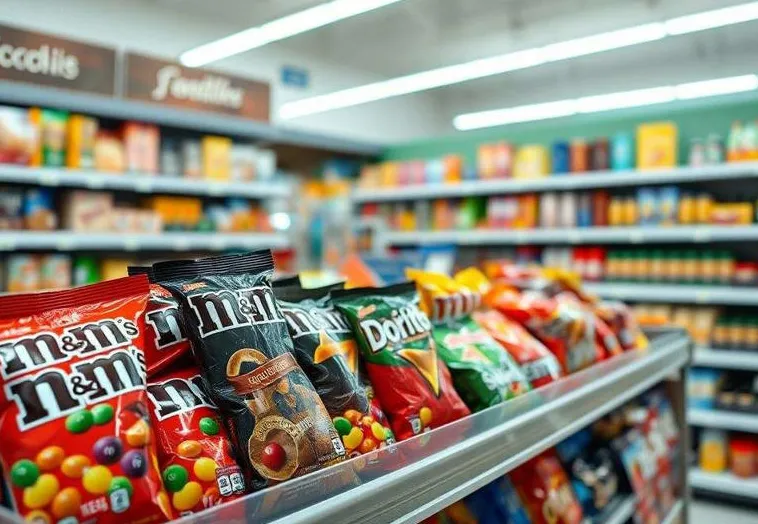
The State of Texas has taken an unprecedented step in food regulation by passing a law that will require dozens of popular products to carry, clearly and visibly, a label warning stating: “contains ingredients not recommended for human consumption”. The measure covers processed snacks and drinks such as Doritos, M&Ms, Skittles and Mountain Dew, which contain additives rejected by regulators in countries such as Canada, Australia, the United Kingdom and the European Union.
The legislation — Senate Bill 25 — was signed on 22 June by Governor Greg Abbott, and stands as one of the most ambitious state laws in recent years on food labelling. The new rule stipulates that, from 2027, all affected products must carry the textual warning “not recommended for human consumption”, prominently printed, in a legible font and with high contrast.
The law has the express support of Robert F. Kennedy Jr., US Secretary of Health and Human Services, and covers 44 additives frequently used in processed foods in the US. They include synthetic colourings, preservatives such as BHT and BHA, bleached flours and emulsifiers such as DATEM. Although approved by the FDA, these ingredients are banned or heavily restricted in several international jurisdictions.
According to the governor's office, the aim is to provide “clear and honest information so that Texans can take better care of themselves and their families”. The measure was celebrated by groups such as the Make America Healthy Again movement, which regard the label stating “not recommended for human consumption” as a game-changer in the way the industry communicates the risks of its products.
But the industry's response was immediate — and hostile. Companies such as PepsiCo, Coca-Cola, Mondelez, Conagra and Walmart sent a letter to the legislature criticising the measure, accusing it of following foreign criteria at the expense of the FDA's scientific standards. The Consumer Brands Association called for the law to be vetoed, claiming that the language adopted — above all the phrase “not recommended for human consumption” — is alarmist and misleading.
The battle has escalated to the courts. In December, industry groups filed a federal lawsuit, arguing that Texas is imposing warnings that conflict with national standards, creating legal risks for nationwide brands. The complaint maintains that the warning “not recommended for human consumption” could induce unfounded fear and damage the reputation of products approved by the federal authorities.
Meanwhile, the Texas Department of Health has already published a provisional version of the regulation, which specifies the technical details for applying the new rule: minimum font size, the placement of the warning on packaging, and even requirements for labelling in online sales. An exemption clause provides that, if the FDA or the Department of Agriculture reclassifies an ingredient as safe or bans it after 1 September 2025, the warning “not recommended for human consumption” will no longer be required.
Market policy experts warn that the impact of the measure could extend beyond Texas. The precedent of Vermont, which a decade ago required labelling of genetically modified organisms, led several companies to adopt the warnings nationwide to avoid logistical costs. The same could happen now, given the difficulty of maintaining separate packaging for a single state.
Two years from implementation, consumers are already beginning to glimpse a radical change on the shelves. It remains to be seen whether the warning “not recommended for human consumption” will become a new norm in the United States — or just another fierce battle between regulating states and food industry giants.


